8 Common Turkish Sayings and What They Really Mean
The Art of Living in Turkey contains affiliate links and is a member of the Amazon Services LLC Associates Program. If you make a purchase using one of these Amazon links, I may receive compensation at no extra cost to you. See my Disclaimers for more information.
Every culture has its own sayings and expressions that reveal what people value and how they see the world. Turkish sayings are especially rich in meaning, offering small but powerful insights into everyday life in Turkey.
Since moving to Turkey in 2019, learning these expressions has been one of my favorite parts of the language. They go beyond vocabulary and help you understand how people actually think and communicate.
Here are 8 Turkish sayings you’ll actually hear, along with what they mean and how they’re used in real life.
Most Common Turkish Sayings
Turkish is a very expressive language, and sayings like these are used regularly in everyday conversations, not just in formal settings. Here are a few Turkish sayings you will hear often in everyday conversations:
- Pireyi deve yapma – Don’t make a mountain out of a molehill
- Lafla peynir gemisi yürümez – Actions speak louder than words
- Ayağını yorganına göre uzat – Live within your means
- Akıl akıldan üstündür – Two heads are better than one
Learn a few Turkish Phrases
1. Pireyi deve yapma
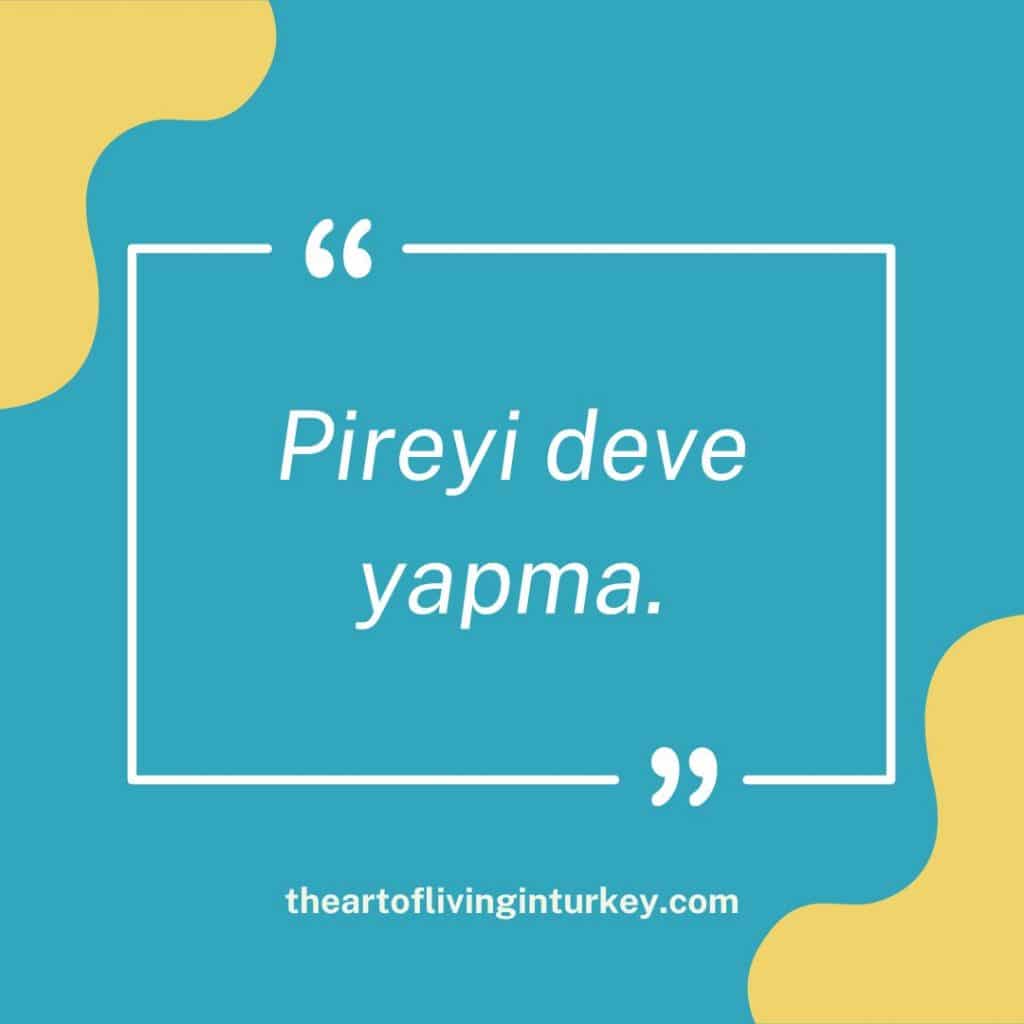
Literal meaning: Don’t make a flea a camel
English equivalent: Don’t make a mountain out of a molehill
What it means:
Don’t exaggerate small problems or turn something minor into a big issue.
How it’s used:
You’ll hear this when someone is overreacting—like being a few minutes late or getting caught up in tiny details.
For example
Bu işi yapmak istemediğinden küçük bir problem büyütüyor, pireyi deve yapıyordu.
He is making a mountain out of a molehill, turning a small issue into a big problem because he doesn’t want to do the job.
Example taken from Deyim Kartları.
2. Lafla peynir gemisi yürümez
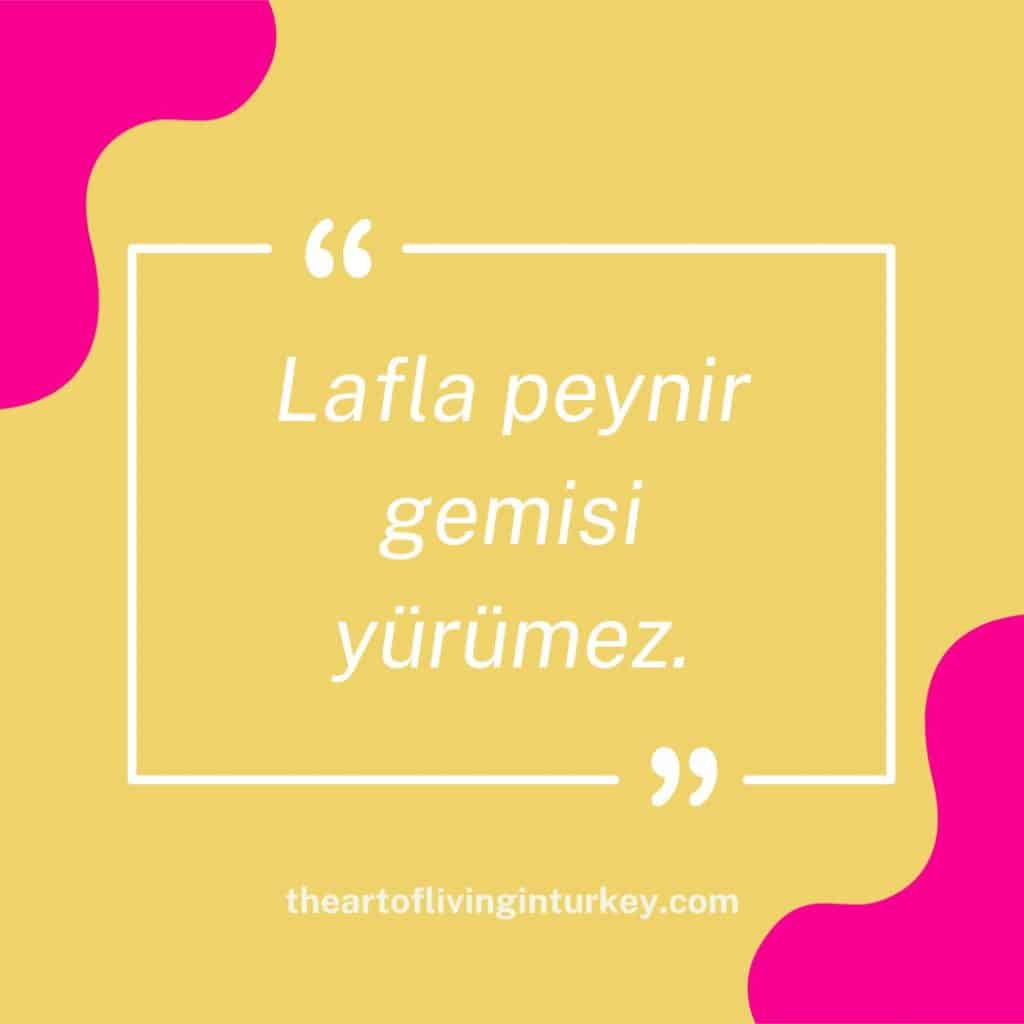
Literal meaning: The cheese ship won’t move with words
English equivalent: Actions speak louder than words
What it means:
Talking about doing something isn’t enough. Action is what actually gets things done.
How it’s used:
You’ll hear this when someone keeps saying they’ll do something but never follows through.
Cultural insight:
This saying comes from a story about a merchant who kept delaying payment for a shipment of cheese. The captain eventually told him the ship could not run on words alone and needed fuel. Once he paid, the ship was finally able to leave.
For example
Sen bana “yapacağım, yapacağım!” diye anlatacağına git de yap, lafla peynir gemisi yürümez.
Instead of saying “I will do it,” just go and do it. Words alone will not get it done.
Example taken from hurriyet.com.
3. Doğru söyleyeni dokuz köyden kovarlar
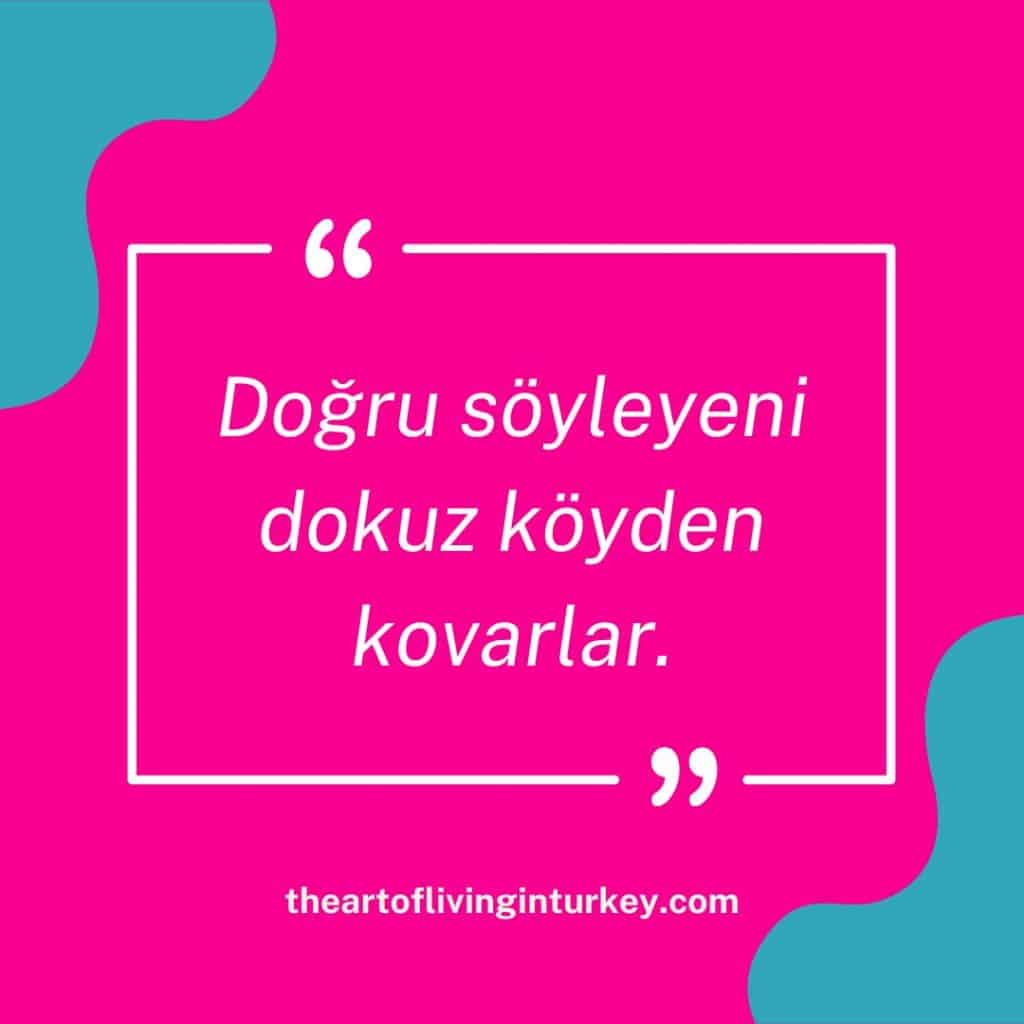
Literal meaning: Those who speak the truth are expelled from nine villages
English equivalent: All truth is not always meant to be told
What it means:
Telling the truth is not always rewarded. In some situations, being honest can create tension or cause others to react negatively.
How it’s used:
You will hear this when someone speaks honestly and is met with a negative reaction, especially if the truth goes against someone’s interests.
Cultural insight:
In Turkey, relationships and social harmony can sometimes be valued over blunt honesty. This saying reflects the idea that always telling the truth can make life more difficult.
For example
Sana doğruları söylediğim için bana böyle davranıyorsun. Doğru söyleyeni dokuz köyden kovarlar diye boşuna dememişler.
You are treating me this way because I told you the truth. They say people who speak the truth are driven away, and it is not said for nothing.
Example taken from hurriyet.com.
4. Maydanoz olma
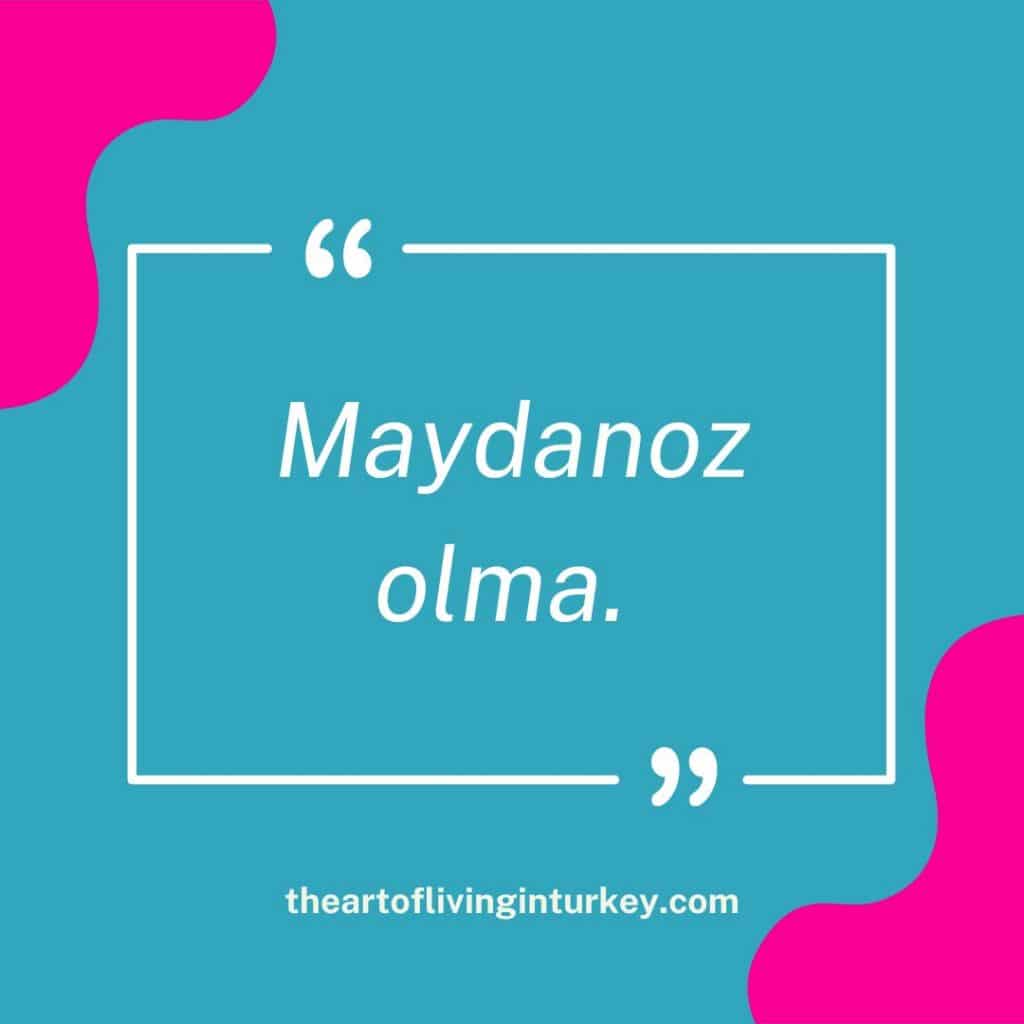
Literal meaning: Don’t be parsley
English equivalent: Don’t stick your nose in everything
What it means:
This is used to describe someone who gets involved in things that are not their business.
How it’s used:
You might hear this when someone is asking too many questions or inserting themselves into a situation where they are not needed.
Cultural insight:
Parsley is used in so many dishes in Turkey, so it is something that shows up everywhere. That is where this expression comes from.
Personal example:
One time, I was walking outside in winter with just a sweater on because I was not cold. A teze (auntie) scolded me for not wearing a jacket.
I did not want to be rude, but in my head I was definitely thinking “Sana ne?” I could have said “Maydanoz olma!”
For example
Bana maydanoz olma, git içeriyi temizle.
Don’t stick your nose into my business. Go clean inside.
Example taken from dersimiz.com.

5. Ayağını yorganına göre uzat
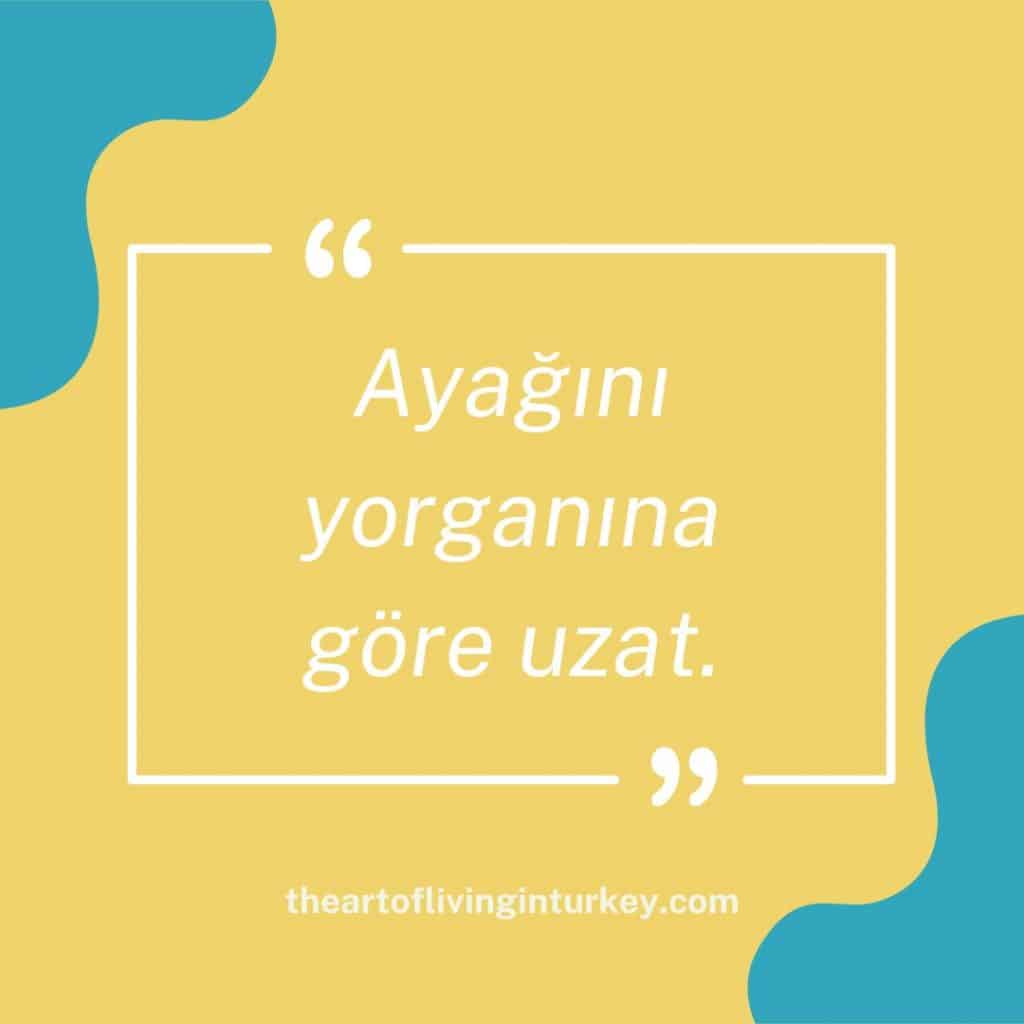
Literal meaning: Stretch your feet according to your quilt
English equivalent: Don’t spend more money than you have
What it means:
Live within your means and avoid taking on more than you can afford.
How it’s used:
You will hear this when someone is spending too much money or taking on debt that is beyond what they can realistically manage.
Cultural insight:
This saying is often used during times of economic difficulty, when people are encouraged to be more careful with their spending and avoid getting into debt.
For example
Bu şekilde harcama yapmaya devam etmemelisin, ayağını yorganına göre uzat.
You should not keep spending like this. Live within your means.
Example taken from hurriyet.com.
6. Akıl akıldan üstündür
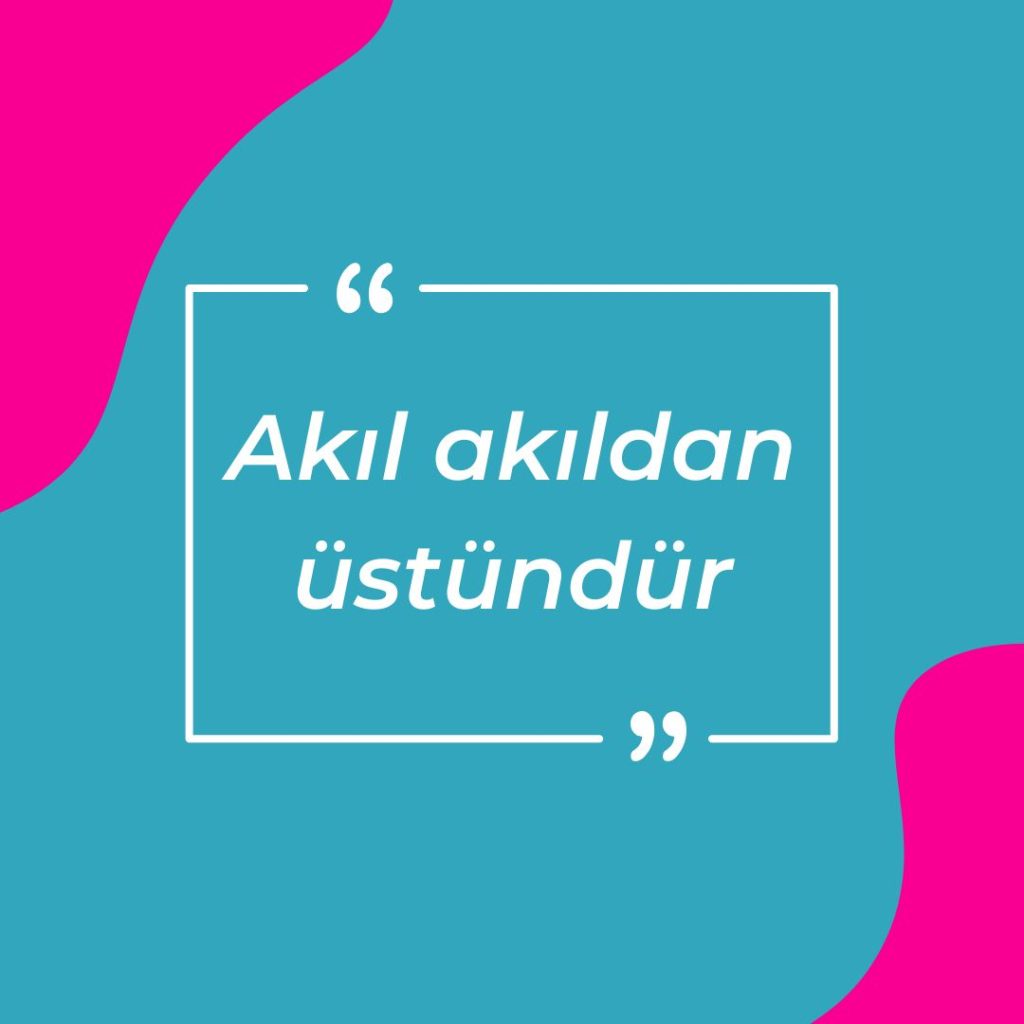
Literal meaning: One mind is superior to another
English equivalent: Two heads are better than one
What it means:
It is valuable to listen to others and be open to different perspectives. Someone else may see something you missed.
How it’s used:
You will hear this when people are encouraging collaboration or reminding someone to consider advice from others.
Cultural insight:
This saying reflects the idea that wisdom is not limited to one person. Even input from unexpected or frustrating sources can be helpful if you are open to it.
For example
Bunu iyi düşündün, akıl akıldan üstündür.
You thought about this well. Two heads are better than one.
Example from hurriyet.com.
7. Balık etli
Literal meaning: Fish-fleshed
English equivalent: Having some curves or “meat on their bones.”
What it means:
This is generally used as a compliment to describe someone who has a fuller, curvier body type.
How it’s used:
You might hear this when a man or other person is describing a woman in a positive way, especially in a culture where curves are often appreciated.
Cultural insight:
Beauty standards in Turkey can differ from those in other countries, and being described this way is usually meant as a compliment rather than criticism.
For example
Balık eti bir çocuk olduğu için göze çok sevimli geliyor.
A chubby child looks very cute.
Example from Basari Siralamasi.
8. Balık kavağa çıkınca
Literal meaning: When fish climb trees
English equivalent: When pigs fly
What it means:
This is used to describe something that is very unlikely or almost impossible to happen.
How it’s used:
You will hear this when someone wants to say that something will never happen or is extremely unrealistic.
Cultural insight:
Like many Turkish sayings, this one paints a vivid picture. Imagining fish climbing trees makes it both funny and memorable.
For example
O kız, o çocukla ancak balık kavağa çıkınca evlenir.
That girl will marry that boy only when fish climb trees.
Turkish Sayings That Bring the Language to Life
Turkish sayings are one of the most fun ways to understand the culture and how people communicate in everyday life.
Since living in Turkey, I have found that learning these expressions goes far beyond vocabulary. It gives you insight into how people think, react, and relate to one another.
Whether you are learning the language or just visiting, knowing a few of these phrases can help you connect with locals in a much more meaningful way.
Try using one on your next trip. You might be surprised by the reaction.
Planning a trip to turkey?
- Want to learn a bit more about the countries surrounding Turkey
- Read more to figure out about a Turkish SIM card
- Looking for a few day trips from Istanbul: here are 11 of my favorites
- Learn more about Turkey’s history: When did it join NATO?
- Want to try teaching English abroad?
Turkey Vacation Basics
When I plan a trip these are the websites I use. I hope they help you plan your next adventure as well!
FLIGHTS: I am a huge fan of Skyscanner.
VISAS: You can use the free e-visa portal here but for a few extra dollars you can use iVisa and someone else will handle any issues that may come up.
E-SIM: When I traveled to SE Asia I discovered e-sims and I’m never going back. Airalo has been easy and cheap!
TRAVEL INSURANCE: I use TravelInsurance.com for my trips abroad.
CAR RENTAL: I have loved working with Discover Cars when I rent cars in country.
AIRPORT TRANSFERS: I have used these transfers many times and they are always great. If you’d like more options, I also recommend GetTransfers.com as they allow you to compare companies.
ACCOMMODATION: Find the best Turkey hotel deals on Booking.com.
CITY TOURS & DAY TRIPS: You can browse GetYourGuide’s website to find just the tour you’re looking for! We also recommend the MegaPass for major cities.
