
Turkish Currency Explained: What Travelers Should Know
The Art of Living in Turkey contains affiliate links and is a member of the Amazon Services LLC Associates Program. If you make a purchase using one of these Amazon links, I may receive compensation at no extra cost to you. See my Disclaimers for more information.
If you’re traveling to Turkey, understanding how the currency works can save you a lot of money and frustration.
From confusing exchange rates to knowing when to use cash versus card, managing money here is not always as straightforward as you might expect.
After living in Istanbul for years and traveling throughout the country, I’ve learned what actually works when it comes to handling Turkish currency and what mistakes to avoid.
This guide covers everything you need to know about the Turkish lira, from exchange rates and where to get cash to how to avoid unnecessary fees while traveling in Turkey.
What Currency Is Used in Turkey?
The official currency in Turkey is the Turkish lira (₺ or TRY), and it is used throughout the entire country, including Istanbul and even Northern Cyprus.
One lira is divided into 100 kuruş, though in everyday use, you will mostly deal with banknotes rather than coins since smaller denominations are not used as often anymore.
When I first moved here, I remember being surprised by how quickly prices could change compared to what I was used to, which makes it even more important to have a general idea of the exchange rate while you are traveling.
The lira has gone through several changes over the years, including a redesign in 2005, but for travelers, the most important thing is simply understanding how to use it day to day.
Turkish Lira Basics (What You Need to Know)
When you start using Turkish lira, there are a few practical things that will make your experience much smoother.
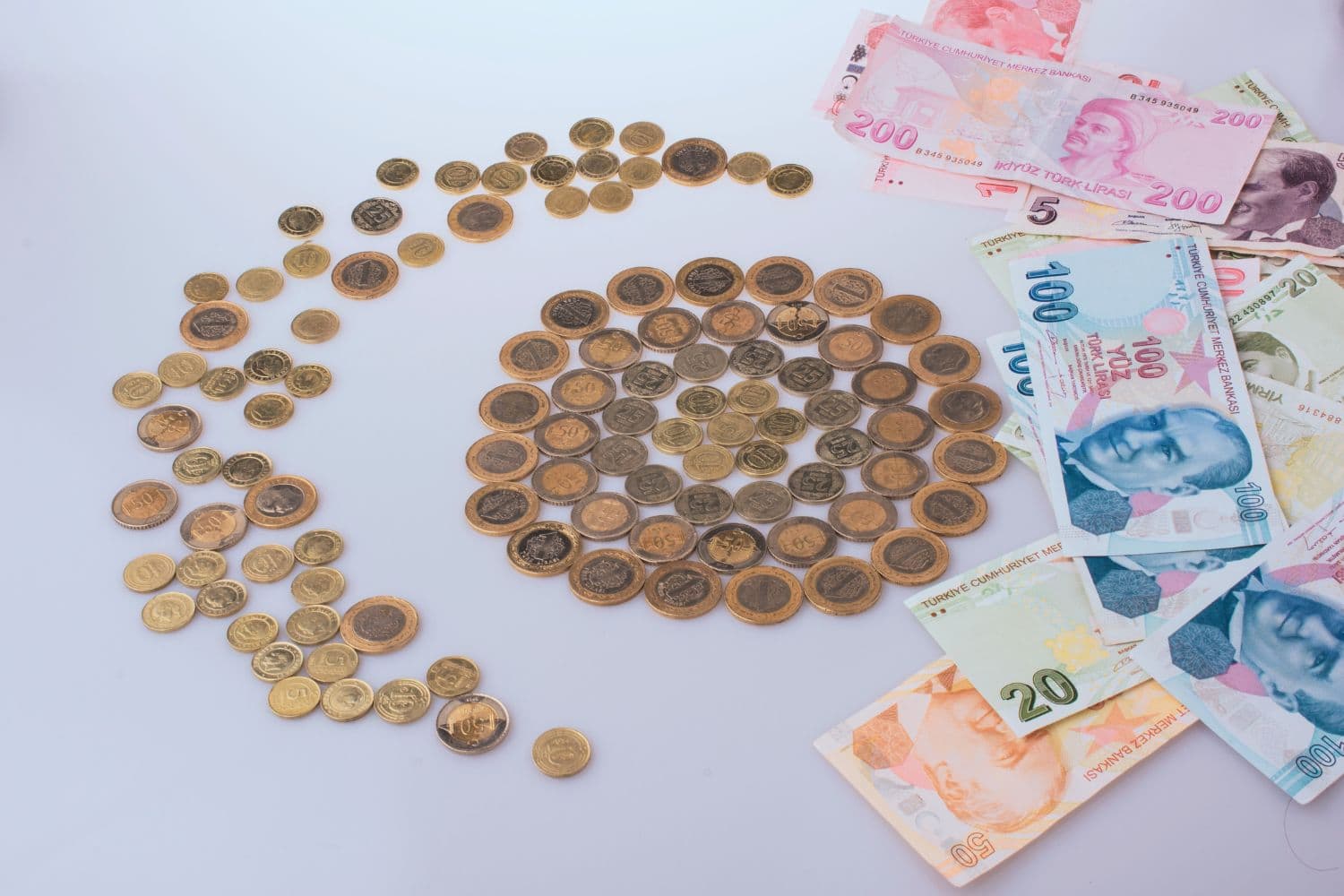
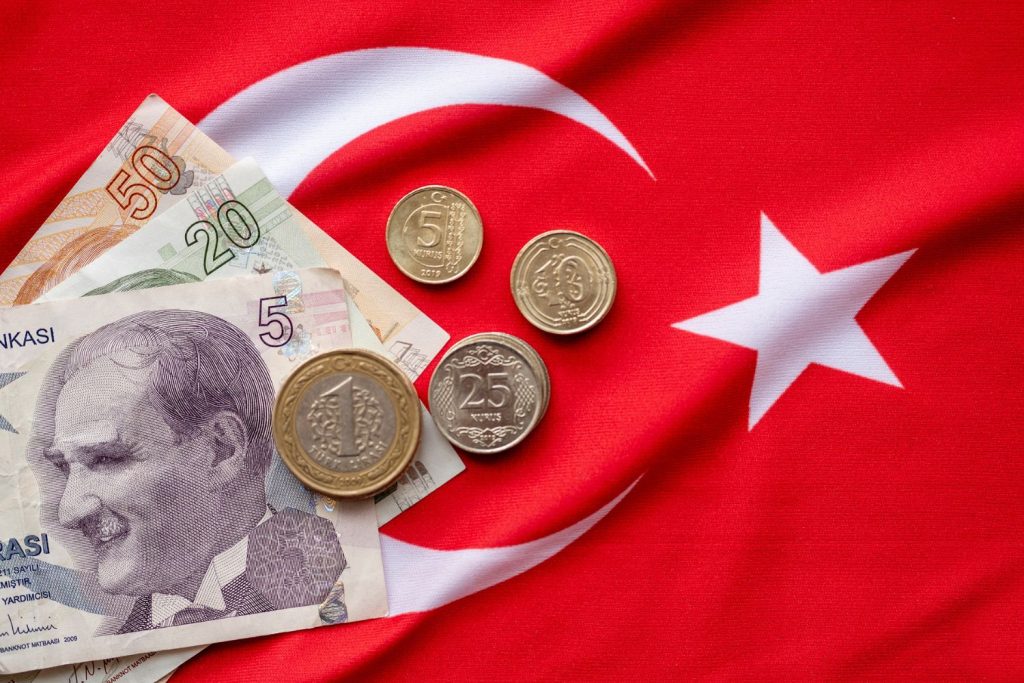
Banknotes are what you will use most often, especially for everyday purchases. The most common bills you will see are 20, 50, 100, and 200 lira. Smaller bills like 5 and 10 lira exist, but you will not see them as often.
Coins are still used, but not nearly as much as you might expect. The 1 lira and 50 kuruş coins are the most useful, while smaller coins are often ignored or not worth carrying around.
One thing I learned quickly is how often smaller denominations are needed for everyday transactions. It is very common for small shops, taxis, or street vendors to not have change for larger notes, especially early in the day.
I have definitely had moments where I tried to pay with a large bill and was told they did not have change, so now I always keep a mix of smaller denominations on me.
It is also worth paying attention to how quickly prices can change. Inflation has been high in recent years, which means prices may be different from what you saw online or even from what someone told you recently.
Exchange Rates (And Why They Change So Often)
One thing that surprises a lot of travelers is how much the Turkish lira can fluctuate.
Unlike some currencies that stay relatively stable, the value of the lira changes frequently due to inflation and economic factors. This means the exchange rate you see today might be different by the time you arrive or even during your trip.
Because of that, I do not recommend trying to memorize the rate. Instead, it is more helpful to have a general sense of what things should cost so you can quickly tell if something seems off.
I usually check a currency converter like XE before making bigger purchases or exchanging money, just to make sure I understand the current rate.
It is also important to always choose to pay in cash when given the option. If you choose your home currency instead, you will almost always get a worse exchange rate due to hidden fees.
How to Get Turkish Lira
There are a few different ways to get lira, but some are much better than others depending on your situation.
1. Withdraw Cash from an ATM (Best Option)
The easiest and most reliable way to get Turkish lira is by withdrawing cash from an ATM once you arrive at the Istanbul airport.
This is what I do, and it saves a lot of hassle compared to trying to exchange money ahead of time or finding the best rates.
Pro Tip: Use ATMs that are attached to a bank rather than standalone machines.
A friend of mine had their card get stuck in an ATM that was not connected to a bank, and it was only retrieved when the machine was serviced and sent back to their home country.
Not ideal in the middle of a trip. If you use an ATM connected to a bank and something goes wrong, you can usually go inside and get help right away.

2. Exchange Cash (Use with Caution)
If you prefer to bring cash and exchange it, you can do so at banks or exchange offices throughout the city.
Just keep in mind that exchange rates can vary, and airport exchange counters almost always offer the worst rates. If you go this route, I recommend exchanging a small amount first rather than all of your money at once.
If you’re in Istanbul, I have found that some exchange offices offer noticeably better rates than others. For example, there is a currency exchange (döviz) in Kadıköy that consistently had some of the best rates when I needed it. The service is not always the friendliest, but the rates made it worth it.
3. Exchange Before You Arrive (Not Recommended)
While it might seem convenient, exchanging money before you arrive in Turkey usually gives you a worse rate. From my experience, it is almost always better to wait until you are in the country.
4. Use Online Tools to Check Rates
Before exchanging or withdrawing money, it helps to check the current exchange rate so you know what to expect. I usually use a tool like XE just to get a general sense of the rate before making larger transactions.
Cash vs Card in Turkey
Both cash and cards are used in Turkey, but knowing when to use each one will make your trip much smoother.
When You Need Cash
You will still rely on cash in many everyday situations, especially for smaller purchases. You will need it for things like taxis, small restaurants, markets, and shops that either do not accept cards or prefer not to.
I have had taxis refuse large bills or say they did not have change, which is another reason I always try to carry smaller denominations.
If you are traveling outside of major tourist areas, you will find yourself using cash even more often.
I always make sure to have some cash on me because there are still plenty of situations where a card will not work or is not preferred.
When Cards Work
Credit and debit cards are widely accepted in larger cities like Istanbul, especially at hotels, restaurants, and bigger stores.
Most places accept Visa and Mastercard, and using a card is often the easiest option for larger purchases.
I tend to use my card for things like restaurants or hotels, and cash for smaller, everyday expenses.
Foreign Card Issues
One thing that can catch travelers off guard is that foreign cards do not always work. I have had transactions where my card worked in one place and was declined shortly after somewhere else, which is why I always carry a backup.
American Express and Discover are rarely accepted, and older machines will decline foreign cards.
You can also use a WISE Card, which offers free ATM withdrawals up to a certain amount each month and low fees after that. It works across multiple currencies, and I’ve found it to be one of the easiest ways to manage money while traveling.
It is also a good idea to let your bank know you are traveling before your trip so your transactions are not flagged.
How to Avoid Exchange Fees
If you are not careful, small fees can add up quickly when using money in Turkey. These are the things I personally do to avoid paying more than I need to.
Always Choose Local Currency
Whenever you pay with a card, you will often be asked if you want to be charged in your home currency or in Turkish lira. Always choose Turkish lira.
If you choose your home currency, the exchange rate is set by the machine or provider, and it is almost always worse than what your bank would give you.
This is one of the easiest ways to avoid hidden fees.
Avoid Airport Exchange Counters
Exchange counters at the airport are convenient, but they usually offer the worst rates. If you need cash right away, it is better to withdraw a small amount from an ATM and wait until you are in the city to exchange more if needed.
Debit vs Credit Cards
For getting cash, a debit card is usually the best option since you can withdraw directly from an ATM. For larger purchases, I prefer using a credit card, especially one with no foreign transaction fees.
Many standard cards charge around 3 percent per transaction abroad, which adds up quickly if you are not paying attention.
Using Wise (Simple and Low Fees)
When I travel or send money internationally, I use Wise because it offers some of the best exchange rates and low fees.
They also offer a debit card that can be used internationally, which makes it easy to spend and withdraw money without worrying about extra charges.
That said, you do not need anything fancy. The most important thing is simply understanding how fees work so you can avoid them.
How Much Cash Should You Bring?
You do not need to carry a large amount of cash in Turkey, but having some on hand at all times is important.
I usually recommend starting with the equivalent of about $100 to $200 in Turkish lira and then withdrawing more as needed.
That is enough to cover things like taxis, smaller restaurants, tips, and situations where cards are not accepted.
Personally, I prefer to withdraw smaller amounts more frequently rather than carrying a large amount of cash at once. It feels safer and gives me more flexibility as exchange rates change.
It is also a good idea to always have a backup plan, whether that is an extra card or access to another account, just in case something goes wrong.
You can get a general idea of daily costs in Turkey by checking sites like Budget Your Trip, but in my experience, prices can vary quite a bit depending on where you are and how you travel.
Practical Tips for Handling Money in Turkey
Carry Small Bills
Smaller bills are much more useful than large ones. Many small shops, taxis, and local vendors will not have change for larger notes, especially early in the day.
I always try to keep a mix of 20, 50, and 100 lira bills to make paying easier.
Where to Store Your Money
I usually split my money between a few different places rather than keeping everything in one wallet.
For example, I might carry some cash in my wallet and keep extra in a separate bag or hidden pocket. That way, if something is lost or stolen, it is not everything at once.
Be Aware of Pickpocketing
Like any large city, pickpocketing can happen in busy areas, especially on public transportation or in crowded tourist spots.
It is not something to be overly worried about, but it is important to stay aware of your surroundings and keep your belongings secure.
Coins Are Less Useful Than You Think
While coins are part of the Turkish lira, they are not used as often as you might expect. You will mostly use banknotes for everyday purchases, so there is no need to carry many coins.
Splitting Costs with Friends
You can also use an app like Splitwise if you are traveling with others. It makes it easy to track shared expenses like meals, taxis, or activities without constantly worrying about who paid last.
I’ve found it especially helpful on group trips so everything stays organized without having to think about it.
Tipping Is Usually Done in Cash
Tipping is becoming more common in Turkey, especially at restaurants, cafes, and for services like taxis or hotel staff and particularly in tourist areas.
Even if you pay by card, tips need to be left in cash since there is no option to add a tip to the receipt.
I always try to keep small bills on hand for this, since it makes tipping quick and easy without needing change.
I have had moments where I only had larger bills and it made tipping awkward, especially in smaller places that could not break the change easily.
FAQs About Turkish Currency
What currency is used in Turkey?
The official currency in Turkey is the Turkish lira (TRY), and it is used throughout the entire country.
Can you use euros or US dollars in Turkey?
In some tourist areas, euros or US dollars may be accepted, but you will almost always get a worse exchange rate. It is best to pay in Turkish lira whenever possible.
Is it better to use cash or card in Turkey?
Both are widely used, but you will need cash for smaller purchases like taxis, markets, and local shops. Cards are commonly accepted at hotels, restaurants, and larger businesses.
Should I exchange money before traveling to Turkey?
No, you will usually get a better exchange rate once you arrive in Turkey, especially by withdrawing from an ATM.
Are ATMs easy to find in Turkey?
Yes, ATMs are widely available in cities and tourist areas, and they are the easiest way to get Turkish lira. I always recommend using an ATM that is attached to a bank rather than a standalone machine, since it is much easier to get help if something goes wrong.
Do I need to tip in cash in Turkey?
Yes, tipping is usually done in cash, even if you pay for a service by card. It is a good idea to keep small bills on hand for this.
Using Turkish Currency with Confidence
Using Turkish currency might feel confusing at first, but once you understand how it works, it becomes second nature.
Between knowing when to use cash, how to avoid unnecessary fees, and where to get the best exchange rates, you can save yourself both time and money throughout your trip.
After living in Turkey for years, I still follow these same simple habits, and they make everyday transactions smooth and stress-free.
If you take one thing away from this guide, it is this. Use ATMs connected to banks, always pay in Turkish lira, and keep some small cash on hand.
Once you get the hang of it, managing money in Turkey becomes one less thing to worry about so you can focus on enjoying your trip.
Planning a trip to Turkey?
- Here are some apps that you should definitely download before your visit
- Learn a few Turkish phrases before you go
- Ever wondered if Turkey is Europe or Asia? Read more…
- Thinking of visiting during Ramadan, find out if it is for you
- This Family Resort is the way to go if you’re looking for an all-inclusive
Turkey Vacation Basics
When I plan a trip these are the websites I use. I hope they help you plan your next adventure as well!
FLIGHTS: I am a huge fan of Skyscanner.
VISAS: You can use the free e-visa portal here but for a few extra dollars you can use iVisa and someone else will handle any issues that may come up.
E-SIM: When I traveled to SE Asia I discovered e-sims and I’m never going back. Airalo has been easy and cheap!
TRAVEL INSURANCE: I use TravelInsurance.com for my trips abroad.
CAR RENTAL: I have loved working with Discover Cars when I rent cars in country.
AIRPORT TRANSFERS: I have used these transfers many times and they are always great. If you’d like more options, I also recommend GetTransfers.com as they allow you to compare companies.
ACCOMMODATION: Find the best Turkey hotel deals on Booking.com.
CITY TOURS & DAY TRIPS: You can browse GetYourGuide’s website to find just the tour you’re looking for! We also recommend the MegaPass for major cities.
