
Is Turkey in Europe? Understand Turkey’s Place Between Europe and Asia
The Art of Living in Turkey contains affiliate links and is a member of the Amazon Services LLC Associates Program. If you make a purchase using one of these Amazon links, I may receive compensation at no extra cost to you. See my Disclaimers for more information.
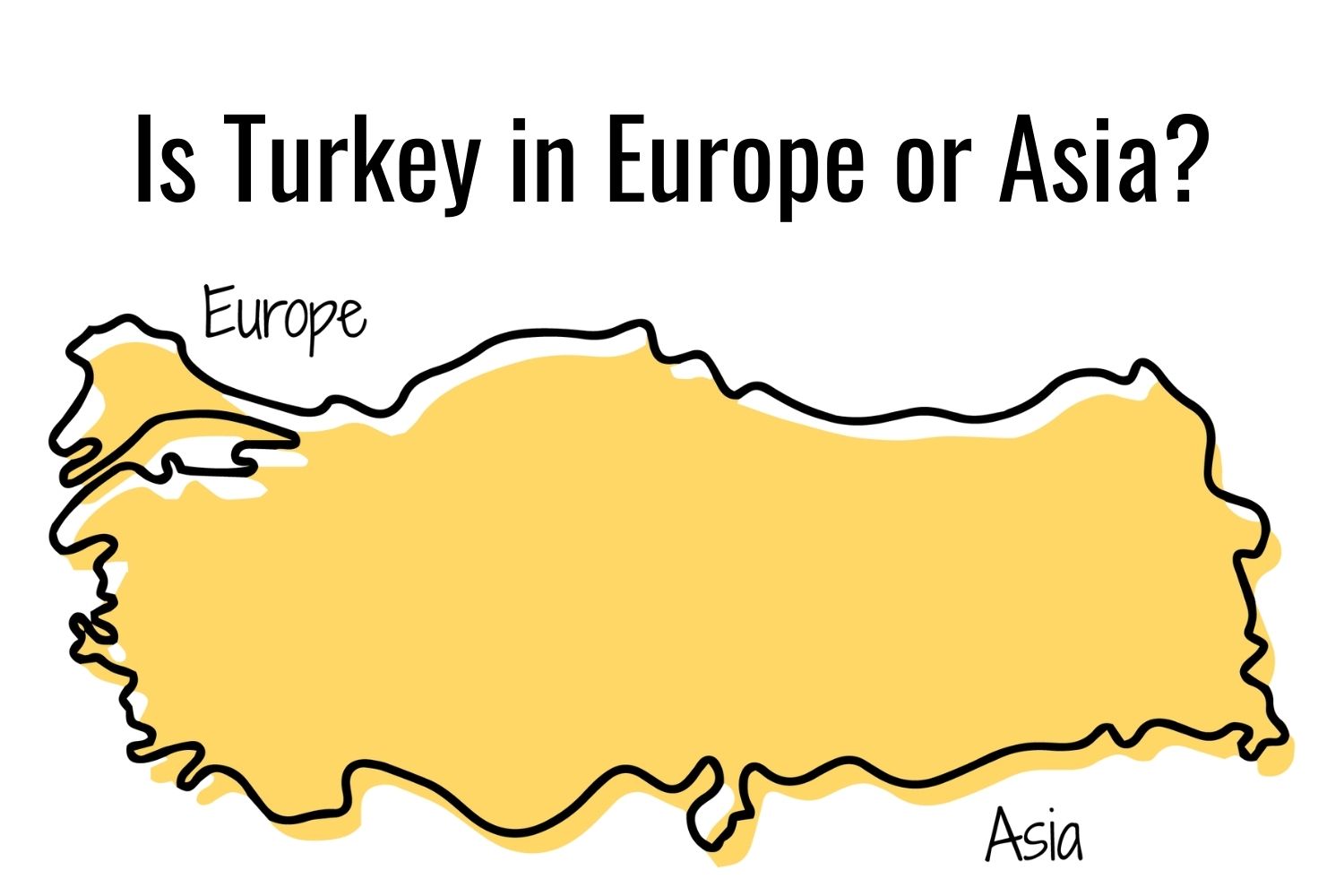
If you’ve ever wondered whether Turkey is in Europe or Asia, the answer is both, actually.
Most of Turkey is geographically located in Asia, while a smaller portion sits in southeastern Europe. But culturally and politically, the answer becomes much more complicated.
After living in Turkey for years, I’ve realized people are often asking something deeper than geography. They want to know whether Turkey feels more European, Middle Eastern, or Asian, and why the country is so often discussed as being “between” worlds.
The reality is that Turkey blends influences from all of them.
In this guide, I’ll break down where Turkey is located geographically, its relationship with Europe, and why the answer isn’t always as straightforward as it first seems.
Is Turkey in Europe or Asia?
Turkey is one of the few countries in the world that is located on two continents.
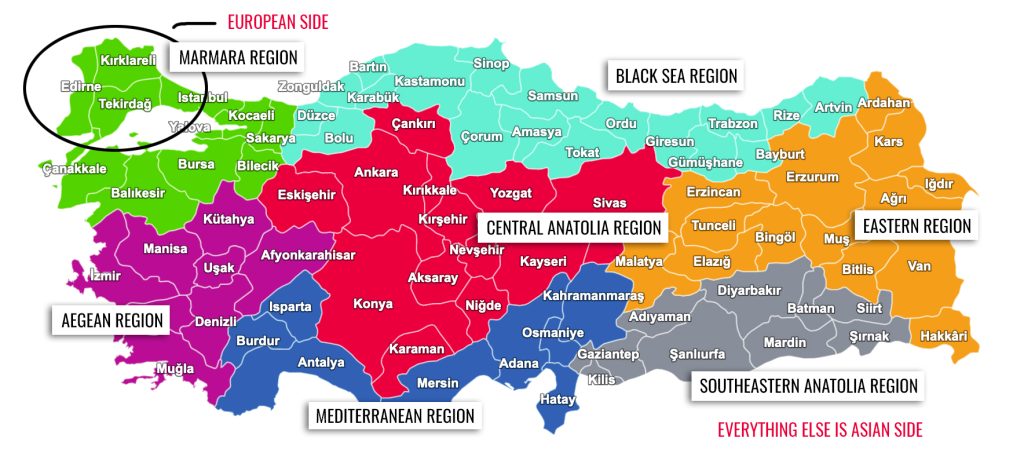
A small portion of the country, known as Eastern Thrace, sits in southeastern Europe. This includes the European side of Istanbul and borders Greece and Bulgaria.
The majority of Turkey, however, is located in Western Asia on the Anatolian peninsula.
The Bosphorus Strait, which runs directly through Istanbul, separates the European and Asian sides of the country. In fact, Istanbul is the only major city in the world located on two continents.
Geographically speaking, Turkey is mostly Asian. But politically, historically, and culturally, the country has long maintained strong ties with Europe as well.
That’s part of why the question becomes much more complicated than simply looking at a map.
Why Is Turkey Considered Both European and Asian?
Turkey’s location has shaped its identity for thousands of years.
Because the country sits between Europe and Asia, it has historically served as a bridge for trade, religion, migration, and empires moving between continents. Greeks, Romans, Byzantines, Ottomans, Persians, and many others all left cultural influences behind.
You can still feel that mix today, depending on where you are in the country.
In Istanbul, for example, you’ll see European-style cafés, Ottoman mosques, modern shopping districts, ancient churches, and bustling street markets all within the same city. In other regions of Turkey, the culture may feel more Mediterranean, Middle Eastern, Central Asian, or distinctly Anatolian.
That blend is part of what makes Turkey feel so unique compared to many other countries.
Politically, Turkey has also spent much of the last century building relationships with European institutions while still maintaining strong ties to neighboring regions in the Middle East, the Caucasus, and Central Asia.
Because of this, Turkey is often described as a transcontinental country both geographically and culturally.
Is Turkey Part of the European Union?
No, Turkey is not currently a member of the European Union.
Turkey officially applied to join the EU decades ago, and negotiations formally began in 2005. For many years, joining the European Union was considered one of Turkey’s major political goals.
However, the process has largely stalled in recent years.
While some areas of cooperation between Turkey and Europe still exist, including trade agreements and NATO membership, Turkey’s EU accession talks have remained mostly frozen since 2018 due to political disagreements and concerns over democracy and human rights.
Even so, Turkey continues to maintain strong economic, political, and cultural ties with Europe.
This is one reason the country is often viewed as existing somewhere between Europe, Asia, and the Middle East rather than fitting neatly into a single category.
Does Turkey Feel More European or Middle Eastern?
After being in Turkey for years, I’ve realized the answer really depends on where you are and what you compare it to.
In some parts of Istanbul, the city can feel incredibly European, especially the European side of Istanbul. You’ll find historic tram lines, sidewalk cafés, wine bars, art galleries, and neighborhoods that remind many visitors of cities in Southern Europe.
At the same time, other parts of Turkey feel much more connected to the Middle East or Central Asia through food, religion, architecture, hospitality, and daily traditions.
Personally, Turkey has never felt fully European or fully Middle Eastern to me. It feels like its own blend of influences shaped by centuries of migration, trade, empire, and cultural exchange.
When I was younger, I always dreamed of living somewhere in Asia, which was part of what originally drew me to Istanbul. Because of that, I only ever lived on the Asian side of the city.
Even though neighborhoods like Kadıköy still have some European influences, the Asian side of Istanbul always felt calmer, more residential, and less overtly European to me compared to areas across the Bosphorus.
That’s also part of why people debate Turkey’s identity so often.
The country doesn’t fit neatly into a single category, and depending on your background or travel experience, your perception of Turkey may look completely different from someone else’s.
Interesting Facts About Turkey’s Geography and Identity
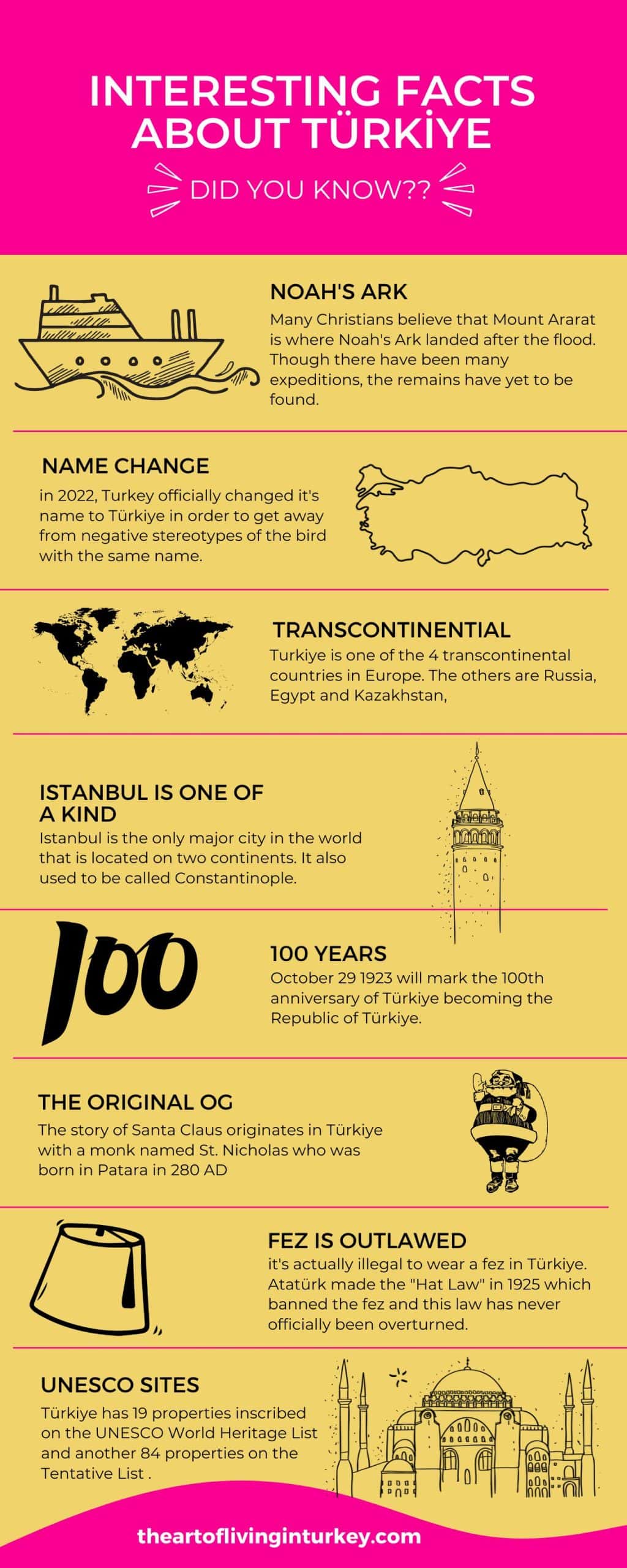
Turkey is considered one of the world’s transcontinental countries because it spans both Europe and Asia. The others include countries like Russia and Kazakhstan.
Istanbul is also one of the only major cities in the world located on two continents. You can quite literally take a ferry from Europe to Asia in under an hour.
Another thing many people don’t realize is that modern Turkey is still a relatively young republic. The Republic of Turkey was officially established in 1923 after the fall of the Ottoman Empire under the leadership of Mustafa Kemal Atatürk.
In 2022, Turkey also officially began promoting the international use of the name Türkiye rather than Turkey. Part of the reason was to better reflect the country’s Turkish pronunciation and cultural identity internationally.
Because of its location between continents, Turkey has developed influences from Europe, the Middle East, Central Asia, and the Mediterranean over thousands of years.
You can see that influence reflected everywhere, from the food and architecture to the languages, religions, and historical sites found throughout the country.
Turkey also has 19 UNESCO World Heritage sites and dozens more on the tentative list, highlighting just how historically and culturally layered the country really is.
FAQs about Turkey, Europe, and Asia
Is Turkey in Europe or Asia?
Turkey is located in both Europe and Asia. Most of the country sits in Western Asia on the Anatolian peninsula, while a smaller portion known as Eastern Thrace lies in southeastern Europe. Istanbul itself is spread across both continents.
Is Turkey part of the European Union?
No, Turkey is not currently a member of the European Union. Although Turkey officially applied for EU membership and began accession talks in 2005, negotiations have largely stalled in recent years.
Does Turkey feel more European or Middle Eastern?
It really depends on where you are in the country. Some parts of Istanbul feel very European, while other regions feel more influenced by the Middle East, Central Asia, or traditional Anatolian culture. After living in Turkey for years, I’d say the country feels like a blend of several different regions rather than fitting neatly into one category.
Why is Turkey considered transcontinental?
Turkey is considered transcontinental because it spans two continents. The Bosphorus Strait divides the European and Asian sides of the country, making Turkey geographically connected to both Europe and Asia.
Is Istanbul in Europe or Asia?
Istanbul is located on both continents. The western side of the city is in Europe, while the eastern side is in Asia. Ferries, bridges, and tunnels connect the two sides of the city across the Bosphorus.
Is Turkey European, Asian, or Both?
So, is Turkey in Europe?
The answer is technically yes and no at the same time.
Geographically, most of Turkey is located in Asia, while a smaller section sits in southeastern Europe.
But culturally and politically, the country has spent centuries influenced by Europe, the Middle East, Central Asia, and the Mediterranean all at once.
After living in Turkey for years, I’ve found that the country rarely fits neatly into the categories people try to place it in.
Some places feel distinctly European, others feel much more Middle Eastern or Asian, and many feel uniquely Turkish in a way that’s difficult to compare anywhere else.
That mix of cultures, histories, religions, and traditions is part of what makes Turkey such a fascinating place to visit and experience.
Turkey Vacation Basics
When I plan a trip these are the websites I use. I hope they help you plan your next adventure as well!
FLIGHTS: I am a huge fan of Skyscanner.
VISAS: You can use the free e-visa portal here but for a few extra dollars you can use iVisa and someone else will handle any issues that may come up.
E-SIM: When I traveled to SE Asia I discovered e-sims and I’m never going back. Airalo has been easy and cheap!
TRAVEL INSURANCE: I use TravelInsurance.com for my trips abroad.
CAR RENTAL: I have loved working with Discover Cars when I rent cars in country.
AIRPORT TRANSFERS: I have used these transfers many times and they are always great. If you’d like more options, I also recommend GetTransfers.com as they allow you to compare companies.
ACCOMMODATION: Find the best Turkey hotel deals on Booking.com.
CITY TOURS & DAY TRIPS: You can browse GetYourGuide’s website to find just the tour you’re looking for! We also recommend the MegaPass for major cities.
Turkey Vacation Basics
When I plan a trip these are the websites I use. I hope they help you plan your next adventure as well!
FLIGHTS: I am a huge fan of Skyscanner.
VISAS: You can use the free e-visa portal here but for a few extra dollars you can use iVisa and someone else will handle any issues that may come up.
E-SIM: When I traveled to SE Asia I discovered e-sims and I’m never going back. Airalo has been easy and cheap!
TRAVEL INSURANCE: I use TravelInsurance.com for my trips abroad.
CAR RENTAL: I have loved working with Discover Cars when I rent cars in country.
AIRPORT TRANSFERS: I have used these transfers many times and they are always great. If you’d like more options, I also recommend GetTransfers.com as they allow you to compare companies.
ACCOMMODATION: Find the best Turkey hotel deals on Booking.com.
CITY TOURS & DAY TRIPS: You can browse GetYourGuide’s website to find just the tour you’re looking for! We also recommend the MegaPass for major cities.
