
40+ Essential Turkish Phrases for Tourists (With Pronunciation)
The Art of Living in Turkey contains affiliate links and is a member of the Amazon Services LLC Associates Program. If you make a purchase using one of these Amazon links, I may receive compensation at no extra cost to you. See my Disclaimers for more information.
If you’re planning a trip to Turkey, learning a few basic Turkish phrases will make your experience so much smoother.
While English is spoken in some areas, it’s not something you can rely on, especially outside of major tourist hotspots. Even knowing just a handful of phrases can help you order food, ask for directions, and connect with locals in a way most tourists don’t.
When I first moved to Turkey, I didn’t know a single word. I remember trying to order food and completely freezing because I didn’t know how to ask for anything. It made everyday situations way harder than they needed to be.
But once I learned a few key phrases, everything changed. People were more open, more helpful, and honestly just excited that I was trying.
In this guide, I’ll walk you through the essential Turkish phrases for tourists, organized by real travel situations—so you know exactly what to say and when to use it.
You don’t need to learn Turkish before visiting Turkey, but knowing a few basic phrases will make your trip much easier.
While English is spoken in some tourist areas, it’s not something you can rely on everywhere. Even simple phrases like “hello” or “thank you” can go a long way in helping you navigate daily situations and connect with locals.
In my experience, making even a small effort completely changes how people respond to you. Turks are incredibly welcoming, and they genuinely appreciate when visitors try to speak the language—even if it’s not perfect.
Basic Turkish Phrases for Tourists (Start Here)
If you only learn a few Turkish phrases before your trip, make it these. These are the ones you will use every single day, whether you are greeting someone, ordering food, or just being polite.
Essential Turkish Phrases
| Turkish | Pronunciation | Meaning | Notes |
|---|---|---|---|
| Merhaba | mear-ha-ba | Hello | General greeting |
| Günaydın | gew-ni-din | Good morning | Used in the morning |
| İyi günler | ee-yee goon-ler | Good day | Use during the day |
| İyi akşamlar | ee-yee ak-sham-lar | Good evening | Evening greeting |
| Hoş geldiniz | hosh gel-deen-iz | Welcome | Said to guests entering |
| Hoş bulduk | hosh bool-dook | Glad to be here | Response to “Hoş geldiniz” |
| Görüşürüz | goo-rew-shew-rewz | Goodbye | Informal “see you later” |
| Hoşça kal | hosh-cha kal | Stay well | Said to the person staying |
| Güle güle | gew-leh gew-leh | Go smilingly | Response to “Hoşça kal” |
| Kolay gelsin | ko-lie gel-sin | May your work come easy | Very commonly used |
| Nasılsınız? | na-suhl-suh-nuhz | How are you? | Formal or polite |
When to Use These Phrases
You do not need to memorize everything. Focus on a few key phrases and use them often.
Merhaba (hello)
Use this anytime you enter a shop, restaurant, or start a conversation. Not saying hello can feel a bit abrupt in Turkey.
Teşekkür ederim (thank you)
You will use this constantly. Turks are very hospitable, and a simple thank you goes a long way.
Lütfen (please)
It is not used as frequently as in English, but it is still appreciated and polite.
Nasılsınız? (how are you?)
A great way to be friendly, even if you do not fully understand the response.
My Go-To Phrase: Kolay Gelsin
This is one of the most useful phrases you can learn.
“Kolay gelsin” is a polite way to acknowledge someone working. I use it all the time when entering a shop, when leaving, and when talking to someone busy.
It is one of those phrases that instantly makes you sound more natural, and locals really appreciate it.
Quick Tip
If you feel nervous speaking Turkish, do not overthink it. Even saying one or two words is enough to get a positive reaction.
When I first started, I kept it very simple. That is what helped me improve the fastest.
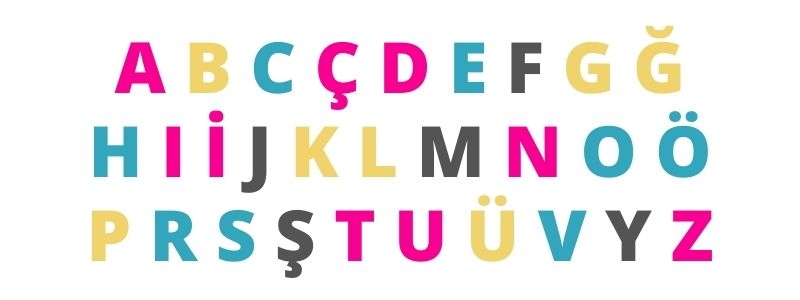
How to Pronounce Turkish Words (Quick Alphabet Guide)
One of the best things about Turkish is that it’s a phonetic language, which means words are pronounced exactly as they’re written.
Once you understand how the letters sound, you can confidently read and say almost anything, even if you’ve never seen the word before.
When I first moved to Turkey, I would practice reading every sign I saw on the street. It felt awkward at first, but it helped me pick up pronunciation much faster than I expected.
Here are a few key things to know:
- Turkish uses the Latin alphabet, but it does not include q, w, or x
- Some letters are different:
- ç = “ch” (like chair)
- ş = “sh” (like shoe)
- c = “j” (like jam)
- j = “zh” (like measure)
- The letter ğ is silent and stretches the vowel before it
- Example: dağ sounds like “daa”
Why this matters
If you can read the letters, you can pronounce almost any Turkish word you see, whether it’s on a menu, a sign, or a receipt.
| Upper | Lower | Pronounced As | Turkish Word (Meaning) |
|---|---|---|---|
| A | a | a in “flood” | araba (car) |
| B | b | Same as English | balık (fish) |
| C | c | j in “jam” | ceket (jacket) |
| Ç | ç | ch in “chair” | çiçek (flower) |
| D | d | Same as English | dede (grandpa) |
| E | e | e in “head” | elma (apple) |
| F | f | Same as English | fil (elephant) |
| G | g | g in “game” | göz (eye) |
| Ğ | ğ | Silent, elongates | dağ (mountain) |
| H | h | Never silent | harita (map) |
| I | ı | i in “igloo” | ışık (light) |
| İ | i | ee in “breeze” | inek (cow) |
| J | j | zh in “pleasure” | jaguar (jaguar) |
| K | k | Same as English | keb |
Turkish Phrases for Restaurants and Cafes
Eating out is one of the best parts of visiting Turkey, but it can feel intimidating if you do not know what to say.
The first time I tried ordering in Turkish, I completely froze and ended up just pointing at the menu. It worked, but it was not exactly smooth.
Once I learned a few simple phrases, everything became easier and honestly more enjoyable.
Useful Turkish Phrases for Restaurants
| Turkish | Pronunciation | Meaning |
|---|---|---|
| Menü alabilir miyim? | me-nu a-la-bi-leer mi-yim | Can I have the menu? |
| Su alabilir miyim? | soo a-la-bi-leer mi-yim | Can I have water? |
| Bir kahve alabilir miyim? | beer kah-ve a-la-bi-leer mi-yim | Can I have a coffee? |
| Sipariş verebilir miyim? | si-pa-reesh ve-re-bi-leer mi-yim | Can I order? |
| Bu nedir? | boo ne-deer | What is this? |
| Bu ne demek? | boo ne de-mek | What does this mean? |
| Tavsiye eder misiniz? | tav-see-ye e-der mi-si-niz | Do you recommend anything? |
| Vejetaryenim | ve-je-tar-yen-eem | I am vegetarian |
| Alerjim var | a-ler-jeem var | I have an allergy |
| Hesap alabilir miyim? | he-sap a-la-bi-leer mi-yim | Can I get the bill? |
| Kart geçerli mi? | kart ge-cher-li mi | Do you take card? |
| Nakit ödeyebilir miyim? | na-kit o-de-ye-bi-leer mi-yim | Can I pay cash? |
When to Use These Phrases
You will use these phrases constantly when eating out, whether you are at a small local cafe or a busy restaurant.
I had a friend who was really confident ordering food in Turkish but struggled with everyday conversation. She would always point out how different it sounded when I used common phrases and expressions outside of restaurants.
It made me realize that learning just a few restaurant phrases can go a long way, but adding a couple of everyday expressions makes your interactions feel much more natural.
Menü alabilir miyim? (Can I have the menu?)
Use this when you first sit down if a menu is not already provided.
Su alabilir miyim? (Can I have water?)
Helpful right away. You may be asked if you want still or sparkling.
Sipariş verebilir miyim? (Can I order?)
Use this when you are ready to order if the waiter has not come over yet.
Bu nedir? (What is this?)
Perfect for when you are looking at something unfamiliar on the menu.
Hesap alabilir miyim? (Can I get the bill?)
You will use this every day. In Turkey, the bill is not usually brought automatically.
What to Expect
In Turkey, meals are meant to be relaxed. Waiters will not rush you, which is great, but it also means you usually need to ask for the bill when you are ready to leave.
This confused me at first because I kept waiting for the check and it never came. Once you know to ask, it makes the whole experience much smoother.
Pro Tip
If you only memorize one phrase from this section, make it:
Hesap alabilir miyim?
You will use it at every restaurant, cafe, and bar.
If you forget it, you can simply raise your hand and mimic signing a bill. The staff will understand immediately.
Turkish Basics for Being Polite
Being polite in Turkey goes a long way. Even though phrases like “please” and “thank you” are not used in exactly the same way as in English, they are still appreciated and will make your interactions smoother.
When I first arrived in Turkey, I was told I said “please” and “thank you” a bit too much. Honestly, I did not mind. It may make you stand out as a foreigner, but it also shows respect, and that is always well received.
Even using just one or two of these phrases can completely change how people respond to you in Turkey.
Useful Turkish Phrases for Being Polite
| Phrase | Pronunciation | Meaning |
|---|---|---|
| Teşekkür ederim | tesh-ek-kewr e-der-eem | Thank you (formal) |
| Teşekkürler | tesh-ek-kewr-ler | Thanks |
| Sağ ol | sa-ol | Informal thank you |
| Lütfen | lewt-fen | Please |
| Afiyet olsun | a-fee-yet ol-soon | Bon appétit |
| Ellerine sağlık | el-ler-eenā sa-lick | Health to your hands (to the cook) |
| Geçmiş olsun | gech-mish ol-soon | May it pass quickly (well wishes) |
| Kusura bakma | koo-soo-ra bak-ma | Excuse me / Forgive me (informal) |
| Özür dilerim | o-zewr dee-ler-eem | I’m truly sorry |
A Closer Look at “Geçmiş Olsun”
“Geçmiş olsun” is one of the most useful and meaningful phrases you can learn.
It is used when someone is dealing with something unpleasant or difficult. For example:
- If someone is sick
- If someone spills something
- If something minor goes wrong
It is not exactly the same as saying “I’m sorry.” It is more like saying, “I hope this passes quickly.”
You can also combine it like so:
“Çok üzgünüm. Geçmiş olsun.”
“I’m so sorry (for you, not for something I did). I hope it passes quickly.”
A Simple Turkish Conversation Example
If you want to go one step further, here is a simple conversation you might have when meeting someone:
| Turkish | English |
|---|---|
| Merhaba. Benim adım Kimberly. Sizin adınız ne? | Hello. My name is Kimberly. What is yours? |
| Merhaba. Benim adım Ayşe. Memnun oldum. | Hello. My name is Ayşe. Nice to meet you. |
| Ben de memnun oldum. Nasılsınız? | Nice to meet you too. How are you? |
| Teşekkürler. İyiyim. Ya siz? | Thank you. I’m well. And you? |
You do not need to memorize this, but even learning one or two lines can help you feel more confident when interacting with locals.
Your Pocket-Friendly Resource
If you prefer having a physical reference while traveling, a Turkish phrasebook can be helpful.


It includes things like:
- Common phrases
- Pronunciation guides
- Quick tips for day-to-day interactions
This can be a helpful backup, especially if you like having something offline while exploring. Let it guide you as you navigate conversations, order food, and interact with locals.
Happy travels, or as they say in Turkish, iyi yolculuklar!
Turkish Phrases for Getting Help
Sometimes you need a little help while navigating a new place, whether that’s asking for directions, understanding a price, or finding the nearest bathroom.
These phrases will make it much easier to ask for assistance and handle unexpected situations. Especially when I first moved to Turkey, I always kept a few key phrases saved on my phone, especially for unexpected situations.
Useful Turkish Phrases for Getting Help
| Turkish | Pronunciation | Meaning |
|---|---|---|
| Bakar mısınız? | ba-kar mi-si-niz | Excuse me (to get attention) |
| Affedersiniz | af-der-see-neez | Sorry / excuse me |
| Bana yardım eder misiniz? | ba-na yar-dum e-der mi-si-niz | Can you help me? |
| İmdat! | eem-dat | Help! (emergency) |
| Polis nerede? | po-lees ne-re-de | Where are the police? |
| Alerjim var | a-ler-jeem var | I have an allergy |
| Tuvalet nerede? | too-va-let ne-re-de | Where is the bathroom? |
| Ne kadar? | ne ka-dar | How much is it? |
| Anlamadım | an-la-ma-dum | I don’t understand |
| İngilizce biliyor musunuz? | een-gee-leez-je bee-lee-yor moo-soo-nooz | Do you speak English? |
| Kayboldum | kai-bol-doom | I am lost |
When to Use These Phrases
I also found myself using “Ne kadar?” all the time while shopping and “Anlamadım” more often than I expected when conversations got a bit too fast. Here are a few other opportunities to use them.
Bakar mısınız?
Use this to get someone’s attention, like a waiter or shopkeeper.
PRO TIP: Make sure you say “Bakar mısınız?” and not “Bekar mısınız?” One means “excuse me,” the other means “are you single?” which can lead to some confusion.
Affedersiniz
Use this if you bump into someone or need to politely interrupt.
İmdat!
This is used in emergencies when you need immediate help.
Polis nerede?
Helpful if you need to find police assistance.
Quick Tip
Keep a few of these phrases saved on your phone so you can access them quickly if needed. Having them ready can make stressful situations feel much more manageable.
Language Apps for Your Phone
While learning a few Turkish phrases is helpful, having a translation app on your phone makes things much easier when you are traveling.
I have an entire post on the best apps for travelers but here are a few apps I have personally used and recommend:

Reverso
Reverso is great because it gives you multiple options for a phrase instead of just one translation.
This is especially helpful in Turkish, where words can have different meanings depending on context.
It helps you better understand what someone is actually trying to say.
Google Translate
Google Translate is not perfect, but it is very useful and easy to use.
The best feature is the camera function. You can point your phone at a menu, sign, or label and see a live translation instantly.
I use this all the time in stores.

Tureng
Tureng is similar to Reverso but focuses more on giving you a variety of meanings for a word.
This is helpful when Google Translate gives you one option that does not quite fit. Tureng lets you explore different meanings so you can find the right one.
Bonus Tip: No translation app is perfect, so try to use them as a guide rather than relying on them completely. Even knowing a few basic phrases from this guide will make a big difference.
One last tip for travelers
One final tip that I still find incredibly useful is installing a translation extension on your browser.
If you use Google Chrome, the Google Translate extension works seamlessly. If you are using Firefox, there are built-in options or add-ons that work just as well.
This is especially helpful because many Turkish websites offer an English version, but the translations are often very basic. You can easily miss important details that are only available in Turkish.
While it cannot translate text within images, it makes things like shopping online or ordering food through Yemeksepeti much easier to understand.
Give it a try. It will save you time and help you avoid unnecessary confusion.
FAQs About Turkish for Tourists
Should I learn Turkish before going to Turkey?
You do not need to learn Turkish fluently, but knowing a few basic phrases will make your trip much easier. It is also much easier to pick up the language once you are surrounded by it.
Do you speak English in Turkey?
Some people do, especially in tourist areas or among younger generations. However, outside of those areas, English is not widely spoken, so it is helpful to know a few key phrases.
How do you say hello in the Turkish Language?
Common ways to say hello include “Merhaba,” “Selam,” and “Ne haber,” which is more like saying “what’s up.”
Can you go to Turkey without knowing Turkish?
Yes, you can. Translation apps like Google Translate can help a lot. When my mom visited, she used it to communicate while exploring on her own. It is not perfect, but it works. That said, knowing a few phrases will make your experience much smoother and more enjoyable.
Turkish Phrases That Will Make Your Trip Easier
Learning a few Turkish phrases before your trip might seem like a small thing, but it can completely change your experience.
From ordering food to asking for help, even the simplest phrases make everyday situations easier and interactions more meaningful. In my experience, it is one of the fastest ways to connect with locals and see a more authentic side of Turkey.
You do not need to be fluent. Just start with a few key phrases from this guide and build from there.
If you want to go a step further, I personally studied with Turkish Now and reached a B1 level. It made a huge difference in my daily life here, and I always recommend them to anyone who wants a more immersive experience.
Before your trip, try practicing a few phrases out loud. By the time you arrive, you will feel much more confident using them in real situations.
Have you started learning any Turkish yet? I would love to hear how it is going or if you have any favorite phrases.
Planning a trip to Turkey? Check these out!
- Make sure you check out my favorite gift for those back home
- Visit this epic all-inclusive in Antalya to practice your newly learned Turkish
- There are 8 countries that border Turkey – Read more
- When you come for a visit make sure you pack your carry-on correctly
Turkey Vacation Basics
When I plan a trip these are the websites I use. I hope they help you plan your next adventure as well!
FLIGHTS: I am a huge fan of Skyscanner.
VISAS: You can use the free e-visa portal here but for a few extra dollars you can use iVisa and someone else will handle any issues that may come up.
E-SIM: When I traveled to SE Asia I discovered e-sims and I’m never going back. Airalo has been easy and cheap!
TRAVEL INSURANCE: I use TravelInsurance.com for my trips abroad.
CAR RENTAL: I have loved working with Discover Cars when I rent cars in country.
AIRPORT TRANSFERS: I have used these transfers many times and they are always great. If you’d like more options, I also recommend GetTransfers.com as they allow you to compare companies.
ACCOMMODATION: Find the best Turkey hotel deals on Booking.com.
CITY TOURS & DAY TRIPS: You can browse GetYourGuide’s website to find just the tour you’re looking for! We also recommend the MegaPass for major cities.
