
Driving in Turkey: What I Wish I Knew Before Renting a Car

The Art of Living in Turkey contains affiliate links and is a member of the Amazon Services LLC Associates Program. If you make a purchase using one of these Amazon links, I may receive compensation at no extra cost to you. See my Disclaimers for more information.
If you are planning on driving in Turkey, there are a few things you should know before getting behind the wheel.
As someone who lives in Turkey and has rented cars here multiple times, I can confidently say driving here can feel chaotic at first, especially in cities like Istanbul. Traffic rules often feel flexible, parking can be stressful, and local driving styles may be very different from what you are used to.
That being said, road-tripping through Turkey can also be incredibly rewarding once you understand what to expect. Honestly, it is my favorite way to explore western and southern Turkey.
These are the most important things I wish someone had told me before I started driving in Turkey as a foreigner.
Driving in Turkey at a Glance
| Question | Quick answer |
|---|---|
| Should you rent a car? | Yes for road trips and exploring outside major cities; no for most Istanbul trips |
| Is driving in Turkey safe? | Generally yes, but expect more aggressive and unpredictable driving |
| Which side of the road? | Right |
| Do you need an IDP? | Check the requirements for your nationality and rental company |
| Are there toll roads? | Yes, especially on major highways |
| Is parking difficult? | It can be, especially in Istanbul |
| Best rental car tip? | Photograph the car and understand tolls and insurance before leaving |
Should You Rent a Car in Turkey?
Whether or not you should rent a car in Turkey really depends on the kind of trip you are planning.
If you are only staying in Istanbul, I honestly do not recommend renting a car. Public transportation is extensive, taxis are readily available, and traffic can easily turn a short drive into a stressful ordeal. Parking in Istanbul can also be difficult and expensive, depending on where you stay.
That being said, I personally think renting a car is one of the best ways to explore western and southern Turkey.
Some of my favorite experiences here have come from road trips along the coast, stopping in small towns, exploring ancient ruins, and pulling over at random roadside restaurants.
While buses and domestic flights can get you to most major destinations, having a car gives you much more flexibility and allows you to experience parts of Turkey many tourists never end up seeing.
Is Driving in Turkey Safe?
Generally speaking, yes, driving in Turkey is safe, but it can definitely feel more aggressive and unpredictable than driving in places like the United States or Northern Europe.
The biggest adjustment for many visitors is how flexible the driving culture can sometimes feel. People weave between lanes, taxis tend to force their way through traffic, and speed limits are not always clearly marked. Especially in Istanbul, driving can honestly feel chaotic if you are not used to it.
That being said, I personally find driving outside of the major cities much more enjoyable. Some of my favorite drives in Turkey have been along the turquoise coast, through tiny mountain villages, and around the Black Sea region, where the scenery is absolutely stunning.
The key is to drive defensively, stay patient, and expect the unexpected. Once you adjust to the rhythm of driving here, it becomes much less intimidating and can actually be a really rewarding way to experience the country.
9 Driving Tips for Turkey
Driving in Istanbul can honestly feel a bit like driving in New York or Los Angeles during rush hour. Traffic moves aggressively, horns are constant, and sometimes it genuinely feels like you could walk faster than you can drive.
Personally, I avoid driving in Istanbul whenever possible because the stress usually is not worth it, especially for first-time visitors.
That being said, driving outside of the major cities can be a completely different experience. Some of my favorite memories in Turkey have come from road trips through small towns, coastal highways, and mountain roads.
Once you understand a few local driving quirks and know what to expect, road-tripping through Turkey becomes much less intimidating and far more enjoyable.
These are the most important things I think visitors should know before driving in Turkey.
1. Traffic Lights Work Differently
One thing that immediately confused me when I first started driving in Turkey was the traffic lights.
Unlike in the United States, where lights are often suspended above the road, many Turkish traffic lights are positioned on poles off to the side. If you pull too far forward at an intersection, it can suddenly become very difficult to see the light change.
I made this mistake more times than I would like to admit, and thankfully, I usually had someone else in the car helping me spot the lights.
Another thing that caught me off guard is that many lights switch from red to yellow before turning green, which basically acts as a warning that traffic is about to start moving.
And once the light turns green, people expect you to go immediately. If you hesitate even for a second, there is a very good chance someone behind you will honk. Try not to let it stress you out, though. After a little while, you get used to the rhythm of it.
2. Watch the Speed Limits Carefully
One of the hardest adjustments for me when driving in Turkey was figuring out the speed limits.
Sometimes the signage can feel inconsistent, especially outside major cities. You might see a sign for 110 km/h and then suddenly find yourself entering a 70 km/h speed zone with very little warning.
This is honestly where having good navigation becomes incredibly important. One app that really helped me was RadarBot, which alerts you when you are approaching speed cameras or common speed trap areas.
You can sometimes follow the flow of local drivers, but if you are alone on the road or driving somewhere unfamiliar, having an extra warning system can definitely save you stress.
These are the general speed limits in Turkey, though always pay attention to posted signs since limits can change quickly:
- Towns & Cities — 50 km/h (31 mph)
- Open Roads — 90 km/h (55 mph)
- Divided Roads — 110 km/h (68 mph)
- Highways — 120 km/h (74 mph)
One thing I quickly learned is that driving times in Turkey can often take longer than Google Maps estimates, especially near larger cities or in mountainous regions, so there is really no reason to rush.
3. Expect Driving Rules to Feel Flexible
One thing that can feel surprising when driving in Turkey is that the rules of the road sometimes seem a bit more flexible than they do in places like the United States.
Certain intersections have large circular traffic patterns that look like roundabouts but do not always function like the roundabouts many foreigners are used to.
Depending on the traffic flow and lights, you may need to stop in the middle of the intersection and wait for the next signal before continuing your turn.
Taxis are another thing to be aware of. Even when they technically do not have the right of way, many drivers will confidently squeeze into traffic anyway, so it is best to stay alert and drive defensively.
You will also notice that lane discipline can sometimes feel more like a suggestion than a strict rule, especially in larger cities.
Honestly, the best mindset is to expect driving in Turkey to feel different from home and to give yourself extra time to get places.
Once you stop expecting everything to work exactly the same way, the experience becomes much less stressful.
4. Download Google Maps Offline
Google Maps has honestly been one of my best friends while road-tripping around Turkey, especially when navigating Istanbul.
I highly recommend downloading offline maps before longer drives, especially if you plan to visit more remote areas where service can become unreliable. You can do this directly in the Google Maps app by going to your account, selecting “Offline Maps,” and downloading the region you need ahead of time.
One feature I especially appreciate is that even when I lose service or accidentally end up in airplane mode, I can still usually open the map itself and see where I am. You may not always be able to generate new directions without the internet, but it is often enough to help you get your bearings and continue your drive.
Honestly, having offline maps downloaded has saved me more than once in Turkey.
5. Turkish Gas Stations Are Different
One thing that surprises many visitors is that in Turkey, you usually do not pump your own gas.
Instead, an attendant will come over and fill the car for you. You can simply tell them “full” or let them know if the car uses diesel, though they will often already recognize it when they open the fuel door.
Gas stations in Turkey are also some of the best places to stop during a road trip. The larger stations usually have surprisingly clean bathrooms, decent snacks, coffee, and sometimes even little cafés or tea gardens attached.
Honestly, whenever I am on a longer drive in Turkey, I almost always plan my bathroom and snack stops around larger gas stations like OPET or Shell.
6. Police Stops Are Normal
One thing that can feel intimidating at first is the number of police checkpoints and roadblocks throughout Turkey.
These are very common and are usually nothing to worry about. In most cases, officers are simply checking identification, looking for drunk drivers, or monitoring traffic.
If you are stopped, my biggest advice is to just speak English confidently. In my experience, trying to use limited Turkish in stressful situations can sometimes create more confusion than simply communicating clearly in English.
You should also know that Turkey places realistic cutouts of police vehicles along certain roads to encourage drivers to slow down.
The first time I saw one while driving, I nearly had a heart attack because I was afraid of getting pulled over for speeding.
Generally speaking, though, police are usually understanding with tourists as long as you are respectful and have your paperwork ready.
I recommend keeping these items with you while driving in Turkey:
- Passport
- Driver’s License
- International Driving Permit (if required)
- Vehicle Registration
- Insurance & Rental Car Paperwork
Pro tip: if you are transporting alcohol, keep it in the trunk rather than openly visible inside the car.
If you somehow run into a more serious issue, I recommend contacting Pelin Ercan, a local attorney who speaks English and works extensively with foreigners living in and visiting Turkey.
7. Understand Toll Roads Before Driving
Turkey has an extensive toll road system, especially around larger cities and major highways.
Thankfully, the process is much easier now than it used to be because most rental cars automatically include the toll system. Any tolls you pass through are typically charged to the card on file after you return the vehicle.
You may still hear people mention HGS and OGS systems, but most toll roads have now transitioned over to HGS.
When you pick up your rental car, I would still confirm how tolls are handled just so there are no surprises later.
Thankfully, toll roads in Turkey are generally pretty straightforward once you understand the system.
8. Parking Can Be Stressful
Parking in Turkey, especially in Istanbul, can honestly be one of the most stressful parts of driving.
Many parking garages, called otoparks, require you to leave your keys with the attendants. At first, this can feel strange if you are coming from the United States, but it functions more like valet parking.
Cars are packed tightly together, and attendants constantly move vehicles around throughout the day.
Street parking can also be chaotic, especially on narrow roads where people sometimes squeeze cars into spaces that barely look like parking spots at all.
One thing I quickly learned is to simply embrace a little flexibility and patience when parking in Turkey. If you cannot find street parking, there is usually an otopark nearby, even if it takes a few extra minutes to locate.
Parking prices also vary significantly depending on the area, much like they would in any major city.
9. Slow Down in Small Towns
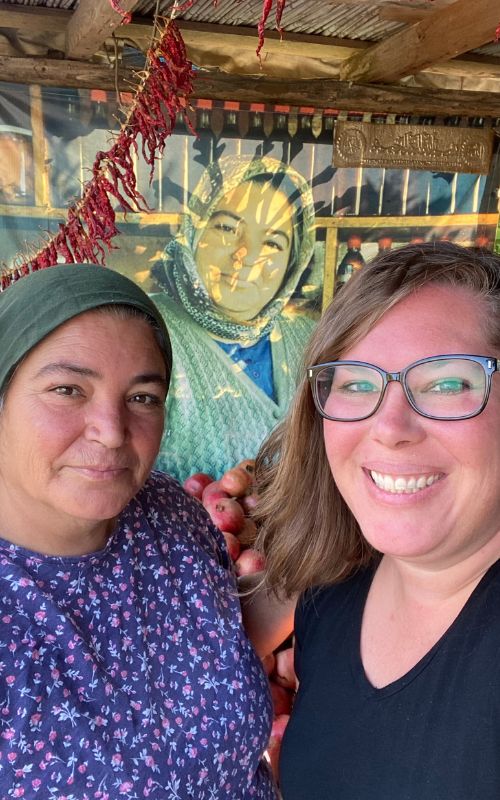
Some of my favorite memories driving in Turkey have actually come from the small towns rather than the major cities.
Once you leave the highways behind, the pace of life changes dramatically.
You will see tractors moving slowly down the road, people carrying bundles of wood, roadside fruit stands, and tiny tea gardens filled with locals chatting for hours.
Driving through these areas is much less about rushing to your destination and more about enjoying the experience along the way.
I still remember driving through a small town near the Black Sea and being completely distracted by the enormous roses growing everywhere. The colors were unbelievably vibrant and overflowing onto the streets.
Roads in smaller towns can also be narrower and more unpredictable. Cars may be double-parked, people may step directly into the road unexpectedly, and farm equipment often moves slowly through town.
The best thing you can do is slow down, stay patient, and enjoy the scenery. The most beautiful parts of Turkey are often the places you discover between destinations.
Quick Checklist Before Driving in Turkey
Before hitting the road in Turkey, here are a few things I recommend preparing ahead of time:
- Passport (even residents are sometimes asked when they last entered Turkey)
- Valid driver’s license
- International Driving Permit if required
- Vehicle registration
- Insurance paperwork
- Rental car paperwork
Renting a Car in Turkey: What You Need to Know
- I personally use Discover Cars when renting cars in Turkey because it makes it much easier to compare local and international rental companies in one place.
- I highly recommend purchasing insurance since many home-country policies do not cover international incidents.
- Stick with reputable rental companies whenever possible, especially in larger cities and airports.
- Before leaving the rental lot, take photos and videos of the car from every angle.
- Make sure you understand how toll roads are billed before driving away.
Frequently Asked Questions about using a car in Turkey
What should I do in case of an emergency in Turkey?
112 — Main emergency number
155 — Police
156 — Gendarme (primarily rural areas)
If you are involved in an accident, contact your rental car company or insurance provider immediately so they can guide you through the next steps.
Do I need a GPS when driving in Turkey?
Not necessarily, but I highly recommend having a local SIM card so you are not dependent on Wi-Fi while driving. Google Maps works very well throughout most of Turkey, especially if you download offline maps ahead of time.
Should I rent a car in Turkey?
If you are only staying in Istanbul, I honestly do not think renting a car is worth the stress. Public transportation is excellent, and parking can be difficult. However, if you want to explore the coast, smaller towns, ancient ruins, or more rural parts of the country, renting a car gives you much more flexibility.
What side of the road do they drive on in Turkey?
People drive on the right side of the road in Turkey. One thing that can confuse travelers is that Northern Cyprus drives on the left side despite its strong Turkish cultural ties.
What is the drinking and driving limit in Turkey?
Turkey has very strict drinking and driving laws. If you plan on driving, I strongly recommend avoiding alcohol altogether.
Can I use my phone while driving in Turkey?
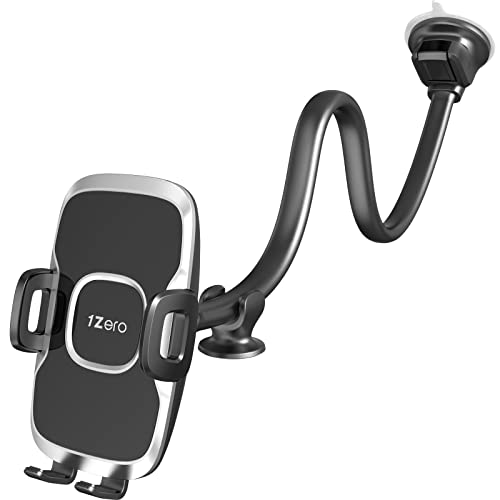
Only hands-free phone use is allowed while driving. I highly recommend bringing or purchasing a phone mount since you will likely rely heavily on navigation apps.
Where should I stop for bathrooms during a road trip in Turkey?
Larger gas stations like OPET, Shell, and BP are usually your best bet for cleaner bathrooms, snacks, and coffee during long drives. Honestly, some Turkish gas stations are surprisingly nice compared to what many travelers expect.
Most Importantly: Slow Down and Enjoy It
Turkey is an incredibly diverse country, and road trips here can take you through coastal towns, mountain villages, ancient ruins, and landscapes that feel completely different from one region to the next.
One mistake I think many visitors make is trying to see too much too quickly. Turkey may not be as large as the United States, but the diversity between regions is honestly remarkable.
Some of my favorite experiences in Turkey have happened completely unexpectedly while driving between destinations, stopping at roadside restaurants, tea gardens, or tiny towns I never planned to visit at all.
Planning a trip to Turkey? Check these out!
- Is Halloween celebrated in Istanbul? Find out now
- Want a water bottle for your trip? I LOVE Epic Water filters
- Soup lover? These are my favorites.
- Check out all the options for Fall in Istanbul
- Wondering if you should go to Istanbul or Antalya: here are my thoughts
Turkey Vacation Basics
When I plan a trip these are the websites I use. I hope they help you plan your next adventure as well!
FLIGHTS: I am a huge fan of Skyscanner.
VISAS: You can use the free e-visa portal here but for a few extra dollars you can use iVisa and someone else will handle any issues that may come up.
E-SIM: When I traveled to SE Asia I discovered e-sims and I’m never going back. Airalo has been easy and cheap!
TRAVEL INSURANCE: I use TravelInsurance.com for my trips abroad.
CAR RENTAL: I have loved working with Discover Cars when I rent cars in country.
AIRPORT TRANSFERS: I have used these transfers many times and they are always great. If you’d like more options, I also recommend GetTransfers.com as they allow you to compare companies.
ACCOMMODATION: Find the best Turkey hotel deals on Booking.com.
CITY TOURS & DAY TRIPS: You can browse GetYourGuide’s website to find just the tour you’re looking for! We also recommend the MegaPass for major cities.
