
Public Transportation Istanbul: The Best Tips for Tourists and Locals
The Art of Living in Turkey contains affiliate links and is a member of the Amazon Services LLC Associates Program. If you make a purchase using one of these Amazon links, I may receive compensation at no extra cost to you. See my Disclaimers for more information.
If you’re visiting Istanbul for the first time, figuring out how to get around can feel overwhelming.
Public transportation in Istanbul includes everything from trams and ferries to metros and buses, and it can seem confusing at first. Once you understand how it all works, though, getting from one place to another is actually very easy and surprisingly affordable.
I have lived in Istanbul since 2009 and have used every form of public transportation in the city. Even though we have a car, I often choose the metro or ferry instead of sitting in traffic.
I learned pretty quickly that understanding the system can save you both time and money. A friend of mine once paid six times the normal ferry price because he didn’t know how to buy tickets properly.
This guide covers everything you need to know about public transportation in Istanbul, from how to pay to which options to use.
How to Pay for Public Transportation in Istanbul
1. Istanbulkart (Best Option for Most People)
To use public transportation in Istanbul, the easiest and most common option is the Istanbulkart, a rechargeable transportation card that works on almost all forms of public transport.
If you plan to stay more than a couple of days or take multiple rides, this is the best option.
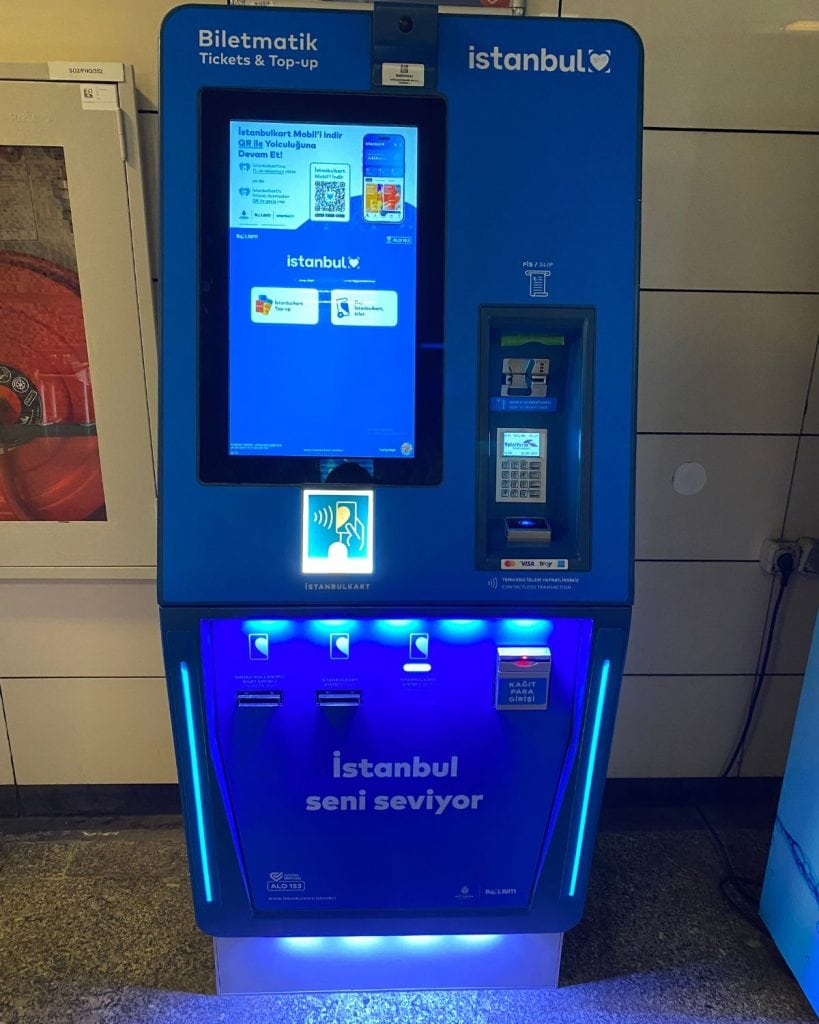
You can buy an Istanbulkart at the airport or at blue and yellow kiosks located near metro stations, tram stops, and ferry terminals. The card costs about 130 TL (around $4), and you will need to load money onto it before using it.
You can top up your card at kiosks, BIM grocery stores, or small shops displaying the Istanbulkart logo. Kiosks accept both cash and credit cards, although there may be a small fee for card payments.
From my experience, this is by far the easiest way to get around the city. I use it almost every day.
Pro tip: When you tap your card, the screen will show both the fare and your remaining balance. Always keep some money on your card so you don’t get stuck.
Most rides cost between 20 and 45 TL, and if you transfer between transportation types, you will usually get a discounted fare.
2. Individual Tickets (Short Trips Only)
If you are only planning to use public transportation a few times, you can buy a limited-use ticket instead of getting an Istanbulkart.
Currently, kiosks offer a 3-ride ticket for around 80 TL, and these can only be purchased with a credit card.
This can be a good option if you are only in the city briefly, but for most people, the Istanbulkart is still more practical.
3. Contactless Credit Card
You can also use a contactless credit card to pay directly at the turnstile.
I actually discovered this by accident when my daughter tapped her wallet and it charged her credit card instead of her Istanbulkart.
This is convenient if you do not want to deal with kiosks or cards, but it is more expensive. A single ride costs around 30 TL, and you will not get transfer discounts.
If you are only taking a few rides, this can work well. Otherwise, the Istanbulkart is the better value.
4. Istanbul City Card (Unlimited Option)
The Istanbul City Card is a tourist-focused option that gives you unlimited rides for a set number of days.
You can use it as a physical card or through an app, and it also includes transportation like the Havaist airport bus.
Prices range from about $14 per day for shorter passes to around $8 per day for longer durations.
This is the most convenient option, but not the most budget-friendly. If you plan to use public transportation frequently and do not want to worry about topping up your card, it could be worth it.
Types of Public Transportation in Istanbul
Once you have your Istanbulkart or payment method set up, getting around the city becomes much easier.
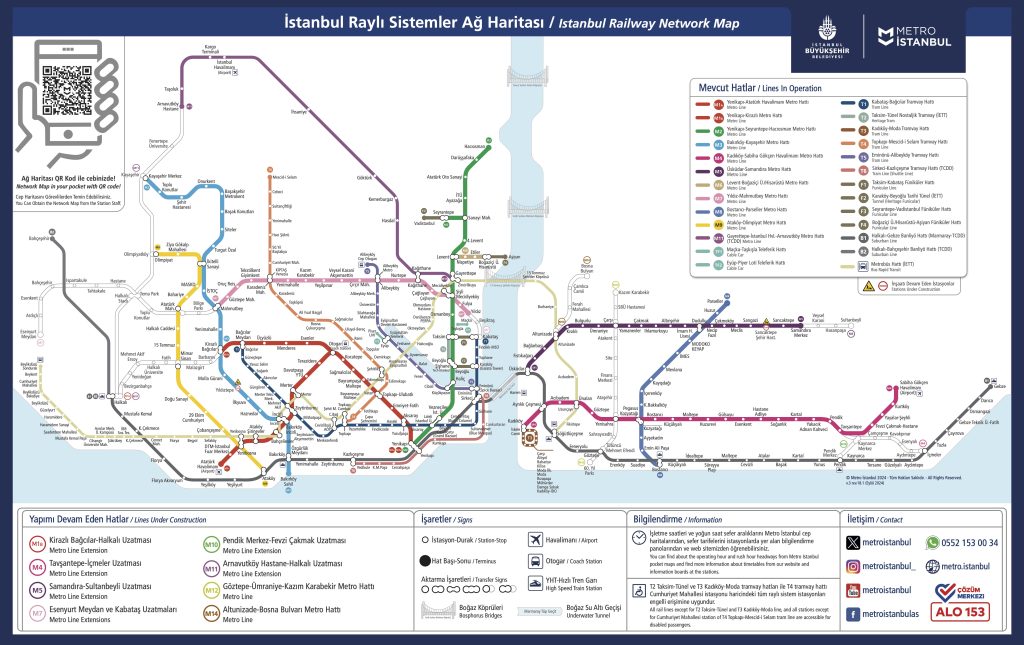
There are several types of public transportation in Istanbul, and each one is useful depending on where you are going. Here are the main options and when you will actually use them.
If you’re coming from the airport, however, I do recommend a scheduled transfer.
1. Tram (Best for Tourist Areas on the European side)
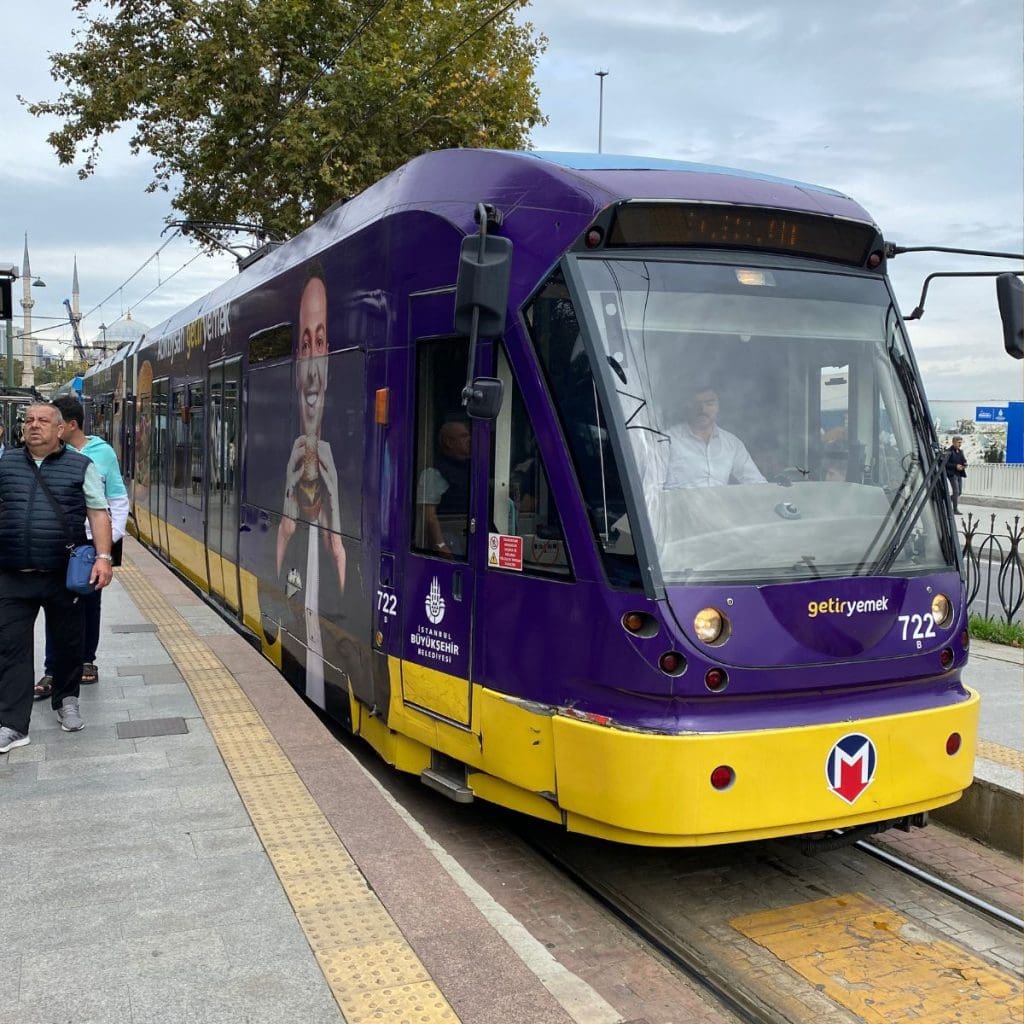
If you are staying in the historic part of Istanbul, you will almost definitely use the tram at some point.
The T1 tram runs from Kabataş to Bağcılar and passes through major areas like Sultanahmet, Eminönü, and the Grand Bazaar. It is one of the easiest ways to get between popular sites without dealing with traffic or figuring out complicated routes.
- Sultanahmet station: You’re right in front of the Blue Mosque and Hagia Sophia.
- Gulhane station: Ideal for visiting Gulhane Park and the Istanbul Archaeological Museum.
- Eminonu station: Perfect for catching a ferry across the Bosphorus or strolling the bustling Egyptian Spice Bazaar.
- Cemberlitas station: Drops you off right at the Grand Bazaar.
I use the tram all the time when I am in the old city because it is straightforward and reliable. The only downside is that it can get very crowded, especially in the middle of the day.
If you want to explore the artsy neighborhood Balat or visit the Greek Orthodox Patriarchate in Fener, you can catch the newly finished T5 Eminonu-Alibeykoy tram line from Eminonu along the Golden Horn right to those neighborhoods.
2. Ferry (Best Experience + Crossing Continents)
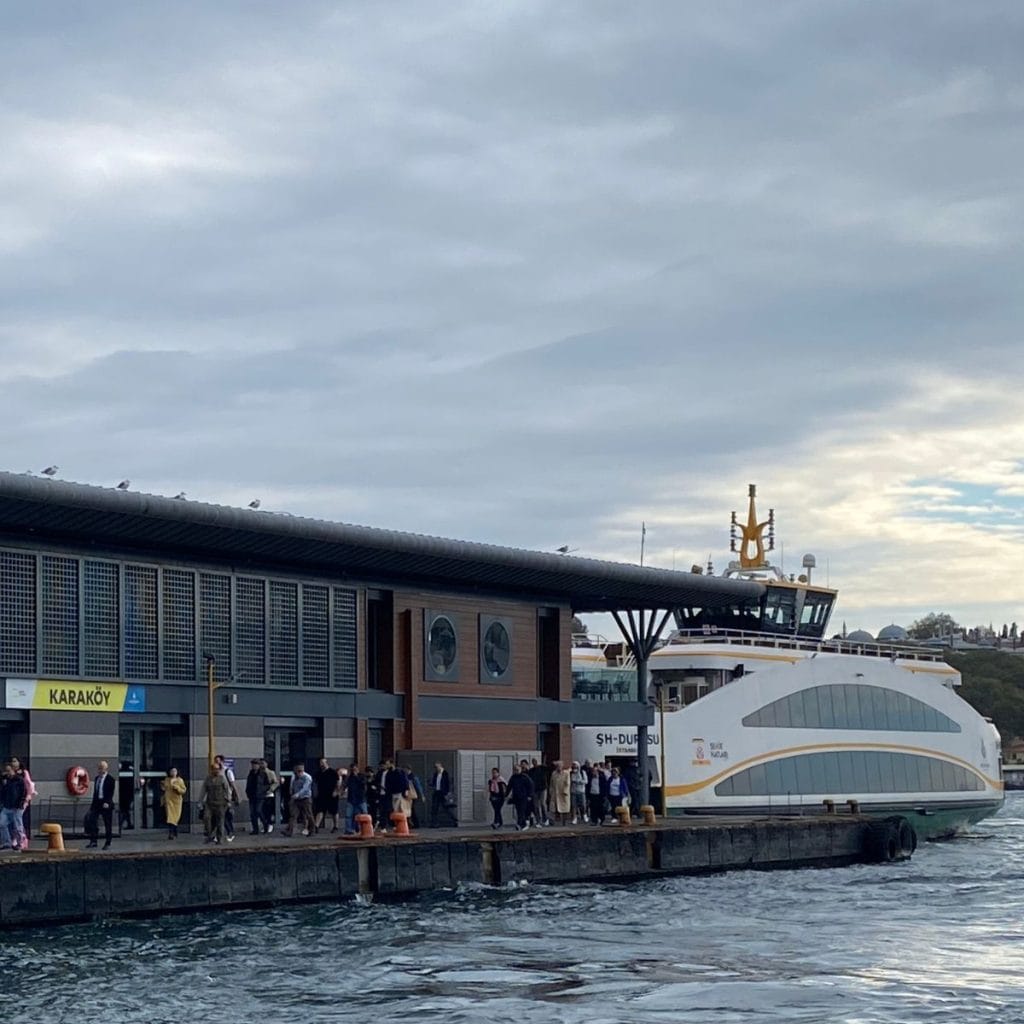
Taking a ferry is one of the best ways to experience Istanbul, and it is often just as cheap as other forms of transportation.
You can cross between the European and Asian sides while enjoying views of the skyline, including the Galata Tower and the domes of Sultanahmet.
From areas like Eminönü, Karaköy, and Kabataş, you can easily reach Kadıköy or Üsküdar in about 10 to 30 minutes.
Whenever I have the option, I choose the ferry. It is one of the few times where getting from point A to point B actually feels like part of the experience instead of just transportation.
3. Metro (Best for Avoiding Traffic)
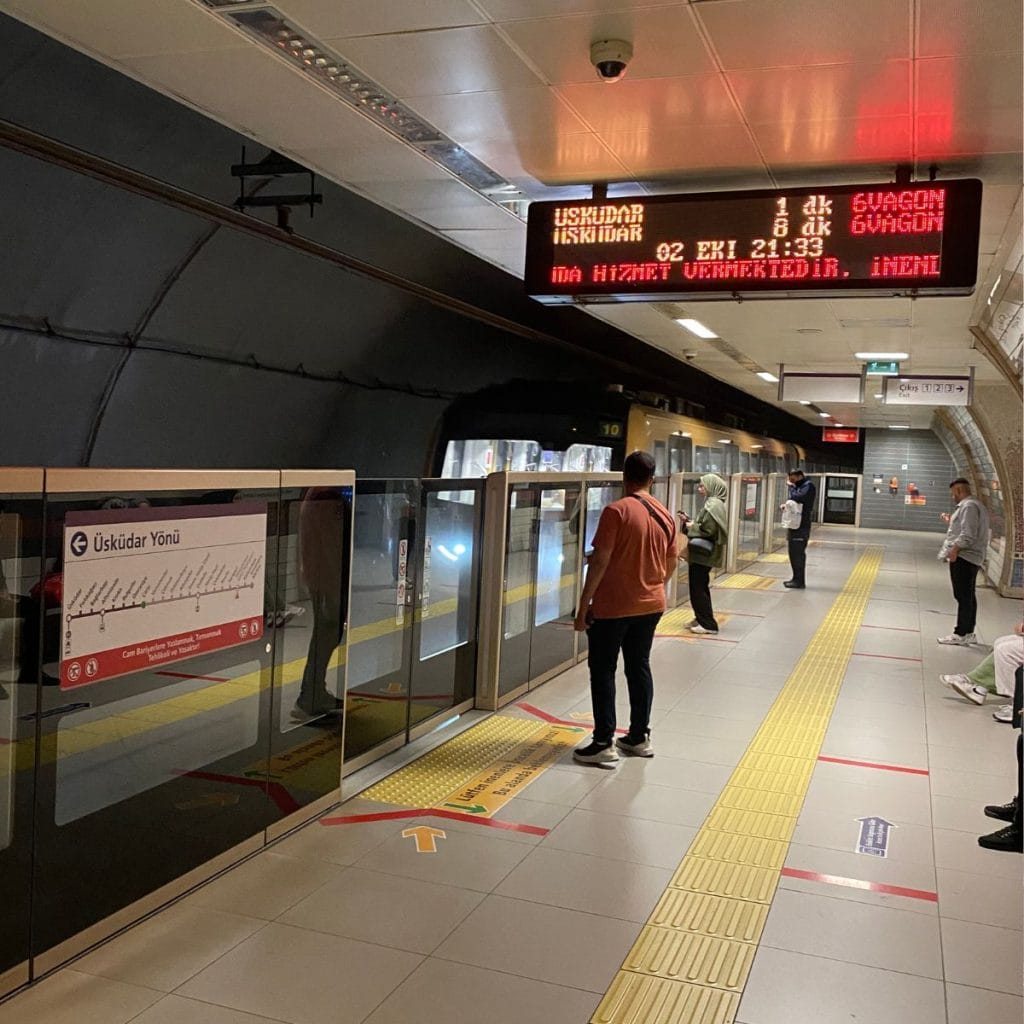
The metro is one of the fastest and most efficient ways to get around Istanbul, especially during rush hour.
The M2 line is the most useful for visitors, connecting areas like Vezneciler, Taksim, and Levent. It is a great option if you want to avoid traffic completely.
The system has expanded a lot in recent years, and it continues to grow, making it more useful than it used to be.
I use the metro when I need to get somewhere quickly or during busy times of day when traffic is at its worst.
4. Funicular (Best for Steep Hills)
In 1875 a tunnel was dug and a one-stop metro, funicular, was installed. It was only the second subway in the world at that point.
Istanbul is a very hilly city, and the funicular is one of the easiest ways to avoid some of the steepest climbs.
The two most useful lines are the F2 (Tünel) between Karaköy and Istiklal Street, and the F1 between Kabataş and Taksim.
If you have ever tried walking these routes, you will understand why these exist. They save time and a lot of energy.
5. Marmaray (Fastest Way Between Continents)
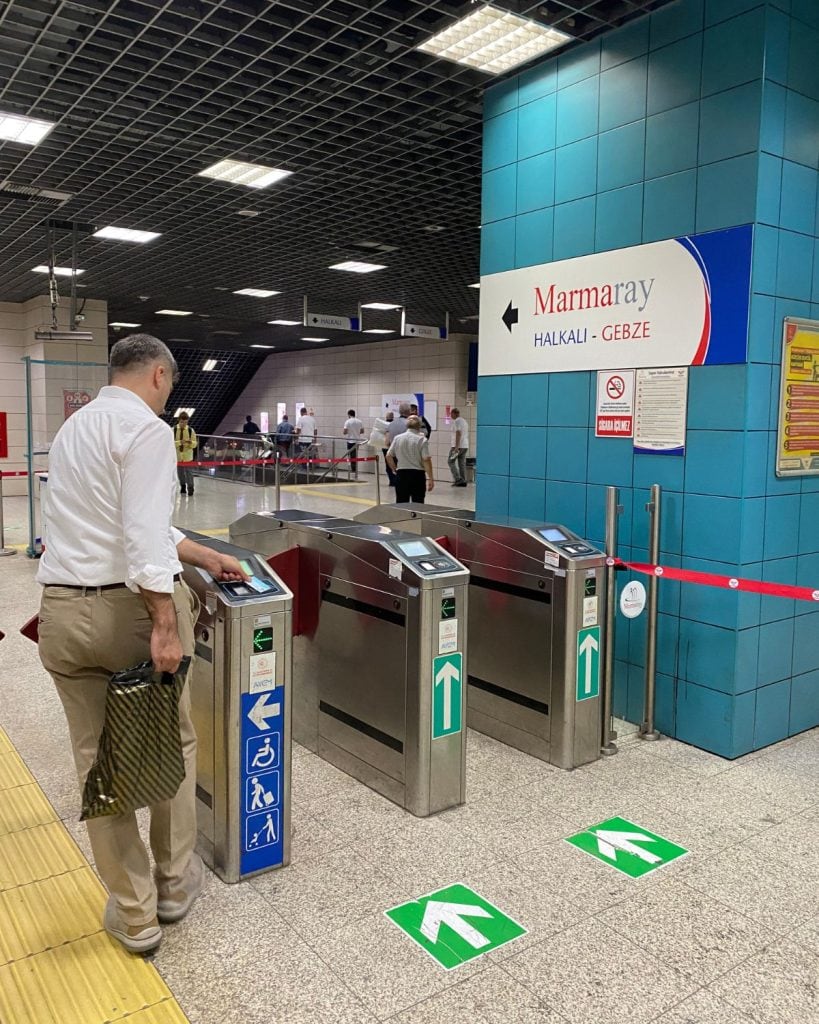
The Marmaray runs under the Bosphorus and connects the European and Asian sides of Istanbul. It is much faster than the ferry and is a great option if you are short on time.
I use this when I need to get across the city quickly, but if I am not in a rush, I usually prefer the ferry for the views.
One thing to note is that fares are slightly higher, and if you do not have a registered card, you will not receive partial refunds for shorter trips.
It is also worth knowing that while the metro system in Istanbul is expanding quickly, it is still more extensive on the European side than on the Asian side. That said, newer lines, like the one connecting Kadıköy to Sabiha Gökçen Airport, are making it much easier to get around both sides of the city.
6. Nostalgic Tram (More for Experience Than Efficiency)
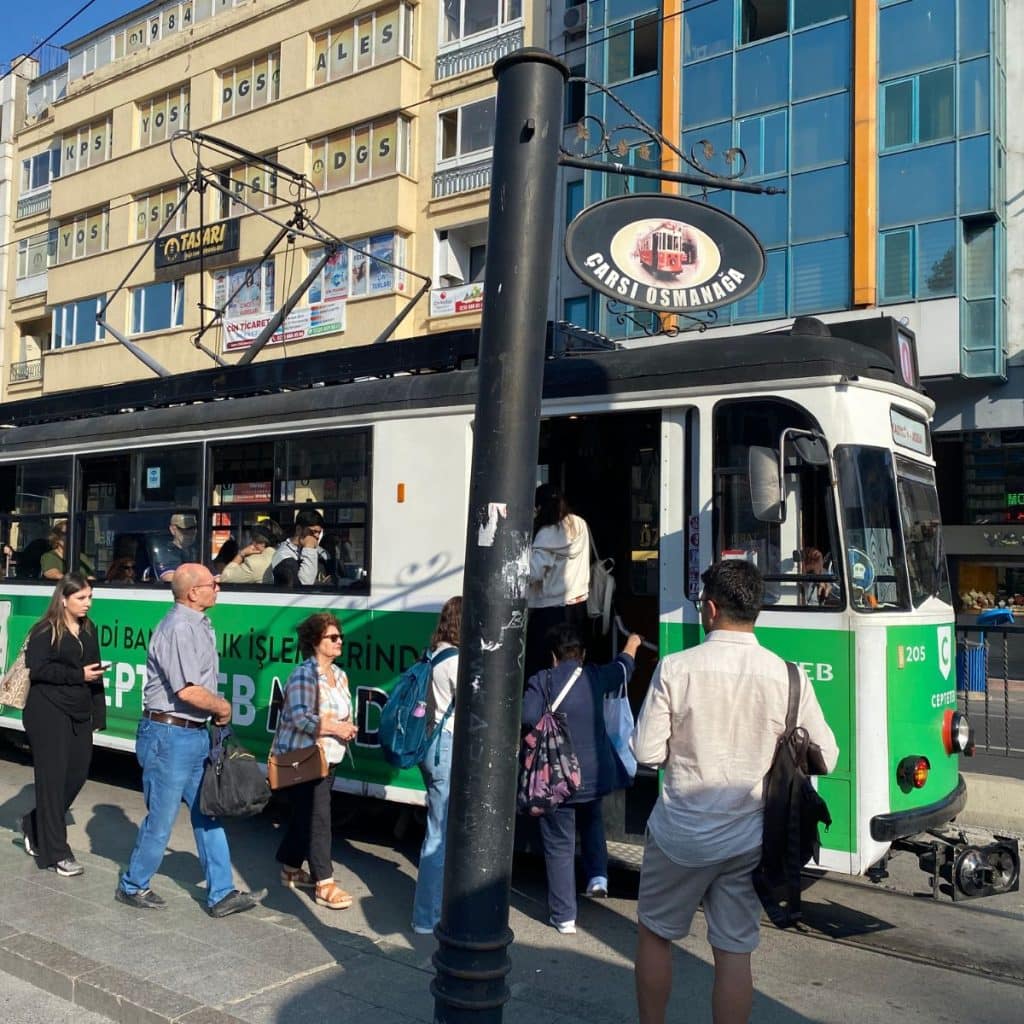
The nostalgic trams in Taksim and Kadıköy are some of the most recognizable symbols of Istanbul.
The red tram along Istiklal Street runs from Taksim Square to Tünel, while the green tram in Kadıköy loops through the Moda neighborhood. Both are more about the experience than actually getting around quickly.
I have taken both, and while they are fun, they are not the most efficient way to travel. In most cases, walking will be just as fast, especially when the streets are crowded.
That said, they are worth trying at least once. The Kadıköy tram in particular is a nice way to explore the neighborhood if you want a more relaxed pace.
7. Bus (Best for Hard-to-Reach Areas)
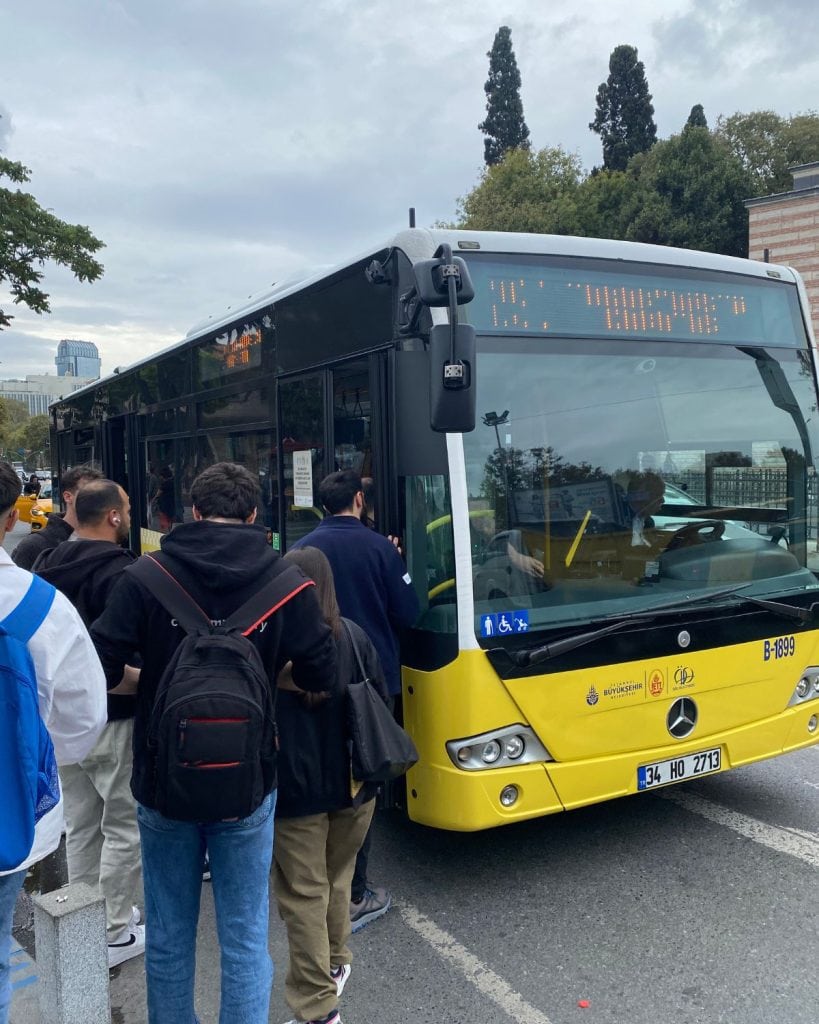
Buses go almost everywhere in Istanbul, including areas that are not easily accessible by metro or tram.
The other day, I met a friend staying in a neighborhood that was not close to any major transport lines. I checked Google Maps, hopped on a bus, and got there without any issues.
That said, buses are not always the most efficient option. Traffic can slow things down significantly, and they can get crowded depending on the time of day.
I usually only take the bus when there is no better option, but it can be very useful depending on where you are staying.
8. Dolmuş (Shared Taxi Option)
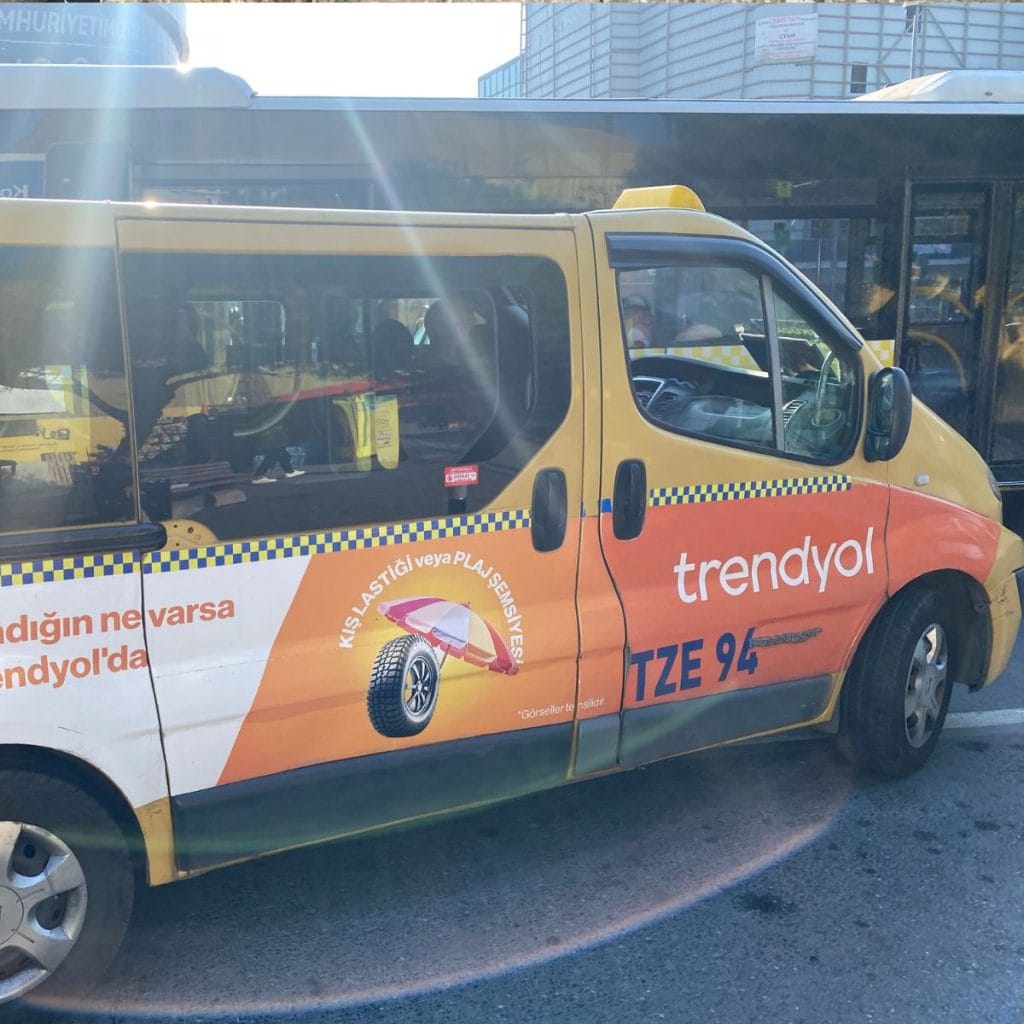
The dolmuş is a shared minivan that runs on fixed routes and is paid in cash.
It works somewhere between a taxi and a bus. You can get on and off along the route, and when you want to stop, you can say “İnecek var” (pronounced “ee-neh-jek var”), which lets the driver know you want to get off.
They are inexpensive and can sometimes be faster than taxis, especially in traffic.
That said, they can be confusing if you are not familiar with the routes, and drivers typically do not speak English. For most visitors, this is not the easiest option, but it can be helpful once you understand how they work.
Pro tip: Drivers will likely not speak English so as a tourist you may find this mode of transport not nearly as enjoyable.
9. Minibus (Local Option)
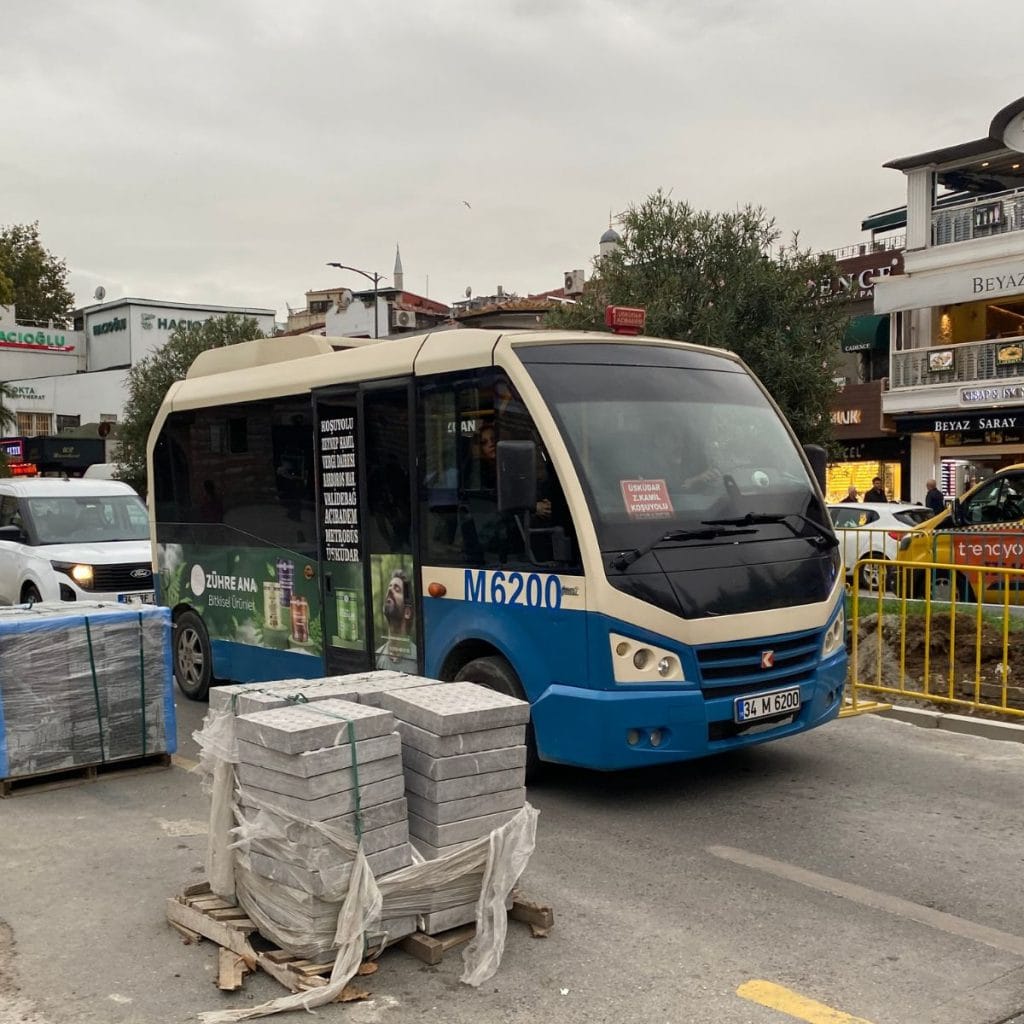
Minibuses are similar to dolmuş but slightly larger and follow set routes throughout the city.
They pick up and drop off passengers along the route rather than at designated stops, which makes them convenient but also harder to navigate.
I find them useful as a local, especially for short distances, but they can be difficult to use if you do not speak Turkish or know the route ahead of time.
It is also worth knowing that you will need to pay attention and ask to get off, as stops are not always clearly announced.
10. Metrobus (Best for Long Distances Across the City)
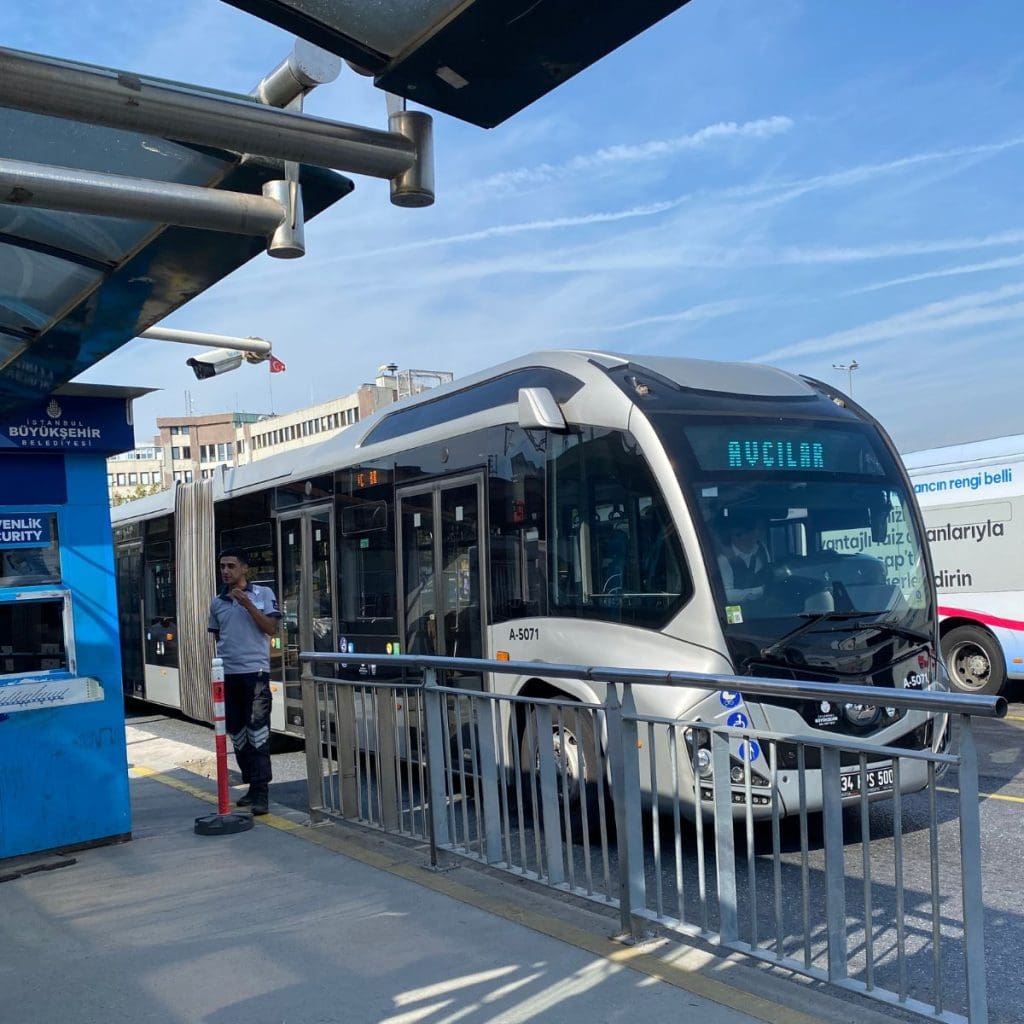
The metrobus runs on a dedicated lane, which allows it to avoid traffic and move quickly across the city.
It is one of the fastest ways to travel long distances, especially between the European and Asian sides.
I use it occasionally when I need to get between major areas without sitting in traffic, but it is mostly used by commuters.
It is also worth noting that it can get extremely crowded during rush hour, so it is not always the most comfortable option.
11. Cable Car (Teleferik) (More for Views Than Transportation)
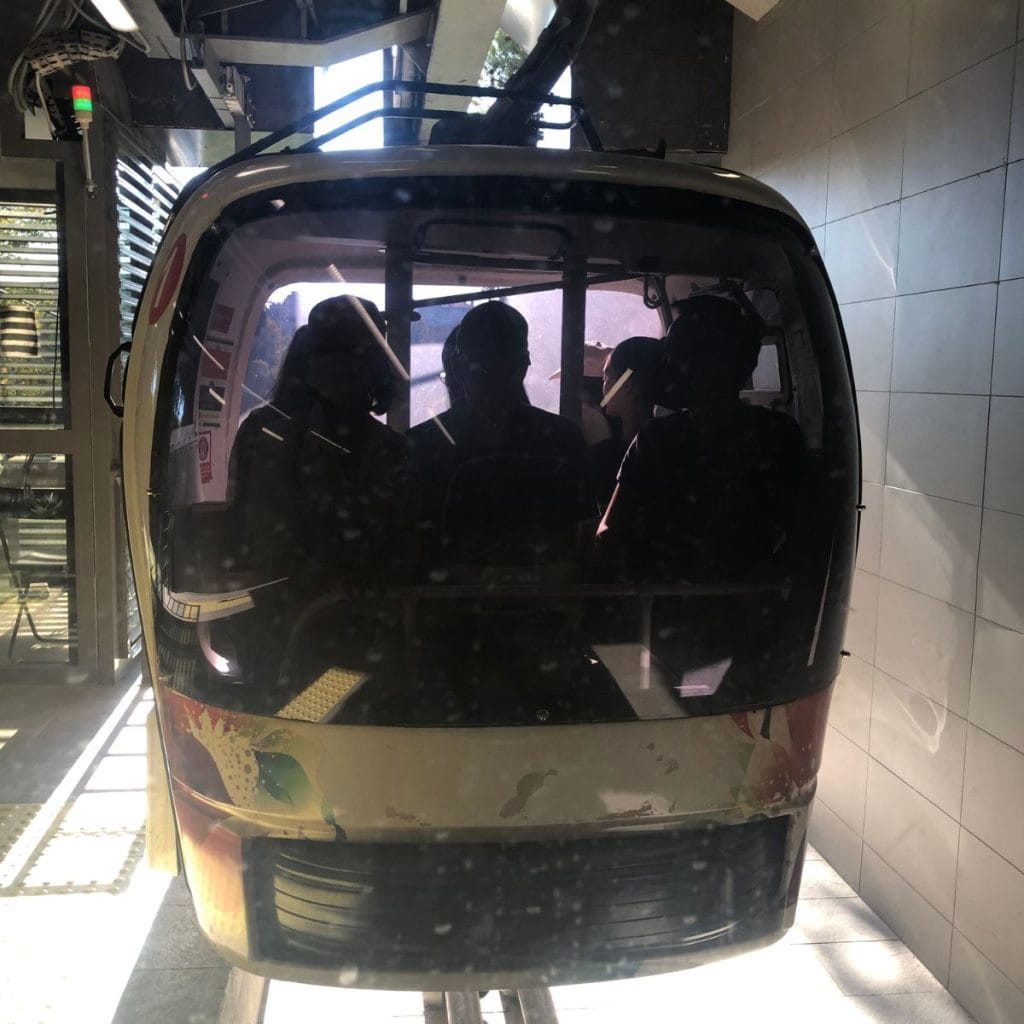
Last, but not least in our transportation round-up, is the cable car (“teleferik” in Turkish). Cable cars in Istanbul are more of an experience than a necessity.
There are two main lines, and both offer great views rather than practical transportation routes.
I have taken them more for the experience than anything else, especially in areas like Eyüp where you can ride up to a viewpoint and enjoy tea overlooking the city.
They are worth trying if you have time, but you will not rely on them for daily transportation.
Up at the top, you can enjoy some Turkish tea and dessert as you take in the beautiful view of the city from above.
Tips for Navigating Public Transportation in Istanbul
Now that you know your options for how to get around the city, here are a few pro tips for how to make your travel as pleasant as possible and avoid some of the stress that naturally comes in such a large city.
Avoid Rush Hour
Public transportation in Istanbul can get very crowded during rush hour, especially between 7:30 and 10 a.m. and again from about 5 to 7 p.m.
Even though metros and ferries are still the fastest options during these times, they can be packed.
If you have flexibility in your schedule, try to plan your travel outside of these hours. It makes a big difference.
Wear Comfortable Shoes
You will walk a lot in Istanbul. It is very easy to hit 15,000 to 20,000 steps in a single day, especially if you are exploring different neighborhoods.
Make sure you bring comfortable shoes, and if they are new, break them in before your trip.
Also, stay hydrated, especially in the summer. Water fountains are not common, but small shops and kiosks are everywhere if you need to grab a bottle.
Pro tip: Start wearing new shoes and break them in before you get here to avoid blisters and any foot issues.
Use Navigation Apps
Google Maps works well in Istanbul and is usually my go-to for planning routes.
That said, it is not always perfect. Routes can change before they are updated in the app, so do not hesitate to double check or ask for help if something seems off.
Apps like Citymapper and Moovit can also be helpful, and Otobüsüm Nerede is useful if you are trying to track buses in real time.
Pro tip: Download offline maps so you always have access, even without service.
Here is a list of other apps that we recommend that don’t have to do with transportation but will make your life much easier.
Is Public Transportation in Istanbul Safe?
From my experience, public transportation in Istanbul is generally very safe.
I regularly allow my teenage daughters to take the metro home in the evening, and it is common to see families and locals out late, especially in busy areas.
Like any major city, pickpocketing can happen, especially in crowded areas or on packed trams. It is usually a crime of opportunity, so just stay aware of your surroundings and keep your belongings secure.
More serious crime is not common, but it is always important to stay aware and use common sense.
FAQs About Public Transportation in Istanbul
How do you pay for public transportation in Istanbul?
Most public transportation in Istanbul uses the Istanbulkart, a rechargeable card you can buy and top up at kiosks around the city. You can also use contactless credit cards or purchase limited-use tickets.
Do buses in Istanbul take cash?
No, city buses do not take cash. You will need an Istanbulkart or a contactless credit card. Dolmuş and minibuses, however, do require cash.
How much is a metro ride in Istanbul?
A typical ride costs around 39–63 TL with an Istanbulkart. Contactless payments are slightly more expensive and do not include transfer discounts.
Can two people use the same Istanbulkart?
Yes, but only one person will receive transfer discounts. The others will pay full fare on each ride.
Getting Around Istanbul with Confidence
Public transportation in Istanbul might seem overwhelming at first, but once you understand how it works, it becomes one of the easiest and most affordable ways to explore the city.
With options like trams, ferries, metros, and buses, you can get almost anywhere without needing a car or dealing with traffic.
After living here for years, I still rely on public transportation regularly. In many cases, it is faster, cheaper, and honestly more enjoyable than driving.
If you take anything away from this guide, let it be this: get an Istanbulkart, give yourself a little time to figure out the system, and do not be afraid to try different options.
Once you get the hang of it, navigating Istanbul becomes part of the experience, even if it is a city of nearly 16 million people!
Planning a Trip to Turkey?
- Wanna visit in the Spring? Learn what makes it special in Istanbul
- You can stay for a whole year with the Digital Nomad Visa
- Make sure you know all about the plugs and adaptors before you come
- Check out the Tulip Festival if you’re coming to Istanbul in April!
Turkey Vacation Basics
When I plan a trip these are the websites I use. I hope they help you plan your next adventure as well!
FLIGHTS: I am a huge fan of Skyscanner.
VISAS: You can use the free e-visa portal here but for a few extra dollars you can use iVisa and someone else will handle any issues that may come up.
E-SIM: When I traveled to SE Asia I discovered e-sims and I’m never going back. Airalo has been easy and cheap!
TRAVEL INSURANCE: I use TravelInsurance.com for my trips abroad.
CAR RENTAL: I have loved working with Discover Cars when I rent cars in country.
AIRPORT TRANSFERS: I have used these transfers many times and they are always great. If you’d like more options, I also recommend GetTransfers.com as they allow you to compare companies.
ACCOMMODATION: Find the best Turkey hotel deals on Booking.com.
CITY TOURS & DAY TRIPS: You can browse GetYourGuide’s website to find just the tour you’re looking for! We also recommend the MegaPass for major cities.
