
Turkish Mezes 25 Must Try Traditional Appetizers
The Art of Living in Turkey contains affiliate links and is a member of the Amazon Services LLC Associates Program. If you make a purchase using one of these Amazon links, I may receive compensation at no extra cost to you. See my Disclaimers for more information.
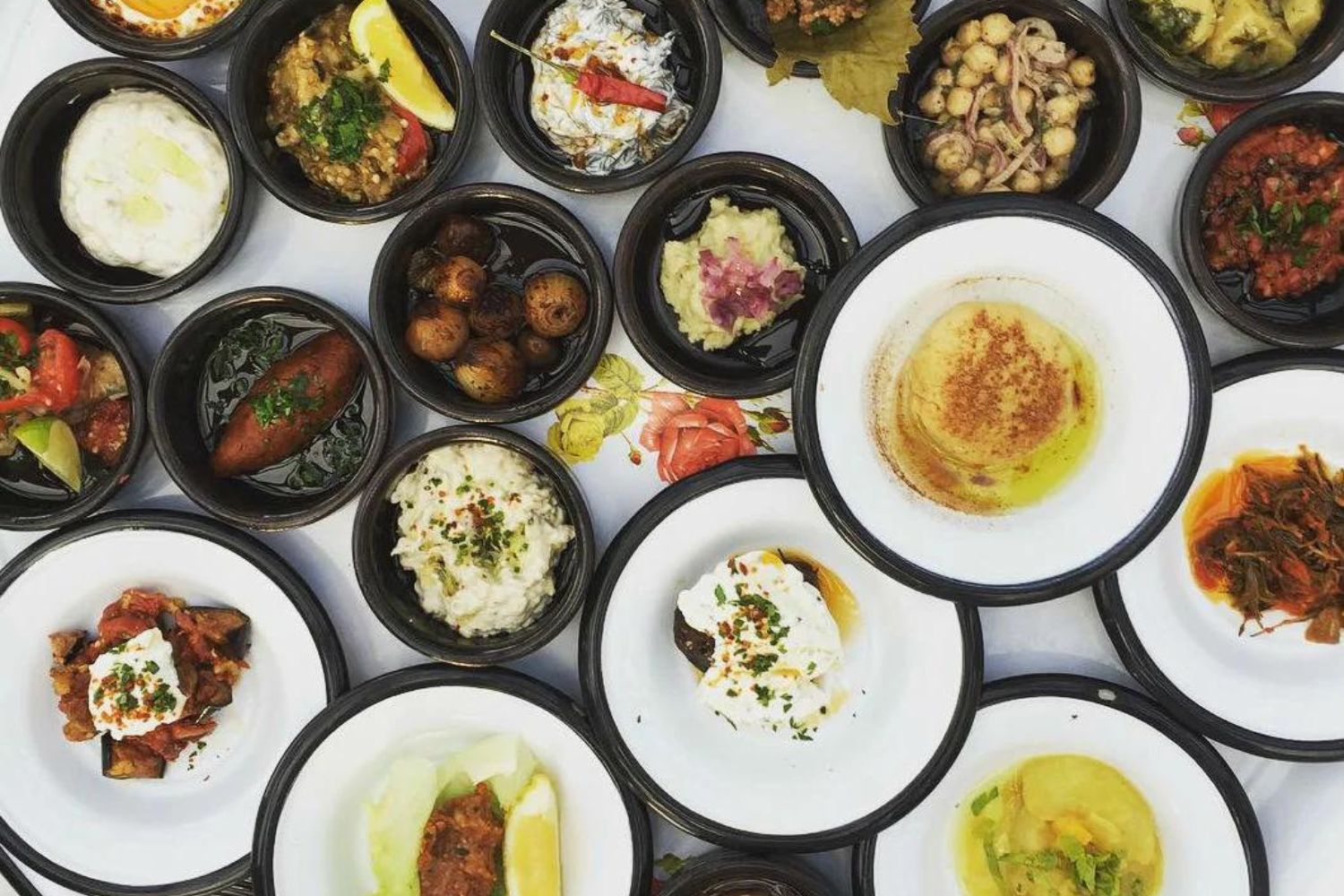
Around the world, appetizers offer a glimpse into the culture and flavors of a place, and Turkish mezes (think Turkish tapas or appetizers) are no exception.
These small, flavorful dishes are made with ingredients that reflect the local environment, and each region has its own specialties that make the dining experience even more unique.
I have lived in Turkey for over five years. During this time, I have had numerous opportunities to explore various restaurants in search of the best types of mezes.
I am especially spoiled by my favorite Fish Restaurant, Âlâ Kadıköy, being located in the same city that I live in. They have such fresh and rich flavors in their dishes and there are always so many to choose from.
Whether dining at a fish restaurant or an ocakbaşı—think of a hibachi grill where cooking takes place in front of everyone—I’ve enjoyed a wide variety of mezes that showcase diverse flavors of Turkey.
Let’s dive in and explore this Turkish meze list of my 25 favorites that you won’t want to miss!
What is a Turkish Meze?
Turkish meze refers to small, shareable dishes served as appetizers or combined together to form a full meal. If you have ever enjoyed Spanish tapas, you already understand the concept.
In Turkey, mezes are placed in the center of the table and shared. There is even a phrase locals use: “Az az ortaya,” which means “a little of everything in the middle.”
Some mezes are served cold, such as hummus or stuffed grape leaves. Others are served hot, like grilled halloumi or fried eggplant. Together, they create one of the most social and flavorful dining experiences in Turkish cuisine.
After living in Turkey for years and eating at countless meyhane and fish restaurants, these are the 13 mezes I order again and again.
Where to Experience Meze in Turkey
For a true meze experience, visit a meyhane or an ocakbaşı. While many restaurants offer a few mezes, these establishments build the entire meal around them.
At fish restaurants, especially, mezes are the highlight. They are best enjoyed slowly, alongside good conversation and a glass of rakı.
One of my favorite places in Kadıköy is Âlâ Meyhane. The quality is consistently excellent, and unlike some tourist-heavy fish restaurants, pricing is transparent, and the menu is clear.
Meze dining is meant to be relaxed. Expect your meal to last a few hours, not a rushed 30 minutes.
When you’re in Kadıköy, stop by Âlâ and enjoy some delicious mezes. Make sure to show the manager this article, and you’ll get a free serving of the house dessert!
1. Patlican Şakşuka (Eggplant)
This is one of my absolute favorites. I have to exercise serious self-control not to eat the entire dish, especially when it’s done well.
Before moving to Turkey, I didn’t even like eggplant. It was one of the few foods I actively avoided. But Turkish cooking completely changed my mind, and now I can’t get enough of it.
Şakşuka is made with roasted eggplant, tomatoes, peppers, garlic, olive oil, and spices. The vegetables are tender and deeply flavorful, with just the right balance of richness and acidity.
The dish dates back to Ottoman cuisine, and its name comes from the Arabic word “saksuka,” meaning “mixture.” While some versions in other countries include eggs on top, in Turkey, it is typically served as a cold meze without them.
2. Gİrİt ezmesİ
A dear friend introduced me to girit, and I’ve been hooked ever since. When he chose it from the meze case, I was curious and, within a few bites, completely convinced.
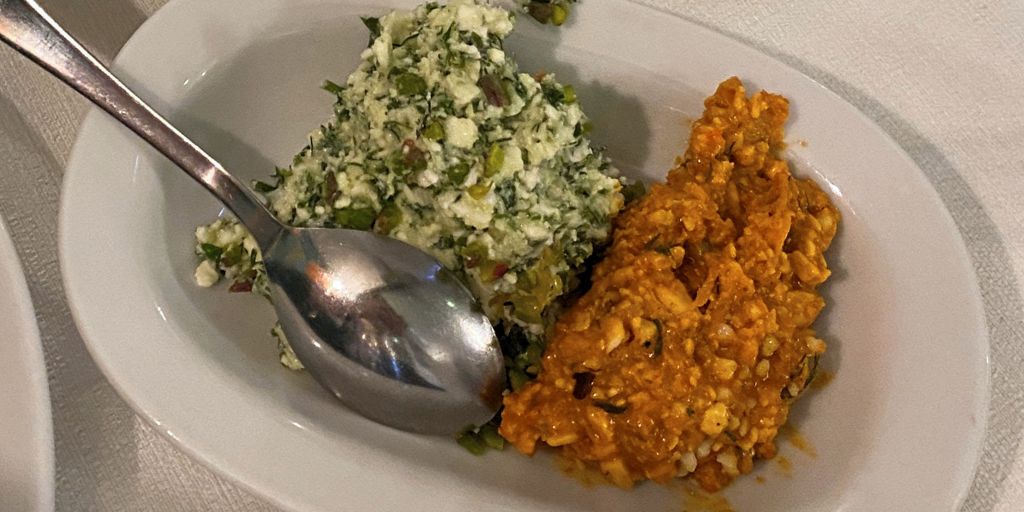
Girit originates from the island of Crete and is essentially a savory cheese spread. It’s typically made with feta (or a similar white cheese), olive oil, and walnuts, though each restaurant adds its own twist. The green version often includes basil and other fresh herbs.
At my favorite spot, Âlâ, they add parsley and dill, which gives it a light, fresh flavor that balances the richness of the cheese beautifully.
Some recipes blend it into a smooth paste, but I prefer it slightly chunky for more texture. Spread onto warm, fresh bread, it’s simple and absolutely unforgettable.
Use this recipe make it at home
This is in Turkish but you can copy and paste it into Google Translate quite easily and worth it as her stuff is great!
3. Denİz börülcesİ
The English name for this is samphire salad. The first time I saw it, I was honestly hesitant. It did not look especially appetizing. But once again, my friend made a great choice, and I was pleasantly surprised.
Deniz börülcesi is a salty sea vegetable, similar to seaweed, and is also known as pickleweed or glasswort. It is usually tossed with lemon juice, garlic, and olive oil, creating a bright, slightly briny dish that tastes like the ocean in the best way.
The version we had leaned into that lightly pickled flavor, and I immediately knew I would be ordering it again.
Interestingly, this plant is actually a succulent and was historically used in glass production. Only the ash was used, so no worries there. Today it appears in coastal cuisines around the world, which makes its exact origins a bit difficult to pin down.
4. Hummus
I have had a love-hate relationship with hummus over the years. Sometimes it is so good that you eat way too much and regret nothing. Other times, it is gritty, bland, and completely forgettable.
After moving to Turkey, I learned a simple trick that changed everything. If you cook your chickpeas with a little baking soda, it softens the skins and makes the hummus incredibly light and smooth. I was amazed. Since learning to make it properly, I cannot go back to store-bought versions.
In Turkey, you will sometimes see hummus served hot in a clay dish, especially at kebab restaurants, topped with sautéed meat. It does not always come this way, but it is a delicious twist on a dish that many people think they already know.
Beyond tasting great, hummus is packed with fiber and protein. Its origins are debated, but some medieval Arabic food writings suggest Syria as an early home of the dish. Today, each culture puts its own spin on it, adjusting the texture and flavor to match local tastes.
Use this recipe to make it at home*
*I would start with half the tahini and add in more if you want more.
5. köpoğlu
Köpoğlu has roots in both Turkey and Romania and sits somewhere between a relish and a salad. It usually features roasted green and red peppers, tomatoes, onions, parsley, and spices, all baked together until soft and flavorful.
Some versions are blended into a chunky spread, while others are left more rustic and served as a salad. It is wonderful spooned onto fresh bread, but just as good eaten straight from the plate alongside other mezes.
Use this recipe to make it at home
You will need the Google Translate plugin to make this one. Working on finding a better English version but for now, this is the best one I could find.
6. İzgarada Halloumİ Peynirİ
Before moving to Turkey, I had never heard of grilling cheese. Wouldn’t it just melt into a puddle? Apparently not if you are using halloumi.
Halloumi has a high melting point, which means it holds its shape beautifully on the grill or in a pan. The outside becomes golden and slightly crisp, while the inside stays soft and chewy.
It is incredibly versatile. You will see it served as a meze on its own, added to salads, eaten at breakfast, or paired with a full meal. I especially love it alongside acılı ezmesi. The salty richness of the cheese balances perfectly with the spicy tomato and pepper mixture.
Halloumi originated in Cyprus and is traditionally made from goat’s and sheep’s milk. Once you try it grilled, it is hard to imagine eating it any other way.
7. Kısır
Kısır was another pleasant surprise for me. I first tried it at a village-style potluck, made by a local woman, so of course I had to give it a chance. I’m glad I did.
It’s a bulgur-based salad mixed with onions, parsley, tomatoes, and spices. At first glance, it looks similar to tabbouleh, but it is much more bulgur-forward, with fewer herbs and a deeper, slightly spicier flavor.
You can eat it on its own as a light meal or serve it alongside grilled meats and other mezes. I expected it to taste plain since I wasn’t used to bulgur, but it turned out to be anything but boring.
Kısır has its roots in Turkish cuisine and shares some similarities with çiğ köfte, especially in its use of fine bulgur and bold seasoning.
8. Havuç Salatası
This is, quite literally, carrot salad. But it’s less of a leafy salad and more like cacık or tzatziki in texture. It’s made with shredded carrots mixed into thick yogurt with garlic and a few simple spices.
If you’re thinking, “That’s not for me,” I understand. I felt the same way at first. But it ended up being much better than I expected.
There’s something about yogurt in Turkey that feels different. It’s tangier and more savory than the sweeter versions common in the States, and it completely transforms simple ingredients. The carrots soften slightly and absorb that garlicky yogurt in a way that makes the whole dish surprisingly addictive.
While I personally still lean toward the vegetable-forward flavors of şakşuka, this is a refreshing and creamy addition to any meze spread.
9. Cacık
Cacık is similar to Greek tzatziki, but it usually contains more herbs and has a slightly thinner consistency. I prefer mine a little saltier and heavier on the garlic. I tend to lean toward savory flavors rather than sour ones.
It’s often served alongside köfte or as part of a meze spread. You can scoop it up with bread, spoon it over grilled meat, or mix it into other bites on your plate. When it’s especially good, I happily eat it straight from the bowl.
If you’re making it at home, use smaller cucumbers if you can find them. They have far more flavor and less water, which makes a noticeable difference. This is especially important in the States, where larger cucumbers can taste bland.
The origins of cacık are complex and tied to Ottoman cuisine. The Greek word “tzatziki” is believed to have evolved from the Turkish “cacık,” and over time, the dish developed slightly different versions across the region.
Some historical references even describe earlier variations that included tahini rather than yogurt.
Use this recipe to make it at home
10. Muhammara
Muhammara is more of a dip, made from tomato or red pepper paste, spices, pomegranate molasses, and crushed walnuts. You’ll often see it topped with a drizzle of olive oil and sometimes mixed with fine bread crumbs for texture.
It’s wonderful spread onto fresh bread, and I especially love pairing it with white cheese if there’s some on the table.
You’ll occasionally find it served at Turkish breakfast spreads, though it has its origins in Syria. Some of the best versions I’ve ever eaten were along the Black Sea coast, where the flavors felt especially bold and balanced.
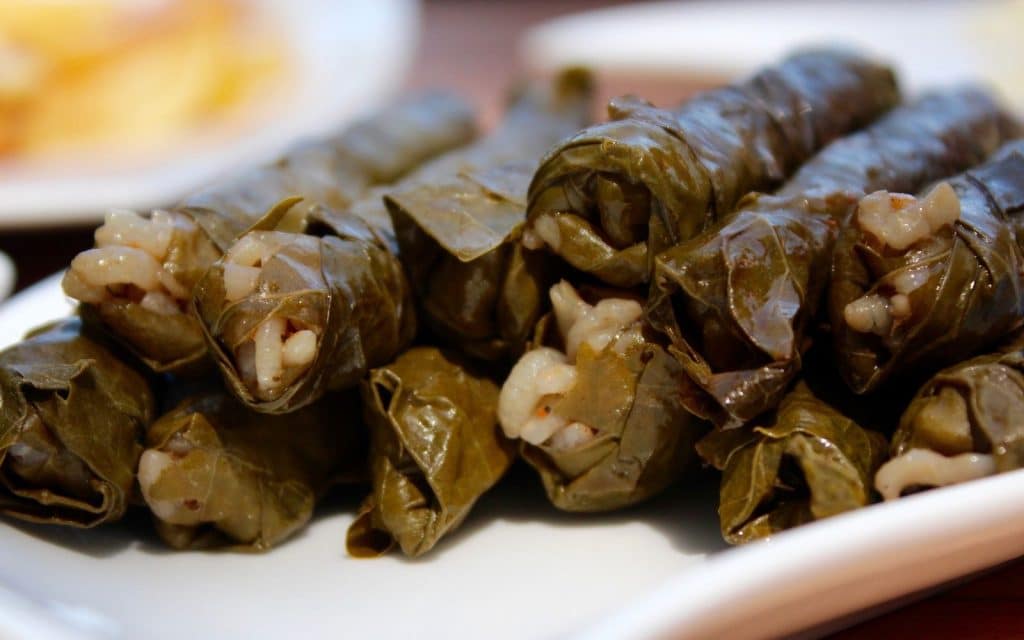
11. Sarma
In my opinion, not all sarma are created equal. Some are heavy on the lemon, which is not my personal favorite. Others include ground beef, known as etli sarma. There is a lot of variation, which makes it a fun dish to experiment with.
Depending on who makes it, sarma can lean sweet and tangy or more nutty and savory. The filling is usually a seasoned rice mixture wrapped tightly in grape leaves or cabbage leaves and rolled into neat little parcels.
My Turkish roommate used to bring them home from a café around the corner, and they never lasted long. On my walk to Turkish lessons, I would pass the kitchen where a group of women sat around chatting and rolling sarma together. It always smelled incredible.
When they’re done well, they’re irresistible. I often stop by a shop, buy a few hundred grams of freshly made sarma, and snack on them over the next couple of days.
Sarma dates back to Ottoman cuisine and has spread throughout the region, with each country putting its own spin on the flavors and fillings.
12. Haydarİ
One thing I quickly noticed after moving to Turkey is how often mint shows up in dishes. Sometimes it is subtle and barely noticeable. Other times, it takes center stage.
With haydari, you will definitely taste the mint. It’s a thick, creamy dip that balances beautifully with the stronger flavors on a typical meze table. If you are unsure about mint in savory food, this is a good place to start.
Haydari is usually made with strained yogurt or labne, mixed with garlic, herbs, and olive oil. It’s wonderful with fresh bread, spooned onto vegetables, or even eaten straight from the bowl.
Its exact origins are a little harder to pin down, but it fits naturally within Ottoman-style cuisine. The use of strained yogurt or labne gives it that rich, slightly tangy depth that pairs so well with grilled meats and other bold dishes.
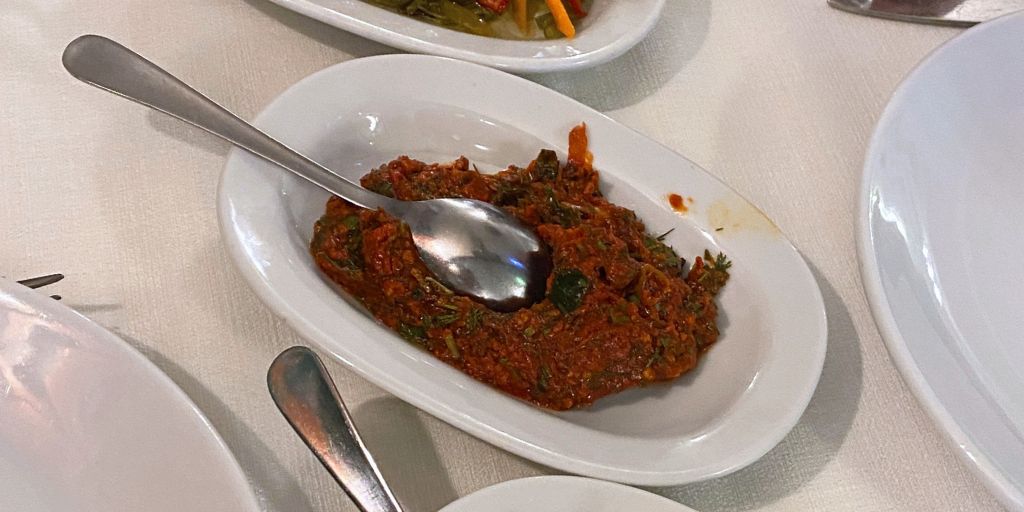
13. acili ezmesi
Last but not least, acılı ezmesi is a spicy tomato-based dip that is almost always eaten with bread. If you are sensitive to heat, consider yourself warned. This one usually brings a kick.
It’s made with finely chopped tomatoes, onions, peppers, and chilis, mixed with olive oil and spices. Spread onto warm bread, paired with girit, or eaten by the spoonful, it’s hard to resist.
I especially love it alongside a kebab plate. That fresh, spicy mixture cuts through the richness of the meat and makes every bite better.
If you’re making it at home, use ripe, flavorful tomatoes. The quality of the tomatoes really makes or breaks this dish.
Acılı ezmesi is bold, bright, and unmistakably Turkish. It’s the kind of meze that wakes up the entire table.
12 More Popular Turkish Meze Dishes
14. Fava
A smooth purée made from split broad beans, olive oil, and dill. It’s mild, creamy, and often topped with red onion.
15. Çerkez Tavuğu (Circassian Chicken)
Shredded chicken mixed with walnuts, garlic, and bread crumbs, usually served cold with a drizzle of paprika butter. Rich and slightly nutty, it’s especially popular during holidays and special gatherings.
16. Topik
A specialty of the Armenian community in Istanbul, made with chickpeas and potatoes wrapped around a spiced onion filling. Slightly sweet and very unique.
17. Şakşuka with Yogurt
A variation of the eggplant dish topped with garlicky yogurt for extra richness.
18. Patlıcan Salatası
Another eggplant favorite, this one is more rustic and often mixed with peppers and parsley.
19. Barbunya Pilaki
Borlotti beans cooked in olive oil with carrots, onions, and tomato. Served cold and deeply comforting.
20. Kalamar Tava
Lightly battered and fried calamari, typically served with tarator sauce. A staple at coastal fish restaurants and always a crowd-pleaser. Definitely order this at Ala!
21. Midye Dolma
Stuffed mussels filled with spiced rice. Technically street food, but often served as part of a meze spread near the coast.
22. Sigara Böreği
Crispy fried pastry rolls filled with white cheese and herbs. A hot meze that disappears fast.
23. Mücver
Zucchini fritters mixed with herbs and often served with yogurt. Light, crispy, and very popular.
24. Atom
Thick yogurt topped with sautéed hot peppers in butter. Spicy, creamy, and addictive.
25. Peynir Tabağı
A simple plate of assorted Turkish cheeses with olives and nuts. Not flashy, but always present.
Things you should know
How Are Turkish Mezes Served?
Mezes are placed in the center of the table and shared. Each person spoons a portion onto their own plate, usually building small bites with fresh bread. It’s a relaxed, communal style of eating that encourages conversation and lingering at the table.
How Do You Choose Mezes?
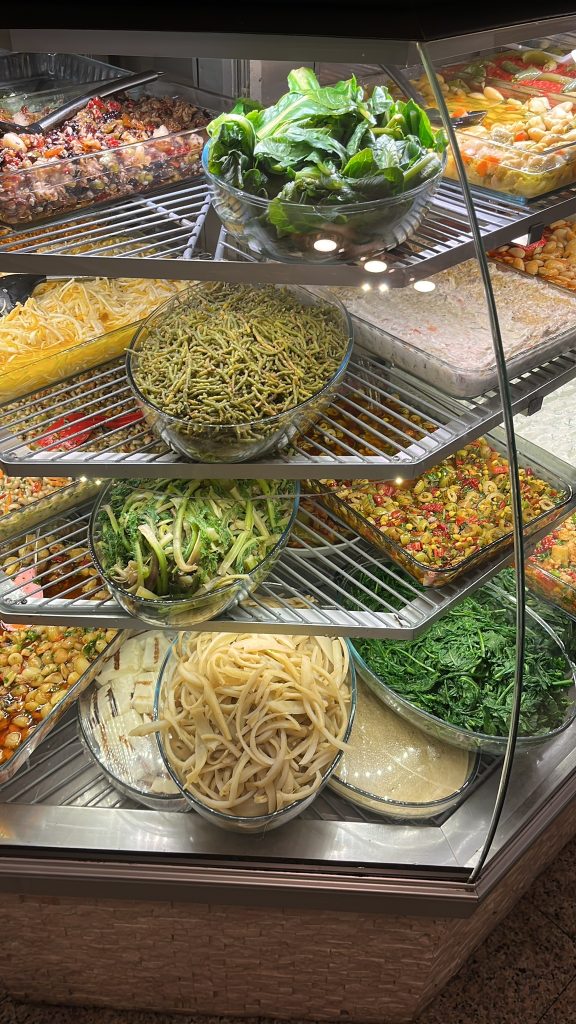
At some restaurants, mezes are included in a set menu. At others, staff will bring a tray or direct you to a refrigerated display where you can choose individually.
You simply point to the ones you’d like, and they’re brought to your table in small plates.
Always confirm pricing before selecting multiple dishes, as costs can add up quickly.
What Should You Expect When Ordering Meze?
At some restaurants, a few small mezes will arrive at your table automatically. Often these are complementary, but it is perfectly fine to ask:
“Bunlar ikram mıydı?”
This means, “Are these complimentary?”
In other cases, staff may bring a tray of individually wrapped mezes or direct you to a refrigerated display to choose from. These are not included in your meal, and you will be charged for each one you select.
Sometimes restaurants include one or two small dishes for free and then invite you to order additional plates if you would like more.
When in doubt, ask before ordering. Mezes are delicious, but choosing several can increase your bill quickly.
How Long Does a Meze Meal Last?
Meze dining is slow and social. In Turkey, meals often last two hours or more, especially in a meyhane. The focus is conversation as much as food, and no one expects you to rush through the experience.
Ready for a Food Tour? Check out my favorites.
What Do You Drink With Meze?
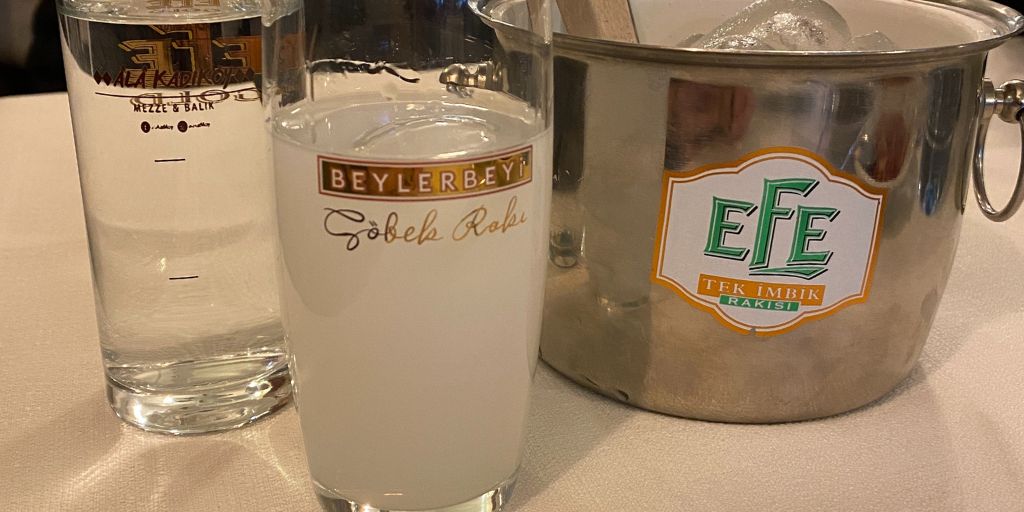
Mezes are traditionally paired with rakı, an anise-flavored spirit similar to ouzo. When mixed with cold water, it turns a cloudy, milky white, earning it the nickname “aslan sütü” or lion’s milk.
Rakı is not taken as a shot. It is sipped slowly throughout the meal, poured into small glasses, and refilled as conversations stretch late into the evening.
Sharing rakı over mezes is considered a social ritual as much as a meal. It encourages lingering, storytelling, and unhurried connection around the table. Rakı is strong, usually around 45 percent alcohol, so pacing yourself is wise.
If you prefer a non-alcoholic drink option, look for şalgam (shalgam), a fermented purple drink made from black carrots. It has a bold, slightly salty, and tangy flavor and is especially popular alongside kebabs and meze spreads. It comes in both spicy and non-spicy versions.
I love the spicy one so much that I sometimes mix a little into the regular for the perfect balance.
Wine is also becoming more popular, especially Turkish wines, but rakı remains the most traditional pairing.
Alcohol availability varies depending on the region, particularly in more conservative areas.
Bringing Turkish Meze Home
I can’t wait for you to experience Turkish meze for yourself, whether at a seaside restaurant in Turkey or around your own kitchen table.
When dining out, always confirm what you’re ordering and the price before adding multiple dishes. Mezes are delicious, but they can add up quickly.
If you’re wondering about how much tip you should add, I have you covered.
If you try making them at home, you’ll likely come across pomegranate molasses, a staple in Turkish kitchens that adds a sweet-tart depth to salads, dips, and vegetable dishes.
It’s worth bringing a bottle home from Turkey or finding one at a specialty market. Even a simple drizzle of olive oil and lemon juice transforms a basic salad.
And if you’re planning your trip, don’t miss my guide to the best souvenirs to bring back from Turkey — it’s full of delicious inspiration.
Planning a trip to Turkey?
- Planning to visit over winter vacation? Find out about the weather now…
- Get from Istanbul to Fethiye on a road trip
- Visiting during October? Find out about Halloween in Turkey
Turkey Vacation Basics
When I plan a trip these are the websites I use. I hope they help you plan your next adventure as well!
FLIGHTS: I am a huge fan of Skyscanner.
VISAS: You can use the free e-visa portal here but for a few extra dollars you can use iVisa and someone else will handle any issues that may come up.
E-SIM: When I traveled to SE Asia I discovered e-sims and I’m never going back. Airalo has been easy and cheap!
TRAVEL INSURANCE: I use TravelInsurance.com for my trips abroad.
CAR RENTAL: I have loved working with Discover Cars when I rent cars in country.
AIRPORT TRANSFERS: I have used these transfers many times and they are always great. If you’d like more options, I also recommend GetTransfers.com as they allow you to compare companies.
ACCOMMODATION: Find the best Turkey hotel deals on Booking.com.
CITY TOURS & DAY TRIPS: You can browse GetYourGuide’s website to find just the tour you’re looking for! We also recommend the MegaPass for major cities.
