
What to Wear in Turkey: Dress Code Tips for Travelers

The Art of Living in Turkey contains affiliate links and is a member of the Amazon Services LLC Associates Program. If you make a purchase using one of these Amazon links, I may receive compensation at no extra cost to you. See my Disclaimers for more information.
Wondering what to wear in Turkey? The good news is that Turkey does not have a strict national dress code like some countries in the Middle East.
However, clothing expectations can vary depending on where you are visiting, the season, and whether you’re entering religious sites like mosques.
After living in Turkey for more than five years and traveling across the country, I have learned that dressing appropriately can make your trip much more comfortable.
In the sections below I will walk you through what to wear when visiting mosques, how locals dress in cities like Istanbul, what to expect in more conservative regions, and how the seasons can affect what you pack.
Let’s start with the situation most travelers encounter first: visiting mosques.
What to Wear When Visiting Mosques in Turkey
While there isn’t an official Turkey dress code, dress rules are much stricter when entering mosques and holy sites such as Hagia Sophia, regardless of where you are.
Men should avoid wearing shorts or tank tops, and in some mosques long sleeves are preferred.
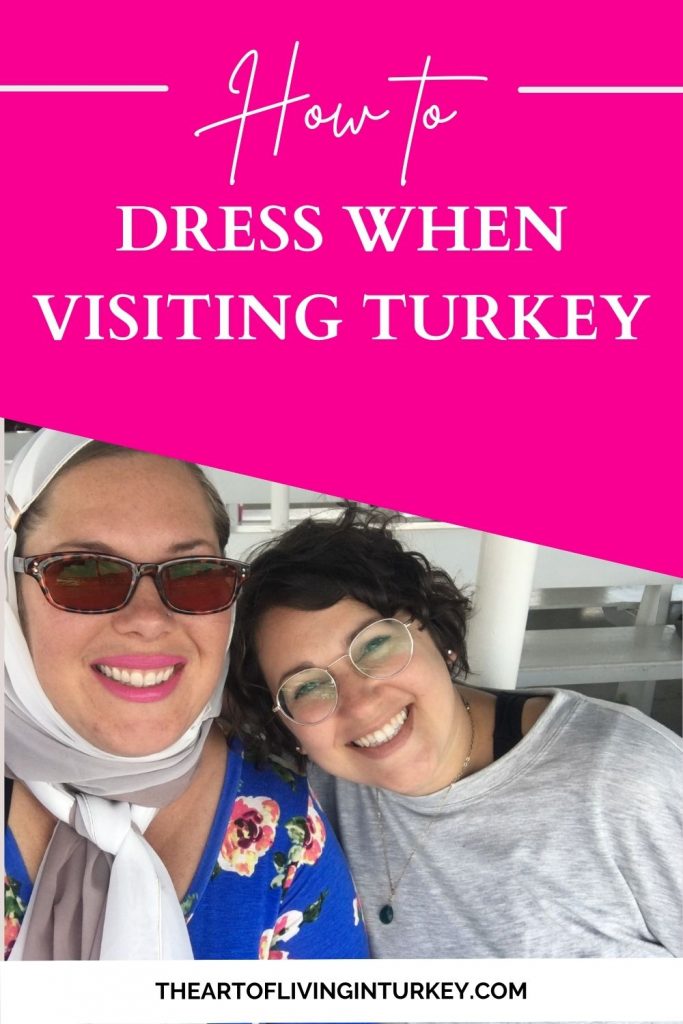
Women must cover their shoulders, upper arms, and hair with a scarf. Loose-fitting pants or a skirt that falls below the knees are required, and leggings are generally not allowed. A long, lightweight dress paired with a large scarf that can wrap around your head and shoulders is an easy and comfortable choice for visiting mosques.
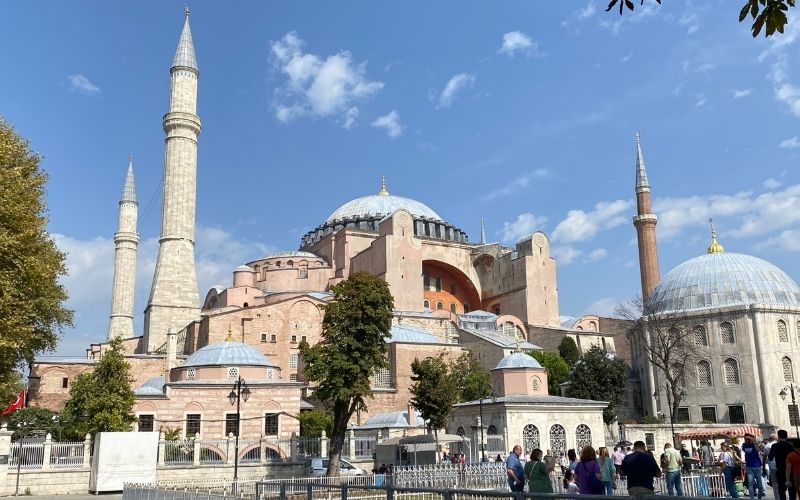
Some mosques, like the Blue Mosque, provide coverings if your outfit isn’t appropriate. Personally, I prefer bringing my own scarf or picking one up from a nearby shop.
If your clothing doesn’t meet the requirements, you may be asked to cover up with a robe or may not be allowed to enter.
Another important thing to remember is that shoes are not allowed inside mosques. You’ll remove them at the entrance and place them in cubbies before going inside.
During busy seasons, especially in summer, or if you’re wearing expensive shoes, it can be helpful to bring a small bag to carry them with you rather than leaving them in the cubbies.
Slip-on shoes are also much easier on days when you plan to visit mosques.
Pro Tip: Mosques close to visitors during prayer times, so it’s a good idea to quickly check daily prayer schedules before you go.
It’s also worth being mindful of how you dress when visiting more traditional neighborhoods like Üsküdar or Fatih. In these areas, showing a lot of skin can attract unwanted attention or stares.
In general, it’s best to dress a bit more conservatively in these neighborhoods than you might in other parts of Istanbul or larger cities.
What to Wear in Istanbul and Other Major Cities
In general, there is no strict dress code for tourists in Istanbul, but dressing slightly more modestly can help you avoid unwanted attention.
However, what you wear in Istanbul, especially as a woman, can be quite different from what you might wear in more conservative areas of Turkey, such as cities in the east.
In larger cities like Istanbul, Izmir, and Antalya, people generally dress much like they do in many European cities. You can usually wear your normal clothes as long as they aren’t extremely short or revealing.
That said, Istanbul is a large and diverse city, and some neighborhoods are more traditional than others. Areas like Üsküdar or Fatih, for example, tend to be more conservative, so it’s wise to dress a little more modestly when visiting those parts of the city.
A helpful tip is to carry a light scarf with you. It’s easy to throw over your shoulders if needed and can help you feel more comfortable in more traditional areas.
In neighborhoods like Kadıköy or Taksim, however, you’ll see people wearing just about everything. These areas are very modern and relaxed when it comes to clothing.
One thing I’ve noticed while living here is that locals and foreigners are sometimes judged differently. My Turkish friends can wear certain outfits that I could never wear without attracting unwanted attention.
When they wear something bold, people might think it’s a questionable fashion choice. When a foreigner wears the same thing, people may assume something about your character instead.
I’m not saying you need to worry too much about what people think, but showing a little cultural awareness can go a long way when visiting another country.
What to Wear in Conservative Regions of Turkey
When traveling to Eastern or Southeastern Turkey, it’s especially important to think about what you wear and how you present yourself. These regions tend to be the most traditional and conservative parts of the country.
Men can often get away with more flexibility, but wearing shorts or tank tops may still attract unwanted attention. It’s generally better to wear long pants and shirts with sleeves.
For women, modest clothing is strongly recommended. Skirts or pants should fall below the knees, and tops should have sleeves — ideally reaching to the elbow or longer.
I know it can get very hot in the summer, but dressing a bit more conservatively will make your experience much more comfortable. Lightweight fabrics like linen dresses or loose pants are a great option for staying cool while still respecting local norms.
What to Wear at the Beach in Turkey
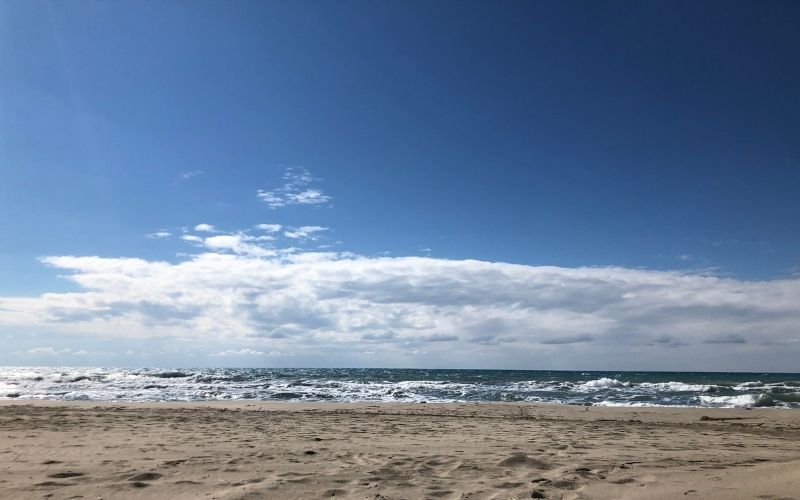
One thing I find fascinating about Turkey is that at the beach (and even at weddings), it often feels like anything goes. You’ll see women dressed head-to-toe as well as women in bikinis — and everything in between.
Popular beach destinations like Antalya, Bodrum, and Fethiye are very relaxed when it comes to swimwear.
Women tend to wear what they feel comfortable in, and honestly, I love that confidence.
That said, when walking around resorts or heading between your hotel and the beach, it’s usually a good idea to wear a cover-up or light dress. The more revealing the swimsuit, the more attention you may attract while walking through public areas.
Just being aware of your surroundings is usually enough, and you’ll likely have no issues. While Turkey has a secular government, it is still culturally conservative in many ways.
If you’re looking for a beautiful beach destination, Fethiye is a fantastic place to visit.
What to Wear in Turkey by Season
Before diving into the seasons, it’s helpful to know that clothing in Turkey is often quite affordable, so if you find you need something different during your trip, it’s usually easy to pick up a few items locally.
Summer
Summer in Turkey can be very hot, especially along the southern coast. Sleeveless tops and shorts are generally acceptable in most places, as long as they aren’t overly revealing.
Places like Antalya can reach 40°C (104°F) and can be quite humid, so lightweight and breathable clothing is essential. Just be sure to dress appropriately for where you’re visiting, especially if you plan to enter mosques or more traditional neighborhoods.
Fall
Fall is a season where layers are your best friend. Days can feel warm when you’re in the sun, but evenings often cool down quickly.
I always find it fascinating how warm the sun can feel during the day, only for the temperature to drop noticeably once evening arrives.
Fall also tends to be rainier than spring, so packing a good raincoat is a smart idea.
Winter
In many parts of Turkey, winter is the wettest season. You’ll want both warm clothing and a reliable raincoat.
The further inland you travel, the colder it will be. Coastal areas like Istanbul or Izmir are generally milder, while inland regions can experience much colder temperatures.
Spring
Spring is one of the most beautiful times to visit Turkey. In fact, spring in Istanbul is probably my favorite season.
Days are usually warm with cooler evenings, so layers work well again. There can be occasional rain, but typically less than during fall or winter.
Weather can vary across different regions of the country, but overall spring tends to offer some of the most comfortable temperatures for exploring.
What Shoes to Wear in Turkey
Comfortable walking shoes are one of the most important things to pack for Turkey.
Cities like Istanbul are very walkable, but they also have steep hills, cobblestone streets, and uneven sidewalks.
Good sneakers or comfortable walking sandals are usually the best choice for exploring cities during the day. This isn’t the place to try out your skills in high heels.
I’m a huge fan of barefoot shoes, especially Xero, but wear what you need to, remembering you will easily log 10-15,000 steps a day.
If you plan to visit mosques or a local’s home, shoes that are easy to slip on and off are especially helpful since you will need to remove them before entering.
How Women Should Dress in Turkey
One thing that often surprises visitors is how stylish Turkish women dress while still maintaining a sense of modesty.
You’ll see a wide range of styles, from modern Western fashion to more traditional conservative clothing. In larger cities especially, fashion is often quite trendy while still leaning slightly more modest than what you might see in some Western countries.
If you want to blend in more easily as a tourist, a helpful rule is:
Dress slightly more conservatively than the middle ground you see around you.
In practice, this usually means avoiding extremely revealing clothing, especially in more traditional neighborhoods or smaller cities.
Lightweight dresses, loose pants, and tops with sleeves are common choices that feel comfortable while still fitting in well with local styles.

What Not to Wear in Turkey
While Turkey does not have strict clothing laws for tourists, there are a few things that are best avoided.
Extremely revealing clothing such as very short shorts, low cut tops, or sheer outfits can attract unwanted attention, especially in more traditional neighborhoods.
Clothing with offensive language or imagery is also best avoided when visiting religious sites or conservative areas.
In general, if you dress slightly more modestly than you might at home, you will feel much more comfortable during your visit.
Important Cultural Tips for Dressing in Turkey
Watch Your Eye Contact
While this is not directly about clothing, it can affect your experience in Turkey.
Eye contact, especially smiling eye contact from a woman toward a man, can sometimes be interpreted as an invitation.
If you do not believe me, try making eye contact with a few vendors while walking through the Grand Bazaar and see how quickly they begin following you to sell something.
The same dynamic can happen on the street. While it is not openly discussed, there can sometimes be an assumption that foreign women are more open to attention.
Because of that, prolonged eye contact may send a message you did not intend.
Of course this does not mean you should never make eye contact or smile. Smiling at other women is completely normal, and honestly one of my favorite things to do while walking around the city.
Engaging with shop owners is also very different from making random eye contact on the street.
This is not meant to be a strict rule. It is simply something to be aware of. The more attention you draw to yourself, the greater the chance of uncomfortable interactions.
Most Turks are incredibly kind and helpful. Like anywhere in the world, though, a little awareness goes a long way.
Dress Slightly More Modestly at Night
Even in large cities like Istanbul, wearing very revealing clothing at night can attract more attention than you might expect, especially if you are walking between places.
Turkish women often dress very stylishly for evenings out. At the same time, their outfits usually lean a bit more modest than what you might see in many Western nightlife areas.
If you want to blend in more easily, choosing something fashionable but slightly more conservative can help you feel more comfortable.
Pay Attention to the Neighborhood
Cities in Turkey can feel very different from one neighborhood to another.
In modern areas like Kadikoy, Karakoy, or Taksim, clothing styles are relaxed and you will see a wide range of fashion.
In more traditional neighborhoods such as Fatih or Uskudar, dressing a little more modestly will usually help you avoid unwanted attention and feel more comfortable.
One of the easiest ways to decide what feels appropriate is to pay attention to how locals around you are dressed.

Extra Packing Tips for Turkey
Especially in the summer, bringing sunscreen and a hat is a very good idea. Sunscreen can be surprisingly expensive in Turkey, and the sun can be intense.
I cannot count how many times I have burned my forehead simply because I stepped out of the house without thinking about it.
Another item I love is my cross body fanny pack style bag. It is small and minimal, which makes it perfect for traveling in busy tourist areas where pickpocketing can happen.
I also use it in everyday life here. I do not like carrying things in my hands or dealing with a heavy bag that makes my back hurt later. Keeping my bag small forces me to carry only the essentials.
While many people recommend bringing an umbrella, I have found that Turkey can be quite windy. Because of that, I usually recommend bringing a good raincoat instead. A slightly longer raincoat works especially well.
Of course, you could bring a poncho if you prefer, but a solid raincoat has always worked better for me.
One last item I always carry is a filtered water bottle. My favorite is the bottle and filter from Epic Water Filters.
It is designed for tap water and helps filter out harsh chemicals and heavy metals, leaving you with much better tasting water while you are out exploring the city.
FAQs About What to Wear in Turkey
What should a female tourist wear in Turkey?
A good rule of thumb is to dress slightly more conservatively than the middle ground you see around you. Shorts and low cut tops are allowed in many places, but they may attract more attention than you expect. Lightweight dresses, loose pants, and tops with sleeves usually work well.
What should you wear on a night out in Turkey?
You can wear almost anything on a night out in big cities like Istanbul. That said, slightly more modest outfits often attract less unwanted attention. Many women choose stylish outfits that cover the shoulders or fall closer to the knees.
Can women wear jeans in Turkey?
Yes. Women wear jeans everywhere in Turkey and they are very common. In tourist areas you can even wear jean shorts, though longer styles usually attract less attention.
Do female tourists need to cover their hair in Turkey?
No. Women only need to cover their hair when entering mosques or religious sites. Outside of those places, head coverings are completely optional.
Is Istanbul safe for women travelers?
In general, yes. Istanbul is considered safe for women travelers, and many women visit every year without issues. Like any major city, it is still important to stay aware of your surroundings.
What to Wear in Turkey: Final Tips for Travelers
Turkey is a modern country with a wide range of styles, especially in larger cities like Istanbul.
While there is no strict dress code for tourists, dressing slightly more conservatively than you might at home can help you avoid unwanted attention and feel more comfortable during your trip.
By paying attention to local customs and dressing appropriately for the setting, whether it is a mosque, a beach, or a busy city street, you will have a much smoother and more enjoyable travel experience.
Ready to go? Make sure you check out the Ultimate Guide to Packing to make sure you don’t miss a thing! You can also learn a few Turkish Phrases to prepare!
Grab my travel Capsule Wardrobe Workbook here!
Planning a trip to Turkey?
- Looking for a read for your flight? Check out these 7 novels
- Halloween in Turkey: is it a thing?
- Medicine in Turkey can be tricky to find: here are a few tips
- Wondering about the weather in Turkey? Read more about Winter here
- Travel essentials for women including a few safety items
Turkey Vacation Basics
When I plan a trip these are the websites I use. I hope they help you plan your next adventure as well!
FLIGHTS: I am a huge fan of Skyscanner.
VISAS: You can use the free e-visa portal here but for a few extra dollars you can use iVisa and someone else will handle any issues that may come up.
E-SIM: When I traveled to SE Asia I discovered e-sims and I’m never going back. Airalo has been easy and cheap!
TRAVEL INSURANCE: I use TravelInsurance.com for my trips abroad.
CAR RENTAL: I have loved working with Discover Cars when I rent cars in country.
AIRPORT TRANSFERS: I have used these transfers many times and they are always great. If you’d like more options, I also recommend GetTransfers.com as they allow you to compare companies.
ACCOMMODATION: Find the best Turkey hotel deals on Booking.com.
CITY TOURS & DAY TRIPS: You can browse GetYourGuide’s website to find just the tour you’re looking for! We also recommend the MegaPass for major cities.
