
The 7 Regions of Turkey: Map, Cities, Climate & Geography Guide
The Art of Living in Turkey contains affiliate links and is a member of the Amazon Services LLC Associates Program. If you make a purchase using one of these Amazon links, I may receive compensation at no extra cost to you. See my Disclaimers for more information.
Turkey is divided into seven geographical regions, each with its own landscapes, climate, culture, and cuisine. From ancient sites dating back over 12,000 years to lush tea gardens and turquoise coastlines, the diversity across Turkey is remarkable.
Each region (Turkish: bölge) is divided into provinces (il). Turkey has 81 provinces, which are further divided into districts (ilçe) and neighborhoods (mahalle).
After living in Turkey for over five years, I’ve had the chance to explore six of the seven regions and more than 23 provinces. One of the things I love most about living here is seeing how dramatically the culture, food, and landscapes change from region to region.
While most of Turkey lies in Asia (Anatolia), a small portion of the country sits in Europe. Three provinces are entirely in Europe, and both Istanbul and Çanakkale span two continents.
Below you’ll find an overview of each region, including:
- climate and terrain
- notable foods
- famous places
- top things to do
Let’s explore the seven regions of Turkey.
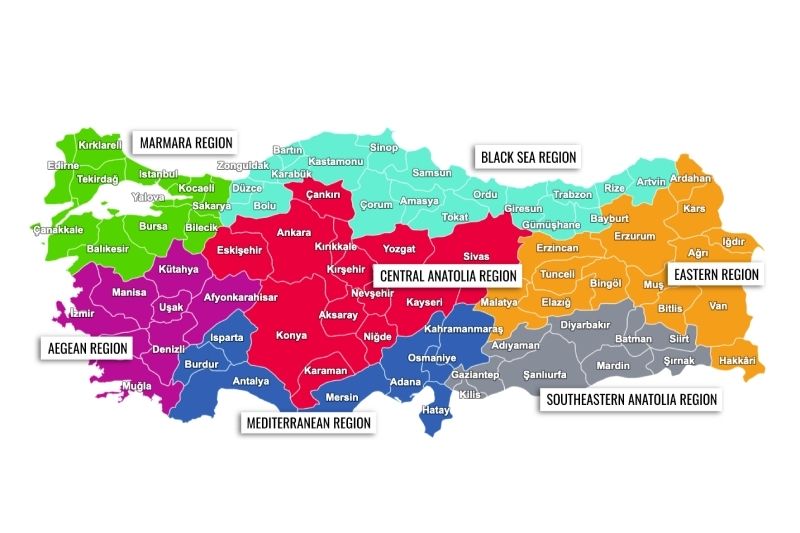
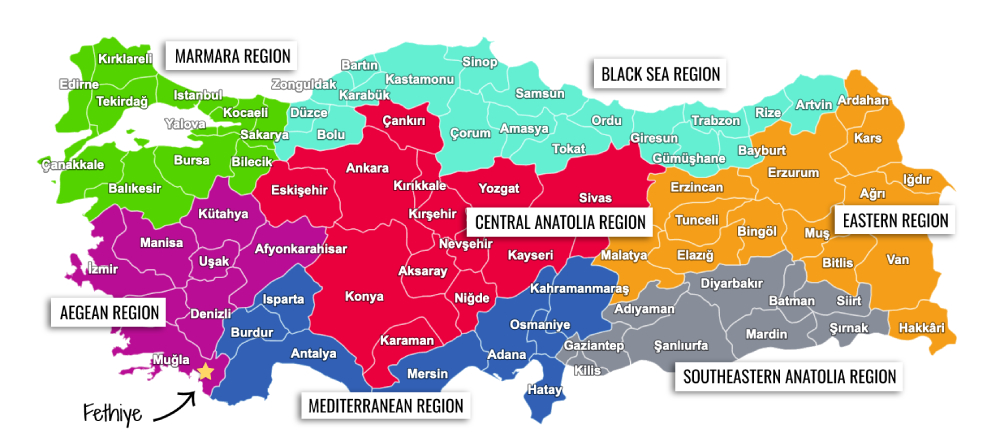
Map of the 7 Regions of Turkey
Turkey is divided into seven official geographical regions, each with distinct landscapes, climates, and cultural traditions. These regions were originally defined during the First Geography Congress in 1941 and are still used today to organize geography and tourism.
The seven regions are:
- Marmara Region
- Black Sea Region
- Eastern Anatolia Region
- Southeastern Anatolia Region
- Mediterranean Region
- Aegean Region
- Central Anatolia Region
The map below shows the approximate boundaries of each region across Turkey.
Quick Overview of Turkey’s Seven Regions
| Region | Largest City | Known For | Landscape |
|---|---|---|---|
| Marmara | Istanbul | Business, history, population | Coastal & urban |
| Black Sea | Trabzon | Tea plantations, lush mountains | Forested mountains |
| Eastern Anatolia | Erzurum | Mountains, Lake Van | High plateau |
| Southeastern Anatolia | Gaziantep | Ancient history, cuisine | Dry plains |
| Mediterranean | Antalya | Beaches, tourism | Coastal mountains |
| Aegean | Izmir | Ancient ruins, olive groves | Valleys & coastline |
| Central Anatolia | Ankara | Capital city, Cappadocia | Plateau |
Major Cities in Each Region of Turkey
Since moving to Turkey in 2019, I’ve traveled extensively around the country, exploring everything from coastal cities to remote mountain villages.
Turkey’s seven regions contain dozens of major cities, each with its own culture, cuisine, and history. Below are some of the most notable cities in each region.
Largest Cities in Turkey
| City | Region | Population |
|---|---|---|
| Istanbul | Marmara | ~16 million |
| Ankara | Central Anatolia | ~5.8 million |
| Izmir | Aegean | ~4.4 million |
| Bursa | Marmara | ~3.1 million |
| Antalya | Mediterranean | ~2.7 million |
Marmara Region
Turkey’s most populated region and home to the country’s largest city.
- Istanbul
- Bursa
- Edirne
- Tekirdağ
- Balıkesir
Black Sea Region
Known for lush mountains, tea plantations, and dramatic coastal scenery.
- Trabzon
- Rize
- Samsun
- Sinop
- Kastamonu
Eastern Anatolia Region
Turkey’s most mountainous and least populated region.
- Van
- Erzurum
- Kars
- Malatya
- Elazığ
Southeastern Anatolia Region
A culturally rich region known for its ancient history and incredible cuisine.
- Gaziantep
- Şanlıurfa
- Diyarbakır
- Mardin
- Batman
Mediterranean Region
Home to many of Turkey’s most famous beach destinations.
- Antalya
- Adana
- Mersin
- Hatay
- Kahramanmaraş
Aegean Region
Known for ancient ruins, olive groves, and beautiful coastal towns.
- Izmir
- Bodrum
- Kuşadası
- Aydın
- Denizli
Central Anatolia Region
Turkey’s geographic heart and home to the capital city.
- Ankara
- Konya
- Kayseri
- Eskişehir
- Nevşehir (Cappadocia)
Marmara Region
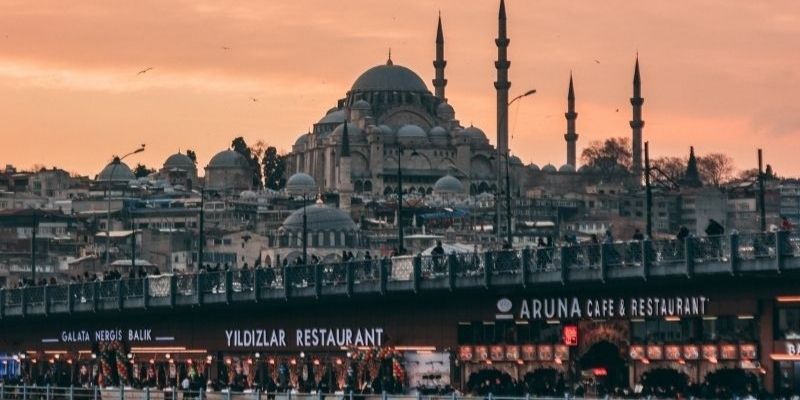
This region’s namesake is the Sea of Marmara, an island sea completely within Turkey’s borders that separates the country’s European and Asian parts.
While the Marmara Region has the second smallest area (8.5%), it also has the highest population (30.3%).
It is bordered by Greece and Bulgaria on the European side and by the Black Sea, Western Anatolia, and the Aegean Regions on the Asian side.
Climate & Terrain
The climate in this region is partly Mediterranean and partly humid subtropical.
Depending on where you are in the region, the climate can vary significantly. Higher altitude areas like Ümraniye will have more snow in winter than lower seaside areas like Kadıköy, for instance.
But because it is mostly on the water, the temperatures are much milder compared to the rest of the country.
That being said, summers are always hot, mostly dry, but typically quite humid. The winters can be cold, but there has been less snow in the last few years.
As someone originally from Florida, I was surprised that I still haven’t needed a true winter coat in Istanbul, though a few colder days have come close. It’s the cold, wet days that nearly push me to get one.
It is also relatively flat, with a few exceptions, though it doesn’t always feel like it when you have to walk up the hill to go to a Turkish lesson or when you are carrying all your purchases back from the market down the street.
Food & Drink
1. Istanbul Street Food
Istanbul boasts some of the best street foods, easily found when you’re a bit peckish. When buying street food, look for stalls that are clean and busy, which usually means the food is fresh.
My four favorites that you will often see:
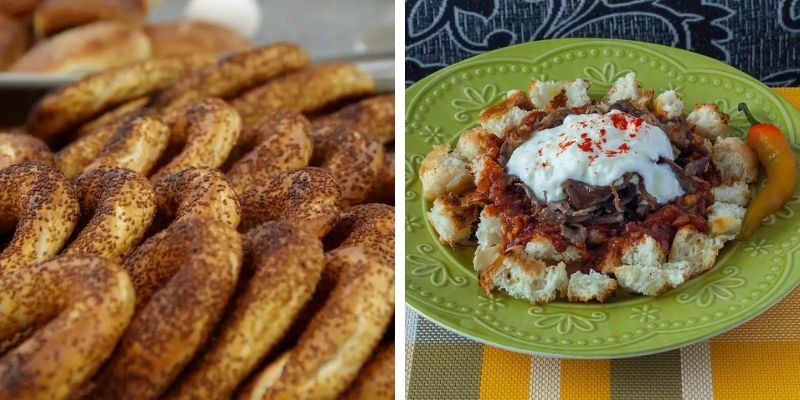
- Simit – similar to a bagel but thinner and absolutely delicious. Try different kinds because they are not all the same…but that will be for another blog.
- Börek – it is so delicious! This is often eaten for breakfast, but it can be found throughout the day. There are so many varieties, and all are delicious. Typically, they are savory, though you will see a sade (plain) börek that they sprinkle it with powdered sugar.
- Tost – this is essentially grilled cheese. They are everywhere. They can have all kinds of stuff inside or just a plain cheese sandwich. Try different ones…which is your favorite? I love it when they put peppers in there.
- Çiğ köfte – these are “meatballs” made from bulgur, tomato paste, and spices. It is the Turkish version of steak tartare, though, after food safety concerns, the meat has been replaced with bulgur and ground walnuts. Vegetarians must definitely try it!
2. İskender Kebap
This is a famous Turkish dish named after the man who created it, İskender Efendi.
While you can find it in many places, try it in Bursa since it’s their specialty. It is thinly sliced lamb, cooked to perfection, mixed with butter-coated pita bread and tomato sauce. Then it is slathered in yogurt and hot, melted butter. Okay, so it isn’t heart-healthy, but trust me, it’s delicious.
Though I have had Iskender Kebab a couple of times, on a roadtrip through Bursa, we stopped at Bursa Kebapçısı and had the best iskender. It is assuredly different in Bursa.
3. Yalova Sütlüsü
A sweet treat you simply must try in Yalova. It is a soft pastry that is soaked in coconut water, milk, and vanilla. It is often adorned with pistachios, which brings a nice contrast to the light color of the pastry.
Famous Places
There are so many! Of course, in Istanbul, there are the ones that everyone knows…Hagia Sofia and theGrand Bazaar (though I think the outdoor markets are better and where the locals shop), or less known ones like the Chora Church, whose renovations were recently completed.
Istanbul holds many incredible ancient sites, has delicious food, and boasts an easy-to-navigate public transportation system.
Istanbul is where people from all over Turkey come to shop.
You can take a private Bosphorus cruise and see so many of the sights from your own private yacht for quite a reasonable price.
It is, however, not the only incredible city in this region.
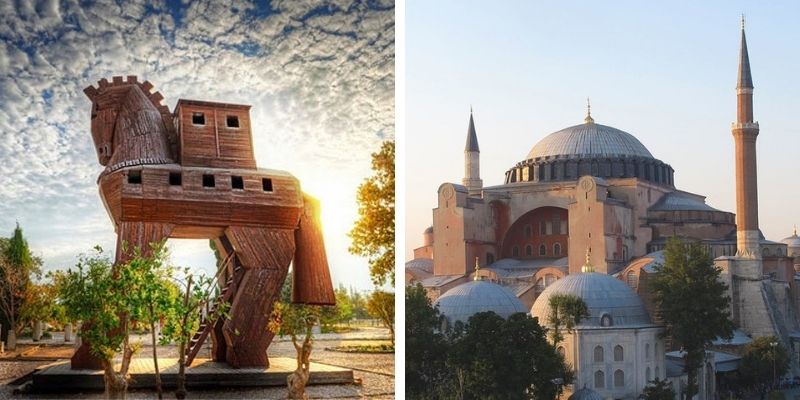
The Selimiye Mosque and its Social Complex are on the UNESCO World Heritage list.
UNESCO World Heritage site states that “the Selimiye Mosque Complex commissioned by Selim II is the ultimate architectural expression by the architect Sinan of the Ottoman külliye.”
You also have the archaeological site of Troy, one of the most famous archaeological sites in the world, having been first unearthed in 1870.
It is known in Greek mythology as the setting of the Trojan War.
Things to Do
One of those exceptions to the flatness of the Marmara Region is the Uludag Mountain, the most prominent in the region.
Here you will find some great skiing, but make sure to stop in Bursa on your way out and try some of their delicious foods! While you’re at it, make sure to buy some dried peppers and eggplants so you can make stuffed peppers later.
There are vineyards to visit (head over to the Tekirdağ Province) and ancient sites peppered throughout the region, not to mention the cultural experiences to be had.
You will even find some great island hopping in this region as you check out the Princes’ Islands, as well as Marmara Island, Gokceada, along with a host of Greek islands available by ferry.
Kocaeli & Balıkesir provinces also have some beautiful natural attractions, including bird sanctuaries, beautiful beaches, and hot springs.
The city walls, originally constructed by Constantine and enlarged by different groups along the way, are the second-longest walls in the world, only after the Great Wall of China, and actually rank 1st in terms of wall height.
Black Sea Region
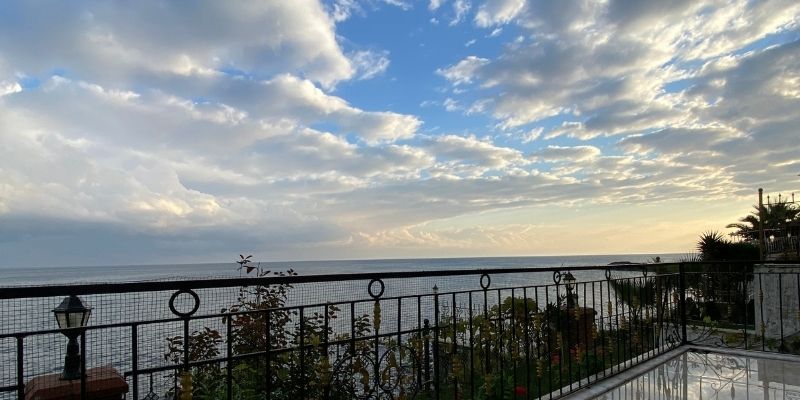
The Black Sea Region is located along the Black Sea and is home to many small coastal villages. I really enjoyed the road trip I took up here.
Most find the Turkish accent here to be quite different and often hard to understand. Despite that, it is still worth a visit.
You can watch this helpful video below to hear the different accents throughout Turkey.

Another interesting fact about this region is that it is the only region where most of its inhabitants live in rural settings rather than urban ones.
It is bordered by 4 of the other 6 regions and the country of Georgia.
Climate & Terrain
This region is often visited by many during the summer months when trying to escape the intense heat and humidity that much of the country encounters.
Because it has the Pontic Mountain Range, there is a higher elevation throughout this region, and its coast is rocky and steep, which is vastly different from the rest of the country.
The coastal road through this region is one of the most beautiful scenes I have seen while driving through Turkey. If you rent a car, make sure to drive down the D010.
Food & Drink
1. Laz Böreği
Remember how I said that most börek is savory…well, in this region, the Laz people group make a borek that is most definitely not savory and quite similar to baklava. Can you guess what it’s called? You guessed it…laz böreği.
2. Black Hive Honey
For all you have bee fans out there, make sure you check out black hive honey while you’re in town.
This honey is produced with quality rather than quantity in mind. And because of the lush Black Sea flora, it is honey unlike anything else.
3. Kuymak
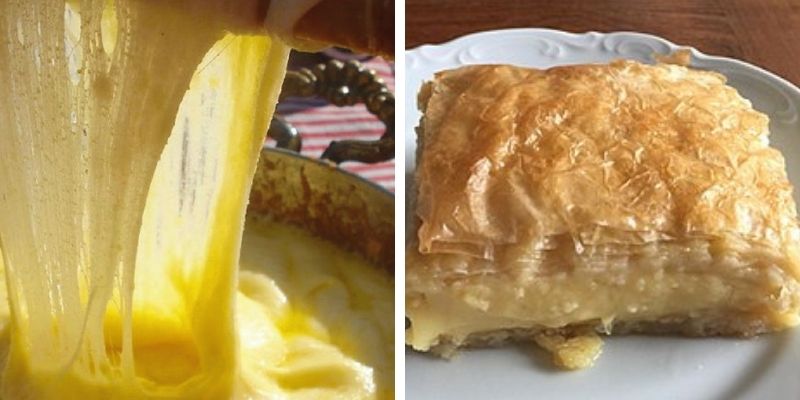
Also known as muhlama, it is very well known in Trabzon, especially. It is cheese sauce, similar in some ways to queso, except quite stringy. Though kuymak and muhlama are often used interchangeably, there is a slight difference between them.
Kuymak is typically made with cornmeal, butter, and a local cheese called muhlama, whereas Muhlama is made with cornmeal, butter, milk or water, and kashar cheese (similar to mozzarella IMO).
You can find this throughout the country, but if you go to the Black Sea, you should definitely try kuymak there!
Famous Places
Here we will find yet another one of UNESCO’s World Heritage sites. The Sümela Monastery in Trabzon was closed for renovations in 2015 and reopened in 2020.
It is an Orthodox monastery dedicated to the Virgin Mary. One of the reasons I want to see it is that it was founded in the 4th century. Amazing!
Pro tip: Because of its age, Sumela is often closed for renovations. Make sure it is open to the public before you go.
If you love Alcatraz, check out the Alcatraz of Anatolia…the historical Sinop Prison, which was later turned into a museum.
Considering when it was built, it is a feat in and of itself.
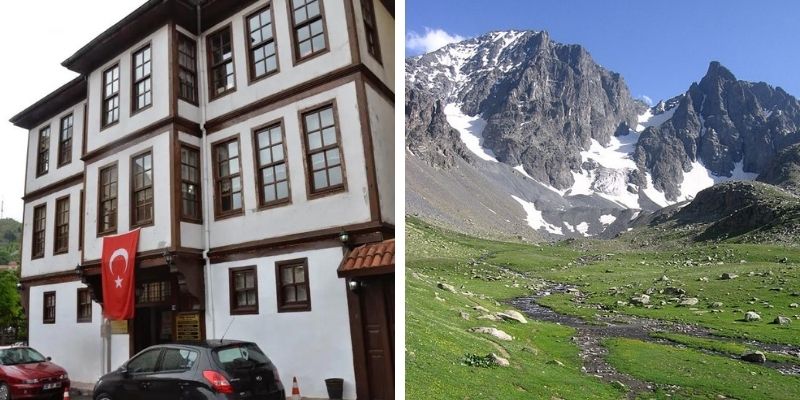
If you visit the Safranbolu Houses in Karabük, you’ll get a feel of Turkey before it was Turkey (#OttomanEmpire).
You will step back in time to the 18th and 19th centuries and will see well-preserved traditional houses, fountains, Turkish baths, and more.
The city of Trabzon is another one worth visiting. It is also one of the oldest ports in Turkey. While you’re there, make sure to try the sutlac!
The scenery is beautiful and the setting for many of my favorite Turkish TV shows. There is much to explore and discover.
Things to Do
The Kaçkar Mountains boast one of the best trekking sites in Turkey. They are covered in ice and usually best hiked between June and September.
And what’s more, for outdoor lovers, this region has many different national parks full of hiking, canoeing, hunting, fishing, and rafting, as well as the ability to see amazing waterfalls, forests, lakes, and rivers.
For history lovers, there are many ancient monasteries, mosques, and a few castles to see as well. Also, the Historical Mansions in Kastamonu are great for architecture lovers.
Eastern Anatolia Region
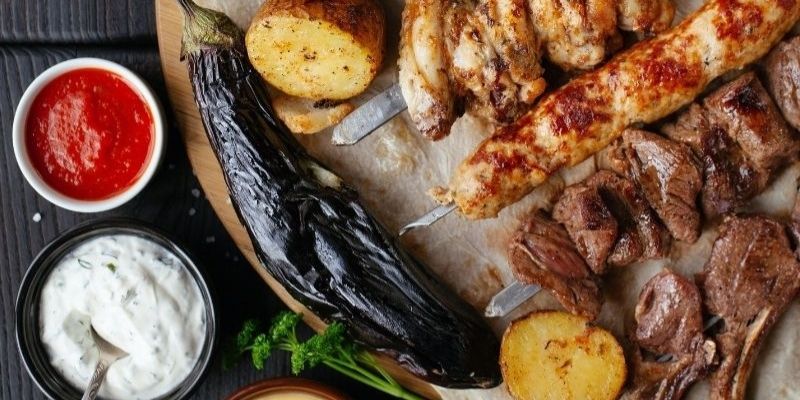
This region has the largest landmass, with roughly 20% of the country’s total, but it is also the least densely populated, with only a meager 7.4% of the entire population.
This region borders the Black Sea, Central Anatolia, Mediterranean, and Southeastern Anatolia Regions as well as Georgia, Iraq, Iran, Azerbaijan, and Armenia.
Because it borders several countries, visiting Eastern Turkey can feel like stepping into another world.
Climate & Terrain
Given that this region is home to the Pontus and Taurus Mountains, it has many high elevations, a more drastic climate, and is mostly uninhabitable for humans.
Many of the mountains here are extinct volcanoes. You can see the old lava flows throughout the region, and it has some of the most absolutely incredible views!
The landscape is covered with lakes, mountains, rivers, and plateaus.
It has cold winters and hot summers. In winter months, it averages around -13 °F (-25 °C) with the lowest being around -40 °F (-40 °C).
In the summer, however, it is much hotter. You can typically find temperatures between 84.9 °F (29.4 °C) and 97 °F (36 °C).
The highs can reach up to 105 °F (41 °C) and cool off to roughly half that at 68 °F (20 °C). Drink enough water so you don’t get dehydrated, and use sunscreen so you don’t get burned!
Food & Drink
1. Fresh & Dried Apricots
In Malatya, you have to check out the apricot orchards. Because of the fertile soil that is nourished by the Euphrates River, the apricots have such a rich flavor.
They utilize traditional drying methods and don’t use sulfur in the process. According to the Observatory of Economic Complexity, Turkey is also the 2nd largest exporter of fresh apricots in the whole world.
2. Kadayıf Dolması
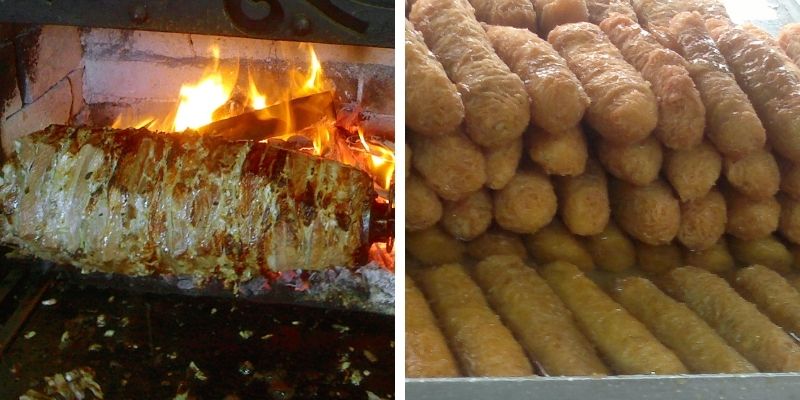
This is a beautiful Turkish desert. It looks like rolled shredded wheat and is often stuffed with pistachios or walnuts. Then they dip it in a sugary syrup similar to many of their desserts.
3. Cağ kebabı
One kebab I am especially looking forward to trying is the Cağ kebabı. This special kebab originates in Erzurum.
It is made from lamb that has been marinated for 12 hours with onions, salt, and pepper. After it cooks on a horizontal skewer over a wood fire, it is sliced and eaten straight away.
Definitely one I’m excited to try.
Famous Places
There are a handful of well-known places in the Eastern Anatolia Region, despite its rugged terrain or perhaps because of it.
Lake Van is one of the most sought-after destinations. It was formed after the explosion of Mount Nemrut Volcano.
Over time, the crater filled with water. The thing that sets this lake apart from the rest is that it is the largest saline soda (alkaline) lake on Earth.
It is also the largest lake in Turkey.
Because of its alkalinity, the only fish that can survive in it is the pearl mullet, which is also only found in Turkey.
If you go there between April and June, you will see hundreds of these fish jumping barriers to go from the salty water to the fresh water in order to reproduce.
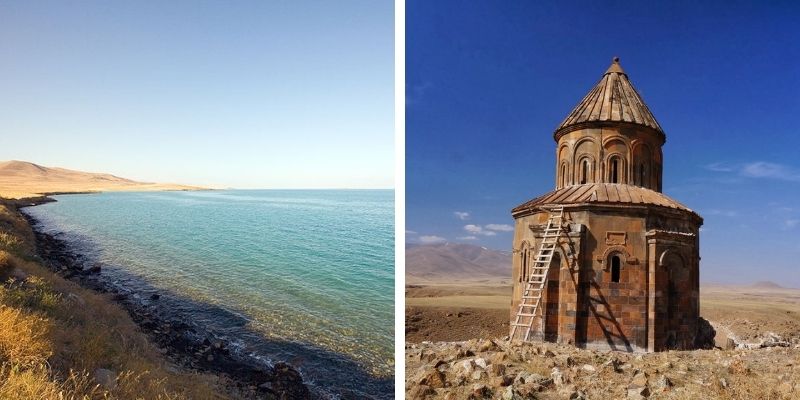
Kars is known for its interesting Russian architecture and for being the setting for Orhan Pamuk’s famous novel Snow.
It is also one of the highest cities in Turkey! If you take the short climb to the Kars Castle, you can experience an even higher view of the city.
There has also been speculation that Mount Ararat, which had its last eruption on June 2, 1840, is the resting place for Noah’s Ark, though there is much debate on the topic. This climbing website even explains how the bible refers to Mt. Ararat as a mountain range instead of a specific mountain.
No one has actually found Noah’s Ark as of now, though many groups have explored the mountain extensively in search of it. Allegedly, even the famous explorer, Marco Polo, spent time searching for this piece of history.
Things to Do
If you enjoy skiing, you should definitely check out the Palandöken Ski Center in Erzurum.
You can go there from the first snowfall in November until roughly June. It is perfect because it is close to the airport, has the clearest weather, and boasts stunning views.
There is also fishing, hiking, and other sightseeing opportunities in the region. A few places to see are:
- The Church of the Holy Apostles
- Harput Castle
- Akdamar Island (in Lake Van)
- Karanlık Canyon (Dark Canyon)
Bingöl Province, formerly known as Çapaçur Province, literally means “a thousand lakes” in Turkish.
This is fitting, given that one of the famous things here is the floating islands. They are actually floating plants in the form of islands on one of the lakes and move much like a raft.
Southeastern Anatolia Region
This region is bordered by the Mediterranean and Eastern Anatolian Regions as well as Syria and Iraq. It comes in at the smallest landmass with only 8% of the country’s total.
More often than not, with the tensions high in Syria, this region is often encouraged not to visit by the US State Department, but it is still worth noting all of the amazing things about this region.
Make sure to check the security threat before you go, though Turkey has always felt quite safe to me.
Climate & Terrain
Here you will find long, hot, and dry summers with cold and rainy winters.
While the summer months in most regions are dry, this region is different because it is that “dry heat” that everyone in Arizona talks about, reaching 105°F (40°C) quite easily.
You can seek out the shade for some respite from the heat.
Because parts of the region are mountainous while others are flatter, the climate varies significantly.
The mountains that run through this region are the Taurus Mountains, which are shared with the Eastern Anatolia Region. Here you will also see many valleys and plateaus.
Food & Drink
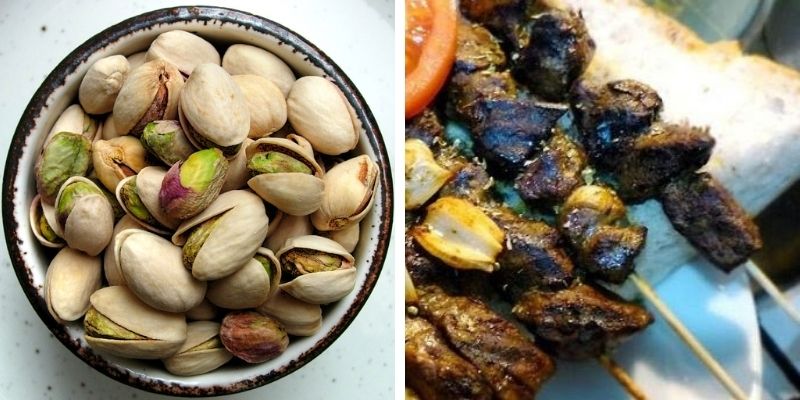
1. All the Kebabs
In this region, don’t miss the nationally renowned variety of kebabs.
As this is a very meat-dependent region, vegetarians may have a more difficult time here than in other regions.
2. Pistachios
Make sure you try the pistachios grown in this region. They are famous for being the world’s finest! Turkey is also the 2nd largest exporter of pistachios, according to the World Bank.
And with that, don’t miss out on the baklava that they are often used in.
3. Mumbar Dolması
If you’re a fan of chitlins in the States, you will probably enjoy the Mumbar Dolması.
While intestines aren’t everyone’s flavor of choice, they are well known in Batman as some of the most delicious you can find. That being said, they aren’t my cup of tea, so I can’t speak from experience. 🙃
Famous Places
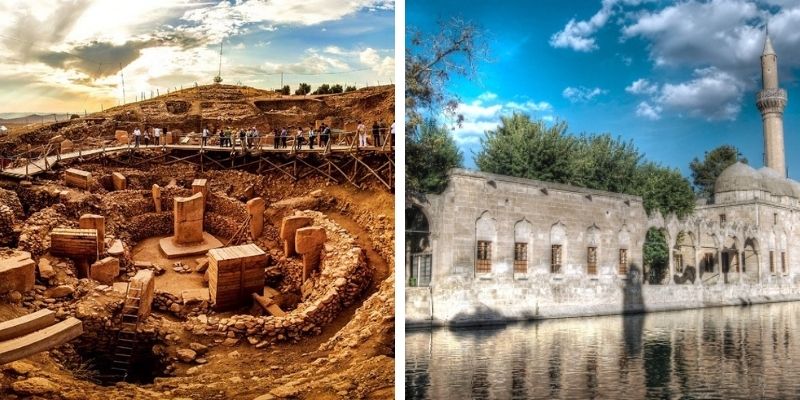
One of Turkey’s most scientifically and culturally important discoveries is Göbeklitepe, “Potbelly Hill,” which was discovered in 1963, but it wasn’t until 1994 that its importance was really understood by German archaeologist Klaus Schmidt.
It is currently considered the oldest known temple complex built by humans. It is currently estimated to be 11,000 years old, nearly 6,000 years older than Stonehenge, according to this article in the Smithsonian Magazine.
The Pool of Abraham in Şanlıurfa is the place many Muslims believe İbrahım (Abraham) was thrown into the fire by Nimrod.
Ibrahim (Abraham) is a very special person to practicing Muslims, Christians, and Jews alike, so this site is visited by Turks and tourists alike.
Things to Do
Nemrut Mountain is a famous volcanic mountain that created the crater that is now Lake Van.
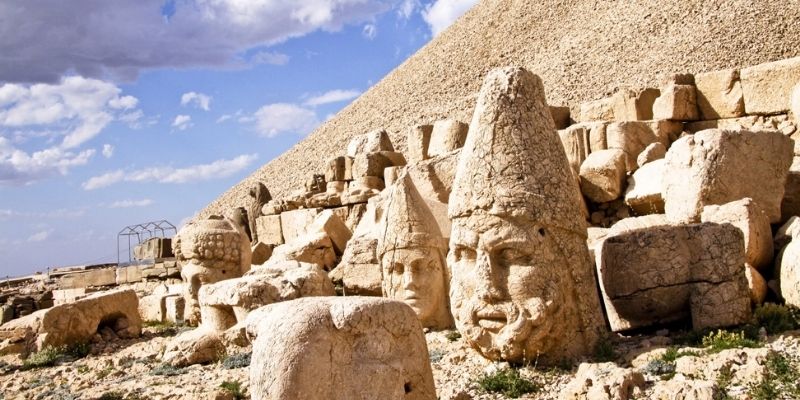
It is on UNESCO’s list because of the famous sculptures that are 8-9 meters tall on the summit. It’s a truly unique sight, and unlike anything you’ll find in most parts of the world.
Make sure you also check out Diyarbakır, the city where the old meets the new. There are many sights to see and much rich history to discover.
This region is quite unique compared to the rest of the country.
It has a different feel, and since it isn’t close to a body of water, you just don’t have that beach feel that much of the coast has.
Mediterranean Region
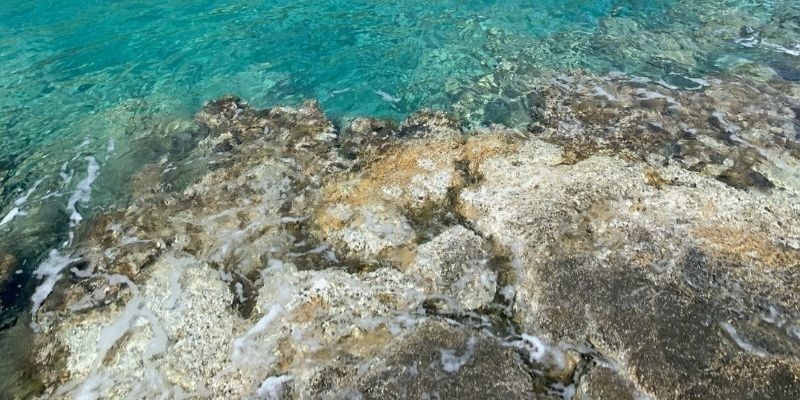
The Mediterranean Region has been visited by tourists for a long time. Many foreigners, typically Europeans, purchase summer homes throughout the region.
It has beautiful views and stunning blue water beaches. It is beloved by all who venture there, unless you can’t stand the summer heat, that is, in which case you should go in the autumn time.
This region is bordered by 4 of the 6 other regions and Syria. It is referred to as “Akdeniz” in Turkish and is also often called the Turkish Riviera or Turquoise Coast.
Climate & Terrain
The terrain here is mountainous with the Toros and Amonos Mountains moving parallel to the sea. There are also many rivers and lakes throughout the region. Obviously, being on the coast, there are also some of the most beautiful beaches.
As you would expect, the summers here are also very hot and dry, while the rest of the year is quite rainy, with the most rain falling between October and April.
In the winter, the coast rarely goes below 41°F (5°C) nor has any snowfall to speak of, but further inland, especially in the Lakes District, you will find an entirely different climate.
Here, it can be quite severe winters with a lot of snow.
Food & Drink
1. Adana Kebabs
While you can get it even in Istanbul, you will find that in Adana, it is even better. The meat is from a 1 or 2-year-old lamb, high quality, and eaten with delicious lavash, a type of Turkish bread. Of course, with some veggies on the side.
I love eating it in a durum form with all the veggies. Afiyet olsun! (similar to bon apetit).
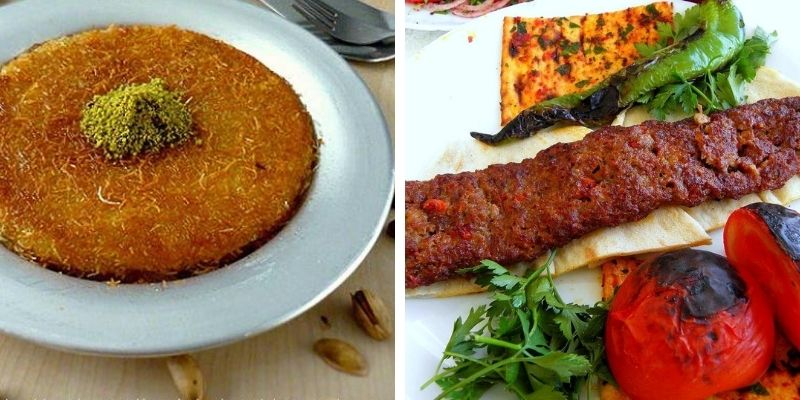
2. Künefe
In Hatay, you can have the world-famous dessert künefe. This is made from shredded wheat and a local unsalted künefe cheese and then drizzled in a sugary syrup. Make sure you eat it fresh for the best experience.
Try it in a couple of places throughout the region and see if you can taste the differences. You can also check out these other desserts that are famous in Turkey.
3. Maraş Ice Cream
Another dessert you could try is traditional Maraş ice cream. It is made from goat milk, salt, and sugar. The special flavor comes from the goat milk coming from goats that were fed with keven herbs and salep.
I am a bit of a snob when it comes to ice cream and still don’t love this one. I recommend trying it, however, because the texture is so different than what I would call “normal” ice cream. Try it out and see if you feel the same.
Famous Places
Here you will find Antakya (also known as Antioch). It is close to the Syrian border so make sure you check about the safety level and do your research before you go.
Unfortunately, the earthquake of 2023 leveled much of the city, though there are still a few places to see, like the St. Peter Church, which was registered as a cultural property to be protected by UNESCO in 2005.
It is also home to the Mosaic Museum in Mersin and the ancient city of Perge, just to the east of Antalya.
Perge was an important city of Pamphylia, but also known to many Christians as one of the cities that Paul traveled to on his first journey through the region.
This region has its own share of UNESCO sites, such as the Titus Vespasianus Tunnel in Hatay and the Ancient City of Sagalassos in Burdur.
If you love history, you will find no shortage of things to see throughout this area!
Things to Do
Patara is an ancient city that was one of the six principal cities of Lycia. It was a major naval and trading port in its day, just on the Xanthos River.
It also has one of the most beautiful sand beaches. It can get quite windy, though, so make sure you go prepared.
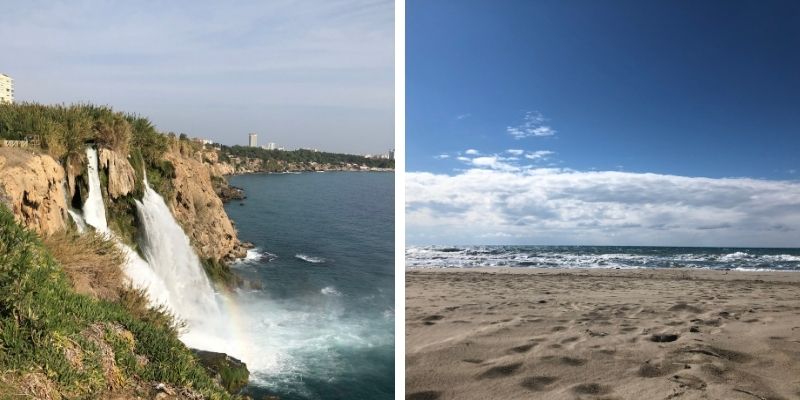
If you’re staying in Antalya, there is so much to do! Düden Waterfalls are pretty epic as they spill over 40-meter cliffs into the Mediterranean Sea.
You can also check out the Old City in Downtown Antalya.
Then you can head over to Osmaniye to relax in the Haruniye Thermal Spring. It is on the Ceyhan River and surrounded by trees. Definitely a place for de-stressing.
You can also check out this post on Fethiye for even more ideas of fun things to do, and this one on how to get to Fethiye from Istanbul!
Aegean Region
This region is bordered by the Marmara, Central Anatolia, and Mediterranean Regions. Because of the curvy coastline, it actually has the longest coastline of all the coastal regions of Turkey.
This region is also bordered by the Aegean Sea, whose waters are often a bit colder than those of the Mediterranean.
Climate & Terrain
This region also has a Mediterranean climate, meaning it is hot and dry during the summer and cool and wet in the winter.
The further inland you go the more drastic the weather becomes. Temperatures range from 57-97°F (14-36°C) in the summer and 40-68°F (4-20°C) in the winter months.
This region does have mountains, though here they are perpendicular to the coast instead of parallel.
Because of this, the valleys allow the sea climate to reach further inland.
Food & Drink
1. Olives & Figs
Make sure you have some olives and figs in Aydin. Their figs are considered one of the best quality figs in the world.
You can buy fresh figs during the summer and even into the beginning of the fall. Also, nearly 60% of all the olive trees in Turkey live in this region.
2. Kumru
What makes this dish special is the chickpea flour in the bread, which makes it especially soft. It is typically stuffed with cheese, sucuk (Turkish sausage), and tomato.
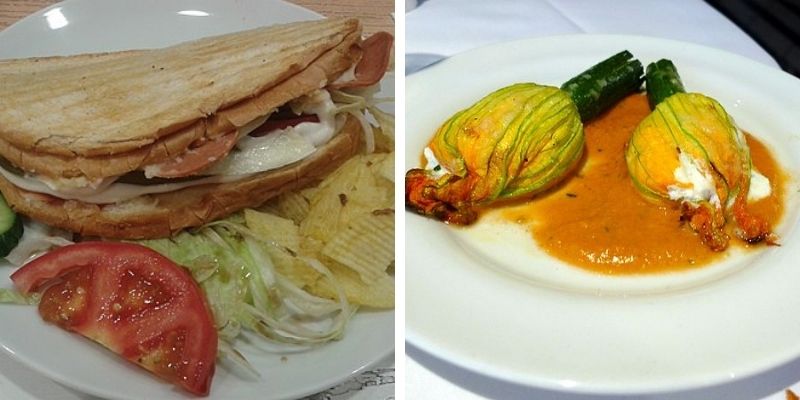
3. Stuffed Squash Blossoms
Or as they are called in Turkish, Kabak Çiçeği Dolması. You will find them in Muğla. Dolma, as we talked about, simply means stuffed.
These are special because the blossoms are picked in the morning before the heat gets to them. You can also find these at many meyhanes and ocakbaşı. They are one of my favorite mezes.
Famous Places
In this region, you will find the 7 churches of Revelation.
The Library of Celsus in Ephesus is one of the most impressive surviving Roman libraries and one of the most photographed historical sites in Turkey. Definitely worth a see! I love the plaque on the inside explaining the engineering aspects of how it was built. Absolutely fascinating.
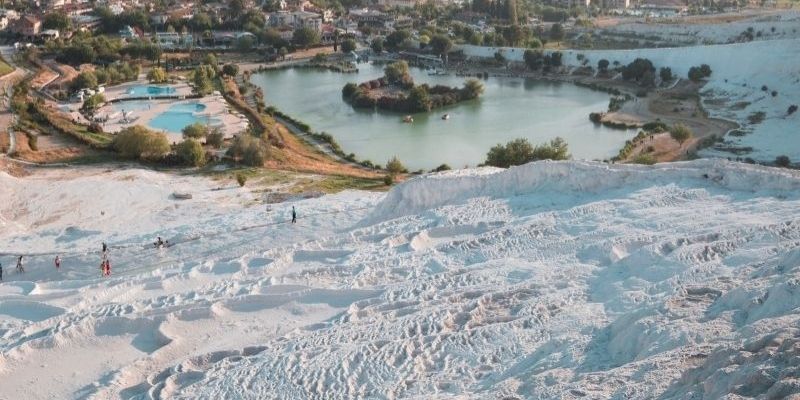
You can also check out Pamukkale in Denizli. During the Roman and Byzantine periods, it was a well-used spa. Cleopatra’s pools and the ancient city of Hierapolis is also there.
The ancient city of Milet is a 3,500-year-old city that was known as the center of positive science and often as the city of philosophers.
Many famous philosophers, such as Thales, Anaximandros, and Anaximenes, were from here.
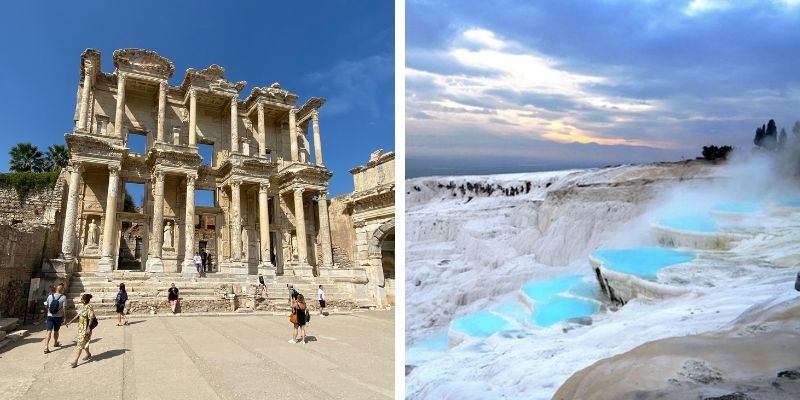
In this region, you can also find the second-longest canyon in the world, the Ulubey Canyon. It was formed after the breakdown of the graben of the Big Menderes River. You can get to it on foot or by dirt road. For those of you who love rock climbing, this is the place to go.
Things to Do
If you want to come to check out the many ancient ruins and stunning countryside, make sure you come in spring or fall for the best weather.
All along the coast, you can find quaint fishing villages mixed with ancient civilizations. You can find olive groves and beaches. This is a perfect place to explore without an agenda.
Check out the Bodrum Castle and Underwater Archaeology Museum. The Underwater Museum is one of the few in the world and the only one in Turkey. As far as museums go, this is a must-see.
Another castle to see is the Karahisar Castle. It was built on a volcanic mountain in roughly 1,350 BC and used to store the state treasury during the Ottoman times.
Today it has become a wish place for those who want to marry or have children.
There is also Izmir (ancient Smyrna), Çeşme (a peninsula West of Izmir), and Kuşadası, which have some of the most beautiful beaches.
Central Anatolia Region
Last but certainly not least, we will talk about the Central Anatolia Region. Here you will find the capital of Turkey, Ankara, as well as some amazing vacation spots.
This region is the second largest region by land area and yet only has roughly 16% of the population.
Also, this region is home to Çatalhöyük, the first settlement ever found in what is today known as Turkey. It is understood to have existed somewhere between 7,500 BC and 5,700 BC.
Climate & Terrain
The terrain is often called the plateau of Turkey, but there is more variety than that. The average elevation is 500 m. The Northern areas have a lot of woods and forestlands, and agriculture is practiced in the river valleys.
Overall, the region has hot, dry summers and cold, snowy winters. It does, however, have 4 distinct seasons. Compared to the rest of the country, it has pretty low precipitation year-round.
Because there is less precipitation and humidity, it often feels less cold than the humid coastal cities.
Food & Drink
1. Mantı
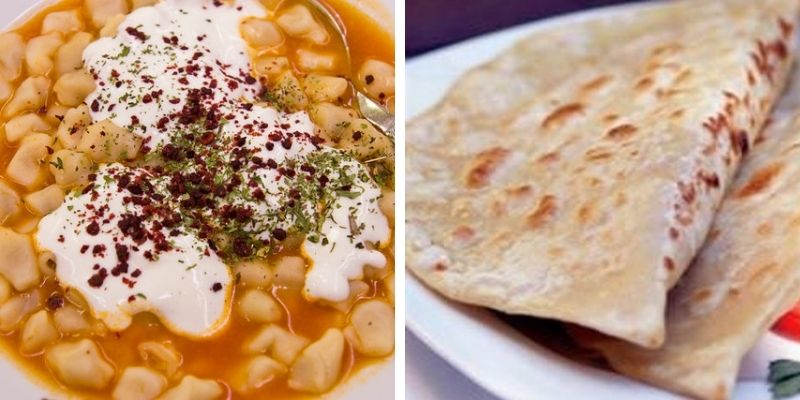
This is a traditional Turkish food that you can find anywhere you go in Turkey, but it is especially famous in Kayseri. Their version is more like a soup than in other regions.
It is a cross between a ravioli and a dumpling. Small bite-sized dough filled with ground meat and onions, though you can also find vegetarian versions, and usually topped with yogurt and a chili oil sauce.
Try it. You won’t regret it!
2. Testi Kebab
Most of the Kebabs that we have talked about are pretty standard, but if you want to try something different…you should check out the Testi Kebab in Cappadocia.
It is cooked in a sealed clay pot that is broken by the waiter when he brings it to the table and pours it into a cast-iron skillet. It was some of the most tender meat I have ever eaten.
3. Tandır Saç Böreği
This is another specialty of the region. In Turkey, they have a dish they call gözleme, which is similar to a quesadilla.
This börek is different because it is made like gözleme. It can be stuffed with anything, but the traditional way is minced meat, tomato, egg, eggplant, and mushroom.
Famous Places
Konya is home to the Sufi order often known as the Whirling Dervishes. If you are fascinated with world religions and history, this is a must-visit. You can go to the museum and learn all about it!
Also, while in Konya, make sure you eat the etli ekmek (literally bread with meat), which is a local dish much like pide without cheese. It is a marriage of pide and lahmacun.
You can step back in time when you visit the Odunpazarı District in Eskişehir. There is so much history, but it is also quaint with its traditional houses, fountains, and squares throughout.
The Atlıhan Bazaar, where you can find locally handcrafted art, is worth visiting.
You can always check out the Gök Madrasa in Sivas as well. Here you will be able to see Turkish architecture and Turkish decorative art all in one place. It was built in 1271 and converted into a museum in 1926.
Things to Do
If you like lavender, you should totally check out the Lavender Valley in Kırıkkale. It was established in 2019, so it is still growing, but the smells are incredible!
If you come during the summer, you can check out Kentpark in Eskişehir. It is a massive park with an artificial beach and a swimming pool. Great for the kiddos!
Of course, there is always Cappadocia, which is nearly the center of Turkey! It is filled with things to see and do.
There are hot air balloon rides, church tours, cave houses, fairy chimneys, underground cities, and SO MUCH MORE! Be prepared, though, it is more expensive than most places in Turkey, given that it is such a tourist hotspot.
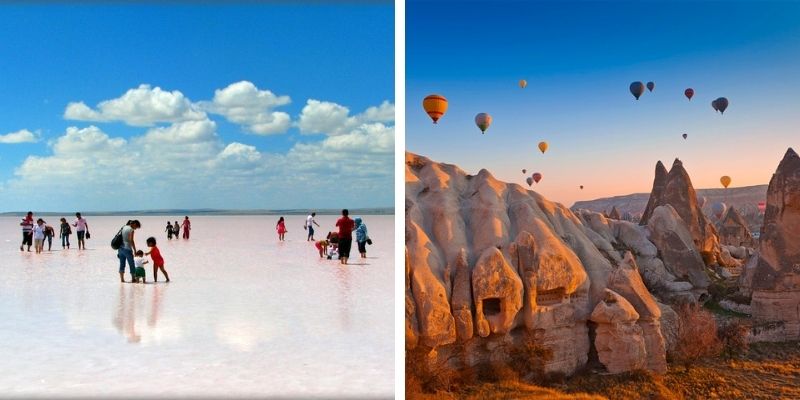
There is plenty to do throughout the Central Anatolia Region, whether it’s visiting waterfalls, going for a hike, checking out Tuz Gölü (Lake Salt), playing in the valleys, or climbing a mountain. For you outdoor lovers, you won’t be bored here!
Why Every Region of Turkey Is Worth Exploring
Turkey may only be slightly larger than Texas, but its landscapes, cultures, and histories vary dramatically from region to region. From the lush mountains of the Black Sea to the ancient ruins of the Aegean coast, each region offers something completely different to explore.
After living here for several years and traveling through most of the country, one thing still surprises me: how quickly the scenery, food, and local culture can change from one province to the next.
If you’re planning a trip, try to explore more than one region of Turkey. Each offers a completely different perspective on the country.
And if you’ve already visited, I’d love to hear which region captured your heart.
Explore More Turkey Travel Guides
If you’re planning a trip to Turkey, these guides may help you explore even more:
Istanbul’s International Airport Guide
Booking a private transfer to your hotel
Our favorite breakfast spots in Istanbul
Turkish Drinks You Should Try
How Much Does It Cost to Live in Istanbul
Turkey Vacation Basics
When I plan a trip these are the websites I use. I hope they help you plan your next adventure as well!
FLIGHTS: I am a huge fan of Skyscanner.
VISAS: You can use the free e-visa portal here but for a few extra dollars you can use iVisa and someone else will handle any issues that may come up.
E-SIM: When I traveled to SE Asia I discovered e-sims and I’m never going back. Airalo has been easy and cheap!
TRAVEL INSURANCE: I use TravelInsurance.com for my trips abroad.
CAR RENTAL: I have loved working with Discover Cars when I rent cars in country.
AIRPORT TRANSFERS: I have used these transfers many times and they are always great. If you’d like more options, I also recommend GetTransfers.com as they allow you to compare companies.
ACCOMMODATION: Find the best Turkey hotel deals on Booking.com.
CITY TOURS & DAY TRIPS: You can browse GetYourGuide’s website to find just the tour you’re looking for! We also recommend the MegaPass for major cities.
